
Hit Enter to Search or X to close
The summer of 2026 tested the limits of New York City’s infrastructure. Temperatures rose above 110 degrees (or above 130 degrees at subway stations), wildfire smoke covered the sky, and flash floods routinely shut down transportation routes. Residents were often advised to ‘stay home,’ but for thousands of workers in the service, supply chain, and construction sectors, that advice was not an option.
Amazon drivers were documented wading through floodwater to deliver packages, while the Amazon Teamsters reported that the company had failed to reduce routes during heatwaves or fix faulty van ACs. Deliveristas, or app-based delivery workers, risked algorithmic penalties if they took necessary water and cooling breaks during shifts.
The climate crisis is here, and it poses a direct and immediate threat to millions of workers everywhere, particularly Black, Brown, immigrant, and low-income workers. While corporate executives contribute to the deteriorating climate from the safety of air-conditioned offices, frontline workers are left to absorb the consequences.
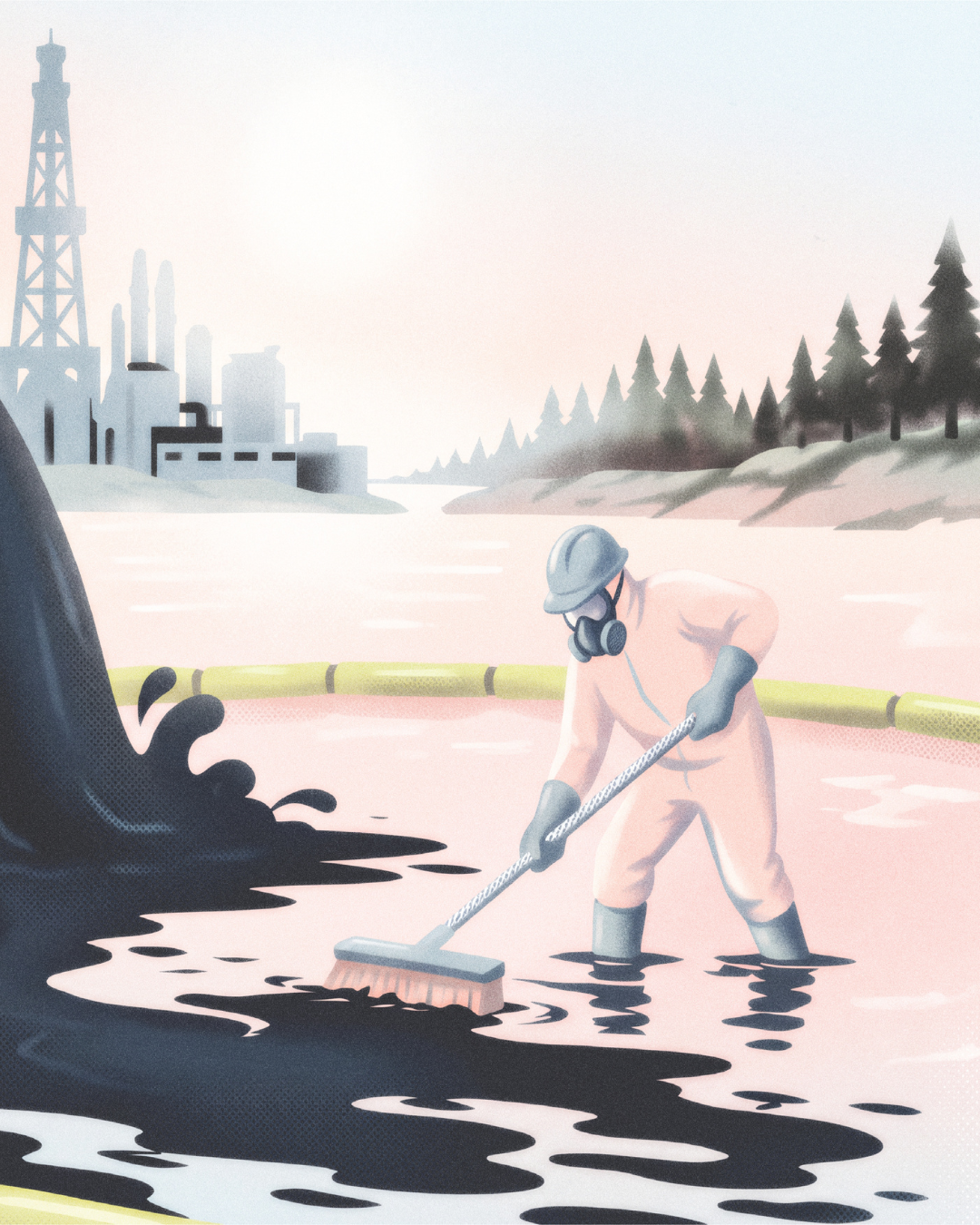
For industrial workers in the Gulf South, climate disasters bring even more acute dangers like chemical leaks and explosions. Dr. Roishetta Ozane, an environmental justice leader from Lake Charles, Louisiana, has been ringing the alarm bells for years. She is the founder and director of the Vessel Project of Louisiana, a grassroots mutual aid organization for disaster relief, and a a co-founder of the Gulf South Fossil Finance Hub, which unites frontline leaders from across Texas and Louisiana.
When we spoke, her Parish was under a storm warning as tropical storm Edouard approached. “The refineries did not close, so those workers have to still show up to work today and be at risk of whatever dangers might incur because of that storm,” she said.
Industrial workers in Louisiana are routinely forced to risk their safety during climate disasters, a reality Dr. Ozane is fighting against. “Not only do they still have to show up to work, but if there is an explosion or chemical release from these facilities, like we saw during Hurricane Laura and Delta, the community members who do not evacuate have no rights because there was an evacuation order in place,” she explained. “Imagine you're a worker at one of these facilities, you have been forced to come to work or else you’ll lose your job, and then a facility nearby has a chemical release. You have no right to sue for damages even though your employer didn't allow you to evacuate.”
Workers across the country are fighting back, demanding that extreme heat, pollution, and storms be treated as the occupational safety threats they are. But while unions have seen some hard-won gains, they now face a federal government that is actively working to dismantle these protections.
In 2024, the Occupational Safety and Health Administration (OSHA) announced a proposal for federal standards specifically targeting heat hazards in workplaces. It was a groundbreaking comprehensive framework achieved through years of organizing. Then, the Trump administration took office and appointed David Keeling to run OSHA.
This was a slap in the face for workers, particularly delivery drivers. Many remembered Keeling as the top UPS safety executive who actively refused their demands to install air conditioning in delivery vans. During his tenure, heat was the leading cause of injuries at UPS, accounting for 20 percent of all incidents.
Since taking office, Keeling has thrown the landmark heat proposal into administrative limbo, indefinitely stalling its adoption. In response, many have turned to local legislation as an alternative, like Mamdani’s executive order protecting workers from extreme heat. But outside of blue cities, millions of employees are clocking in without a federal floor of protection against a warming planet.
Bridging a Historical Divide
Given the dangers that climate change and pollution pose for workers, you’d think that environmentalists and labor organizers would be natural allies against shared corporate enemies. But labor unions have historically been wary of climate activists. They saw them as white, affluent elitists who care more about trees than the working class. Unfortunately, their suspicions were often justified.
The Timber Wars of the 1980s and 90s Pacific Northwest remain a defining example. After years of tree-sits and legal battles, environmental groups celebrated a monumental victory for conservation and halted logging on millions of acres of old growth forests. The win, however, cost about 32,000 timber jobs in towns that had relied on the industry for generations. When unions pushed back, most environmental groups refused to engage and dismissed workers as a necessary sacrifice. The group Earth First! even spiked trees during direct actions, a tactic they knew risked injuring workers. Today, many retired timber workers still suffer the consequences of the out-of-touch environmentalism that cost them their livelihoods and emptied their towns.
The climate movement eventually began to move past its wilderness-focused origins, but it did not do so on its own. Labor leaders have been pushing the climate movement for decades, refusing to accept a false choice between good jobs and a livable planet.
Cesar Chavez and the United Farm Workers, for example, forced the issue by making pesticide exposure a central labor issue. UFW’s fight to protect farmers from toxic chemicals called out the hypocrisy of mainstream environmentalists that mobilized to save eagles from DDT but stayed conveniently silent about farmworkers being poisoned by that same chemical in the fields. By building strategic coalitions, the UFW forced big green organizations to recognize that you cannot protect the earth without protecting the people who harvest it. That core demand for safe land, labor, and life eventually became the foundation of the 17 Principles of Environmental Justice drafted at the 1991 First National People of Color Environmental Leadership Summit.
Even the term ‘just transition,’ widely used today as a guiding principle by climate movements around the world, was originally coined by union leader Tony Mazzocchi. Representing the Oil, Chemical, and Atomic Workers (OCAW) in the 90s, he proposed a radical new vision where workers would not have to bear the brunt of a transition away from harmful industries. Mazzocchi and the OCAW pushed for income support, retraining, and pension guarantees for displaced workers--all demands that many unions and climate groups have since made their own.
To be clear, the mainstream climate movement still has a long way to go when it comes to putting working-class organizers in leadership or meaningfully incorporate union demands. But in environmental justice organizations led by local communities, like the Vessel Project, workers are a core part of the fight. “We’ve had workers create their own movements against the facility because they were able to see from the inside what was happening and the lack of care for the community,” Dr. Ozane said. “They also saw their own health decline because they have been exposed to that industry for so long.”
Divide-and-Conquer
And yet, whenever a new fossil fuel project is proposed, the old ‘planet vs. workers’ debate tends to resurface. In 2017, the New Orleans City Council voted on a controversial gas-fired power plant proposal by Entergy. Public hearings drew dozens of supporters holding signs reading “Power Station = JOBS!!!!” and testifying about the economic benefits that would go to local communities.
Who could blame working people in the room for choosing a construction paycheck over the abstract impact of future emissions? Except in this case, most of them weren’t choosing anything. After the project was approved, an investigation by local outlet The Lens revealed that the vocal supporters were paid actors hired by Entergy, instructed to recite speeches written by a PR firm.
Dr. Ozane has seen this happen all over the state. “I've been in meetings where we know there are paid agitators who are saying, ‘our community wants this,’ and then nobody knows this person,” she said. “And you can tell sometimes they can't even pronounce the parishes.”
This is astroturfing, the practice of manufacturing the appearance of grassroots support for a polluting project. The fossil fuel industry has been running the play for decades, often portraying the climate movement as the enemy of the working class.
We saw the same tactic when Indigenous-led protests against the Line 3 oil pipeline made national headlines. Conveniently, a group called ‘Minnesotans for Line 3’ popped up on social media, stressing the importance of the pipeline for the local economy. Their Facebook featured dozens of videos of residents arguing that replacing Line 3 would create thousands of union jobs. Minnesotans for Line 3 claimed to be a grassroots group of thousands of everyday Minnesotans, but few activists were surprised when an investigation revealed that the pipeline company Enbridge was bankrolling the campaign.

The promise of widespread, high-paying jobs remains one of the most potent tools in the fossil fuel industry’s arsenal, repeated by Republicans and Democrats alike. New pipelines, LNG terminals, and petrochemical plants are sold as lifelines to Rust Belt and Gulf South communities that have been given the short end of the stick too many times.
These promises, however, are often based on deeply flawed and inflated projections that fail to materialize on the ground. In Appalachia, the fracking boom promised to create 450,000 new jobs a decade ago, a number that gave hope to many families in shrinking towns. But the promised new era of economic prosperity never arrived. In reality, these projects mostly brought outsourced, non-union, and often out-of-state contractors. A new report published by the Ohio River Valley Institute shows that the heavily fracked counties of Appalachia have actually lost 10,000 jobs. The profits flowed directly to corporate headquarters, leaving local communities with environmental damage and degraded infrastructure.
The fossil fuel industry doesn’t care much about the truth—it has billions of dollars to spend on actors, fake numbers, and shadow PR groups. Exposing their lies is necessary, but it’s only half the battle. Besides, they didn’t pull the ‘climate vs. workers’ tension out of completely thin air. To truly defeat the carefully cultivated myth of fossil fuels as the backbone of the American working class, the movement must champion labor and offer a transition plan that brings workers and jobs to the front.
The New Climate-Labor Coalition
Dr. Ozane created The Vessel Project precisely to make sure no one gets left behind. “We’re attacked with the phrase, ‘you don’t want to see growth’,” she said. “No, we want to see growth. We want jobs to come. We want people to be able to pay their bills, drink clean water, breathe in clean air. It just can’t be ‘this community needs jobs, so we're going to put this thing here without asking the community what they actually want.’ We need renewable energy, resilience hubs, infrastructure improvement, disaster recovery, and clean manufacturing. All of those things can create jobs. We have to make sure that these jobs are safe, that folks are paid enough to thrive, and that we’re not moving them away from their communities.”
The environmental justice movement reminds us that worker exploitation and carbon emissions are both driven by the same greedy corporations who hoard wealth at the expense of people. The racial capitalist system determines who is exposed to pollution, who does dangerous work for low wages, and who has the least amount of power to demand change.
“Workers, especially black, brown, immigrant, and low-income people, are often on the front lines twice,” Dr. Ozane said. “They're doing the most dangerous jobs, exposed to toxic chemicals and extreme heat. Once they return home, they're still surrounded by contaminated water, flooding, and poor air quality.” Low-income communities are disproportionately affected by climate disasters, and they are also the ones who often bear the cost of the transition away from fossil fuels.
In New York, organizations led by communities in low-income, high-pollution neighborhoods have built wide coalitions championing decarbonization alongside new green jobs. One of their biggest wins, Local Law 97, caps emissions from large buildings, which are responsible for two-thirds of the city’s emissions. The implementation of energy efficiency upgrades is estimated to create 141,000 new jobs, with guaranteed training and workforce development opportunities to make these jobs accessible for low-income workers of color. Unlike the fossil fuel industry, these promises are based on rigorous modeling and are subject to regular compliance reviews.
Nationally, labor and climate organizers are increasingly uniting against a shared adversary: Amazon. The company applies the same extractive logic to both its workforce and the environment, violating the rights of workers at warehouses while building data centers that consume massive amounts of electricity and water. Amazon Employees for Climate Justice, for example, are fighting against both ICE presence at warehouses and rapid AI development.
If the fossil fuel industry’s greatest trick was convincing the world that the survival of the working class depends on the destruction of the planet, then the labor-climate coalition’s greatest weapon is proving that our survival depends on each other. Climate change is a labor issue, and we cannot win a clean energy transition without the leadership of the working people who will have to build it.




.png)