Hit Enter to Search or X to close
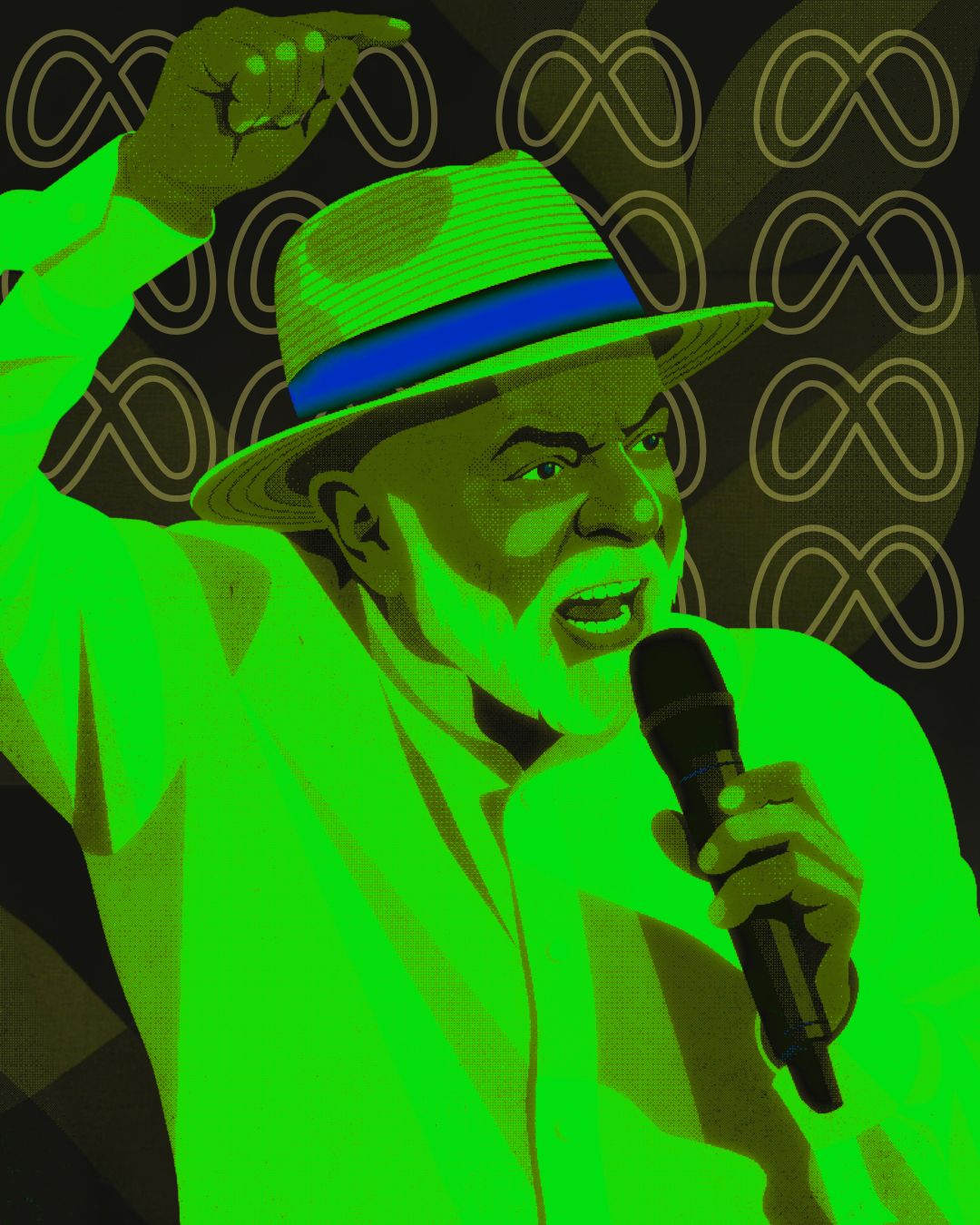
Brazil’s 2026 presidential election has been rocked by allegations from left-wing incumbent Luiz Inácio Lula da Silva that Meta engaged in political interference, sparking protests across Brazil and placing the company under renewed scrutiny over its role in elections. This is not the first time Meta has been a major player in the electoral process. In 2016, the world was introduced to the reality that social media could play an active and consequential role in shaping elections through the Cambridge Analytica scandal. The scandal exposed how personal data collected from millions of Facebook users could be exploited to build psychological profiles and target voters with political messaging. The scandal resulted in international outrage, congressional hearings, and, eventually, a record-breaking $5 billion fine against Facebook by the Federal Trade Commission in 2019. A decade later, despite years of scrutiny, penalties, and promises of reform, Meta continues to face serious questions about its responsibility to safeguard democratic participation and, possibly, its role in purposely subverting it.
Brazil's Election and the Fight Over Political Visibility
With Brazil's presidential runoff scheduled for October 25, 2026, the race between left-wing incumbent President Luiz Inácio Lula da Silva and right-wing challenger Flávio Bolsonaro has become the center of a heated dispute over how Meta handles political content.
Lula's campaign has accused Meta, which owns Facebook, Instagram, and WhatsApp, of limiting its ability to reach voters while allowing content supporting Bolsonaro to spread more freely. On September 23, an advertising account used by Lula's campaign was temporarily shut down, preventing the campaign from running political ads. Meta acknowledged the incident but blamed it on technical errors, denying that it had intentionally favored either candidate.
Being visible on social media is super consequential for political candidates today. According to the Reuters Institute Digital News Report, 54% of people worldwide get news from social media and video platforms each week, more than from traditional TV or news websites and apps. With so many people getting their news online, a campaign's ability to reach voters can depend heavily on how these platforms operate. Lula eventually took the dispute to Brazil's Superior Electoral Court, which ordered Meta to prove that it was treating both presidential campaigns equally.
And the allegations of Meta's interference in Brazilian politics go beyond this election. A recent investigation by NetLab, a research group at the Federal University of Rio de Janeiro, found 1,613 political ads running across Meta's platforms between July and September 2026 that came from outside Brazil or were placed by people and groups not authorized to run election ads in the country. Most came from pages based in the United States, although researchers also found activity linked to Italy, Mexico, Bangladesh, and Colombia.
A separate investigation by Agência Pública found at least 1,069 ads mentioning Lula or Flávio Bolsonaro that were paid for in U.S. dollars between August 16 and September 30. These ads cost at least $120,800 in total and ran without the political advertising labels required by Meta's own rules.
This isn't the first time Brazil has dealt with social media disrupting its democratic process. The country is still dealing with the aftermath of Jair Bolsonaro's presidency, including the January 8, 2023, attacks on government buildings by his supporters after he lost the election. Social media played a major role in spreading false claims about election fraud and helping organize the people involved in those events.
Even Meta's Own Oversight Board Is Raising Concerns
On October 20, Meta's independent Oversight Board released a statement criticizing the company's repeated failures to enforce its rules during elections. “We have repeatedly warned that during elections and periods of heightened political tension, Meta's content moderation failures often manifest themselves in two ways: overenforcement that suppresses political speech and underenforcement that undermines electoral integrity,” the board stated.
The statement came just days after Meta temporarily suspended the Instagram account of the liberal organization No Kings during nationwide protests against the Trump administration, just weeks before the midterm elections. Meta apologized for the suspension, claiming its automated security system had mistakenly flagged the account's unusually high activity as suspicious.
Meta has blamed both incidents to technical problems, a defense that offers the company plausible deniability. However, given Meta’s history, critics accuse the company of political interference, especially since these incidents seem to benefit right-wing candidates and political positions that align with the interests of Meta and its founder, Mark Zuckerberg.
Zuckerberg's Political Pivot
Mark Zuckerberg's relationship with Donald Trump has gone through quite the vibe shift over the past decade. During Trump's first presidency, the two often clashed over how social media should handle political misinformation and what content should be allowed online. Things got even more heated when Facebook and Instagram suspended Trump's accounts following the January 6, 2021, attack on the U.S. Capitol. But by the time Trump returned to the White House in January 2025, Zuckerberg seemed eager to get back on his good side.
Meta donated $1 million to Trump's inauguration fund, Zuckerberg attended the inauguration, and the company announced major changes to its leadership and rules about what people could post.
One of those changes was the appointment of Joel Kaplan as Meta's chief global affairs officer. Kaplan had previously served as deputy chief of staff under President George W. Bush and had spent years pushing for policies that were more friendly to conservative politicians. Meta also added Dana White, the president of the UFC and a well-known Trump supporter, to its board of directors.
Perhaps the biggest change came in January 2025, when Zuckerberg announced that Meta would end its third-party fact-checking program in the United States. Instead, the company would move toward a community notes system, similar to the one Elon Musk introduced on X, where users help add context to posts.
Zuckerberg claimed these changes were about protecting free speech and reducing political bias in content moderation. Critics, however, questioned whether Meta was genuinely trying to fix problems with its policies or simply trying to win favor with the Trump administration.
What the Research Actually Tells Us About Meta's Algorithms
Questions about Meta's influence on politics are nothing new. For years, researchers have been studying how social media affects what people believe, how they vote, and how society works.
One of the most interesting studies was published in Science in July 2023. Called “Asymmetric Ideological Segregation in Exposure to Political News on Facebook”, it looked at how around 208 million Americans received political news on Facebook during the 2020 presidential election.
Researchers compared the political news people could have seen, what actually appeared in their feeds, and what they chose to click on or interact with. What they found was a deeply divided platform, where conservatives and liberals were having very different experiences.
The study found that people were increasingly separated by their political views at every step. Researchers discovered a large part of Facebook's political news that was viewed almost entirely by conservatives, with nothing similar on the liberal side. Most of the false or misleading information flagged by Meta's fact-checkers was also found in this conservative section. Overall, news sources popular with conservatives appeared more often on Facebook than those popular with liberals.
However, the study did not find that Meta was purposely making these differences happen to help conservatives. What people see on Facebook depends on many things, including who they follow, which groups they join, what they click on, and what the algorithm recommends.
But here's where things get complicated. Conservative political content often uses fear and anger to get people's attention. This kind of content, commonly called "ragebait," is designed to make people upset enough to react, comment, or share it. Research has shown that anger can be a powerful driver of engagement online. And because social media algorithms are designed to keep people engaged, this type of content can spread quickly. So it's hard to tell how much of this divide comes from what people choose to watch and how much comes from what Facebook pushes into their feeds.
Another study, also published in Science in 2023, looked at how Facebook's and Instagram's algorithms affected users during the 2020 U.S. presidential election.
Called “How Do Social Media Feed Algorithms Affect Attitudes and Behavior in an Election Campaign?”, the study tested what would happen if people saw posts in the order they were published instead of having Facebook's algorithm decide what appeared first.
The results were interesting. People who switched to a chronological feed spent much less time on the platforms and saw different kinds of content. On Facebook, they saw more posts from friends with moderate political views and news sources followed by both liberals and conservatives. They also saw fewer posts containing insults, hateful language, or personal attacks.
Together, these studies show that political news is not shared equally on social media. The algorithms deciding what appears in our feeds can keep us stuck in our own political bubbles, shape what we pay attention to, and limit the different opinions we come across. That's a serious problem for democracy, because people need access to different sources of information to understand what's happening in the world and make informed decisions.
Democracy Cannot Depend on Meta's Goodwill
The Cambridge Analytica scandal revealed how personal information stolen from social media could be used to target people with political ads. Today, the problem goes much further. Social media platforms themselves have become tools for political actors to influence public opinion, divide people, and interfere with elections.
Ten years later, we're no longer just worried about outside companies getting their hands on our personal information. The platforms themselves now play an active role in elections. They decide what content people see, which accounts get recommended, which political ads are approved, and who gets SHADOWBANNED!
The controversy surrounding Brazil's presidential election shows what can happen when we give a handful of tech bros this much power. Whether Meta's restrictions on Lula's campaign were caused by technical problems, poorly designed moderation systems, or something more deliberate, the root of the problem remains the same. A few private companies have enormous control over how people receive political information.
Cambridge Analytica was supposed to be a turning point. The scandal forced people to confront how social media could be used to manipulate politics. Yet a decade later, little has really changed. We need stronger laws to regulate these companies, break up their monopolies, and create independent oversight to hold them accountable. Otherwise, free speech and democracy itself are at risk.