
Hit Enter to Search or X to close
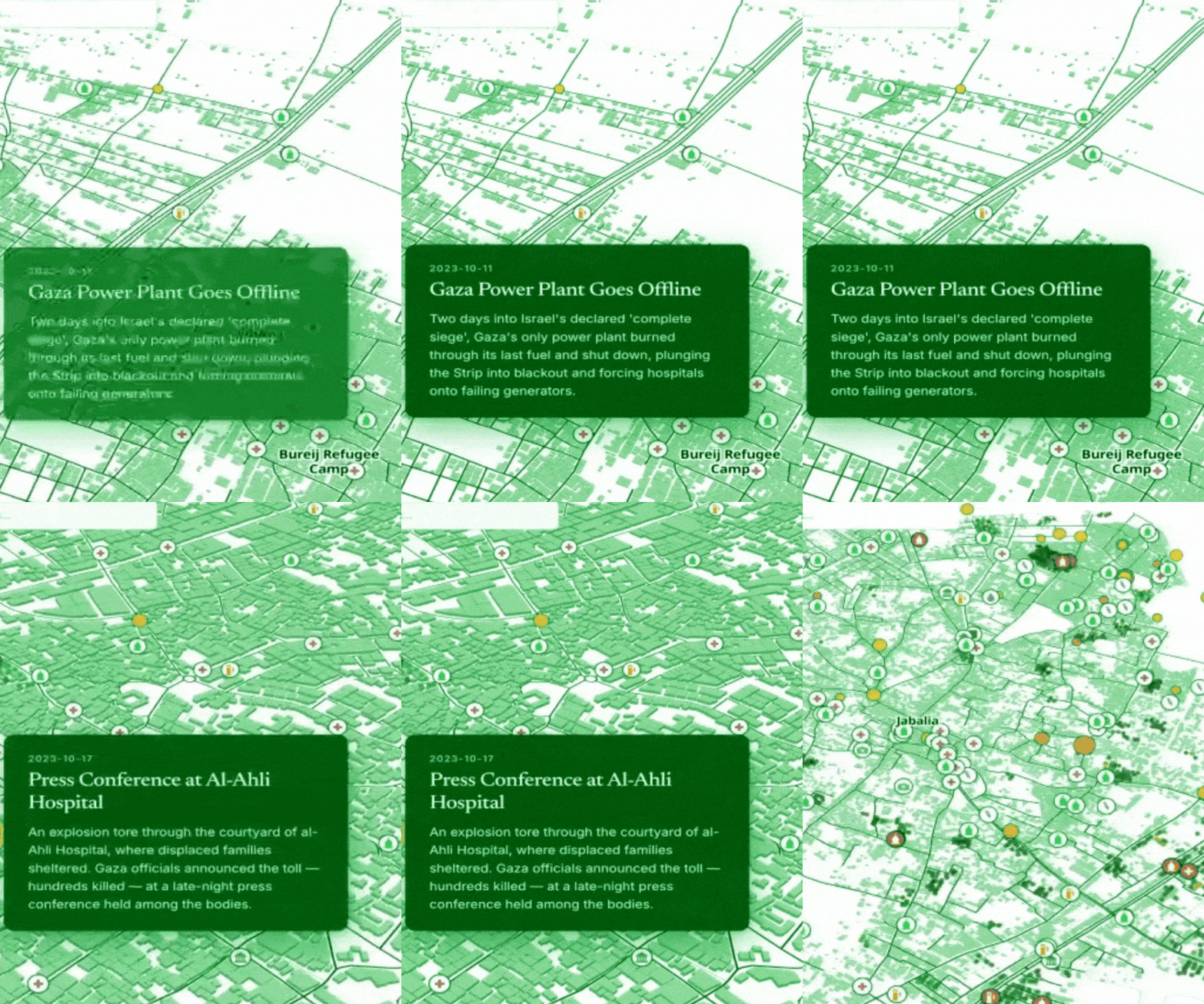
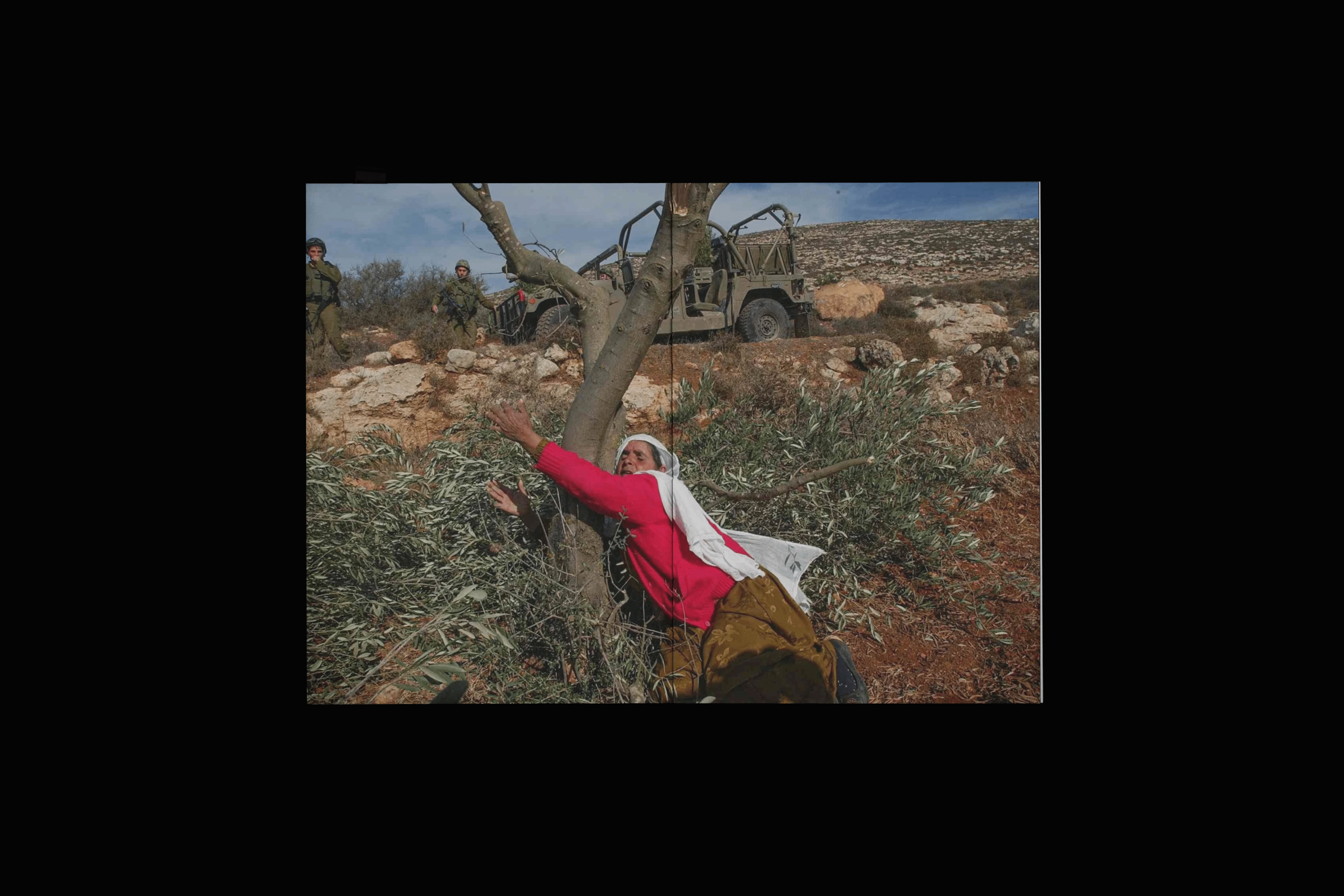
Palestinian Youth Movement’s digital archive turns the destruction of Gaza into a living map, making visible the scale of a genocide that increasingly disappears from the news cycle. The first images of Gaza after October 7 2023, were impossible to escape. Bombed-out buildings, overwhelmed hospitals, families searching through rubble, entire neighborhoods flattened. But as the months stretched into years, the coverage has become quieter due to a variety of factors. such as censorship, and on the ground conditions despite the fact that current numbers show that 1400 Palestinians have been killed since the "ceasefire." In addition Israel is currently on a campaign to start removing rubble in Gaza, which presents an opportunity for Israel to erase it's war crimes in the process. As Francesca Albanese, the UN Special Rapporteur on the Occupied Palestinian Territories, warned: “The ongoing removal, crushing and relocation of rubble in Gaza must not destroy evidence of international crimes or prevent the recovery and identification of human remains in the besieged enclave.” Documenting Genocide is an attempt to ensure the truth is preserved.The digital project maps the destruction of Gaza since October 7, 2023. Users can move through the map geographically or use a timeline to watch the destruction unfold over time.
.jpg)
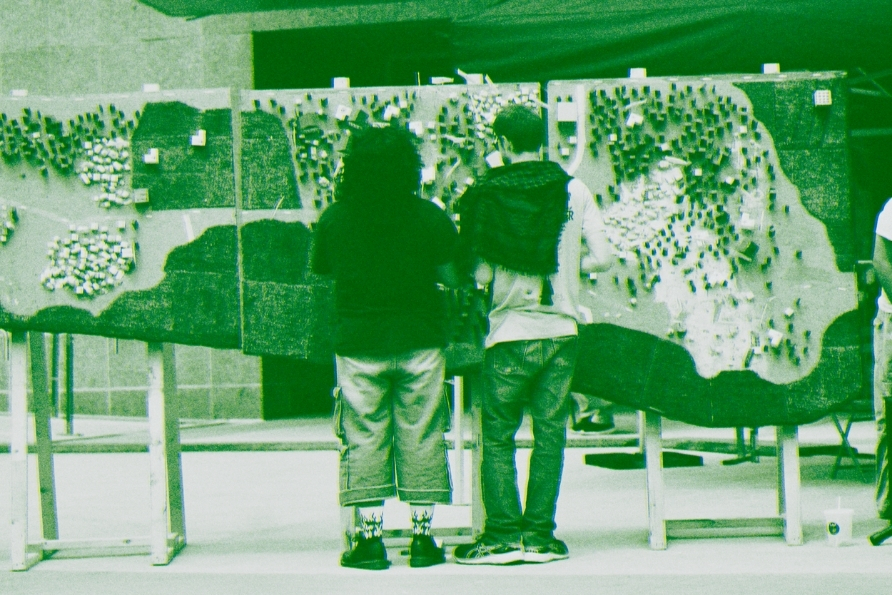
The project grew out of another PYM initiative, The Architecture of Genocide, a series of massive physical maps of Gaza showing the Strip before and after October 7. The maps were originally created as a flagship exhibit for PYM’s Palestine conference and were subsequently reproduced byBut physical maps have obvious limits. They can only exist in one place at a time.“I wanted to make it easily accessible for anyone,” says Yusuf Tessy, who initially developed the digital project independently before bringing it to PYM. “I also wanted to get a little more granular in the detail.” The project became a digital companion to the physical exhibition, allowing the project to reach spaces where two 20-foot maps of Gaza of can’t reach.“I really wanted to think about like what different pieces make a society function and how do we show how that has been destroyed... It’s jaw dropping to see all of these different things that are essential for society to function properly disappear so quickly," Tessy says.
The project also makes visible a longer history. While Documenting Genocide begins on October 7, the policies shaping life in Gaza did not begin that day. Israeli officials had spent decades implementing restrictions on food, water, gas and electricity. On the map, the destruction can therefore be understood not only as a series of attacks, but as an escalation of policies that preceded the current genocide. At the same time, Documenting Genocide is deliberately unfinished. The map draws from multiple datasets and satellite assessments, some of which update periodically rather than documenting an event at the moment it occurs. Larger markers correspond to reported incidents, while smaller points represent damage identified through satellite imagery. Visitors can also see turning points of the war, from Al-Ahli to Al-Shifa to Hind Rajab as well as total casualties per site.
Although, there are some things that cannot be captured. Tessy points to crossings as one example. Information might indicate whether a crossing was technically open or closed, but that does not communicate whether sufficient aid was actually entering Gaza. “If the Strip needs 400 aid trucks every day, but they’re only getting two, I don’t think it really does it justice to say that the crossing was open,” he says. There are also the datasets that simply remain inaccessible. PYM was unable to obtain some information from outside organizations because of licensing restrictions, despite the potential value of that data for documenting the destruction. Bringing important questions into view. Who gets to document violence, who controls that information, and what happens when records of an ongoing genocide are treated as intellectual property? Despite its limitations, this project is a vital act of defiance against historical erasure. It refuses to let the systematic destruction of Gaza be quietly rewritten or swept aside. By anchoring itself in unbiased data, it builds an unshakeable archive of truth, ensuring that what happened in Gaza can never be denied. “It’s still kind of abstract,” Tessy says. “A red dot doesn’t capture what a destroyed building looks like.” That is why the digital map exists alongside other forms of documentation.
Tessy points to The Living Record, an archive by Writers Against the War on Gaza, as an example of a project that documents the genocide through testimony from journalists, family members, friends, and colleagues. “They both serve very important but different purposes,” he says. That is particularly important as media coverage of Gaza has diminished. Tessy describes the current news cycle as “little drops of information,” where increasingly catastrophic events are required to break through into sustained coverage. Documenting Genocide offers a way to step outside that cycle and see the accumulation of destruction over time. “This is still very much an ongoing genocide,” he says. The project is also revealing something that can easily disappear beneath images of rubble: what Gaza was before. While compiling the map, Tessy says he was surprised by the number of health facilities, educational institutions, and mosques that existed across the Strip. Looking for buildings to document meant, unexpectedly, learning about the society that existed before its destruction. “When you’re focusing on attacks, you don’t really think about what was there before,” he says. “And so I learned so much about what Gaza was before the genocide through going through this process.”
“When you’re focusing on attacks, you don’t really think about what was there before,” he says. “And so I learned so much about what Gaza was before the genocide through going through this process.”
Gaza is often presented in Western media as a place defined exclusively by war, poverty, and destruction. The map subverts that by showing a society that had schools, hospitals, religious institutions, businesses, and public life, making the scale of what has been destroyed more tangible and heartbreaking. “I think there’s like a subset of society that just won’t consider this a genocide and that needs to change in my opinion... I think the genocide speaks for itself. If you sit back and you click play click play [on PYM’s Documenting Genocide website] and you see kind of what’s happened in terms of, you know, airstrikes, bombings, attacks, people killed, but also the fact that places of worship and all the things that you need to have a healthy society is being destroyed should speak for itself ,” Tessy shares. And that may ultimately be the project’s most important function.
You can check out the digital archive here
Editorial Note (October 13, 2026): At the time of publication on September 1, 2026, the reported number of Palestinians killed since the ceasefire was 1,369. As of October 13, 2026, that figure has increased to approximately 1,400.
.jpg)

.jpg)