
Hit Enter to Search or X to close
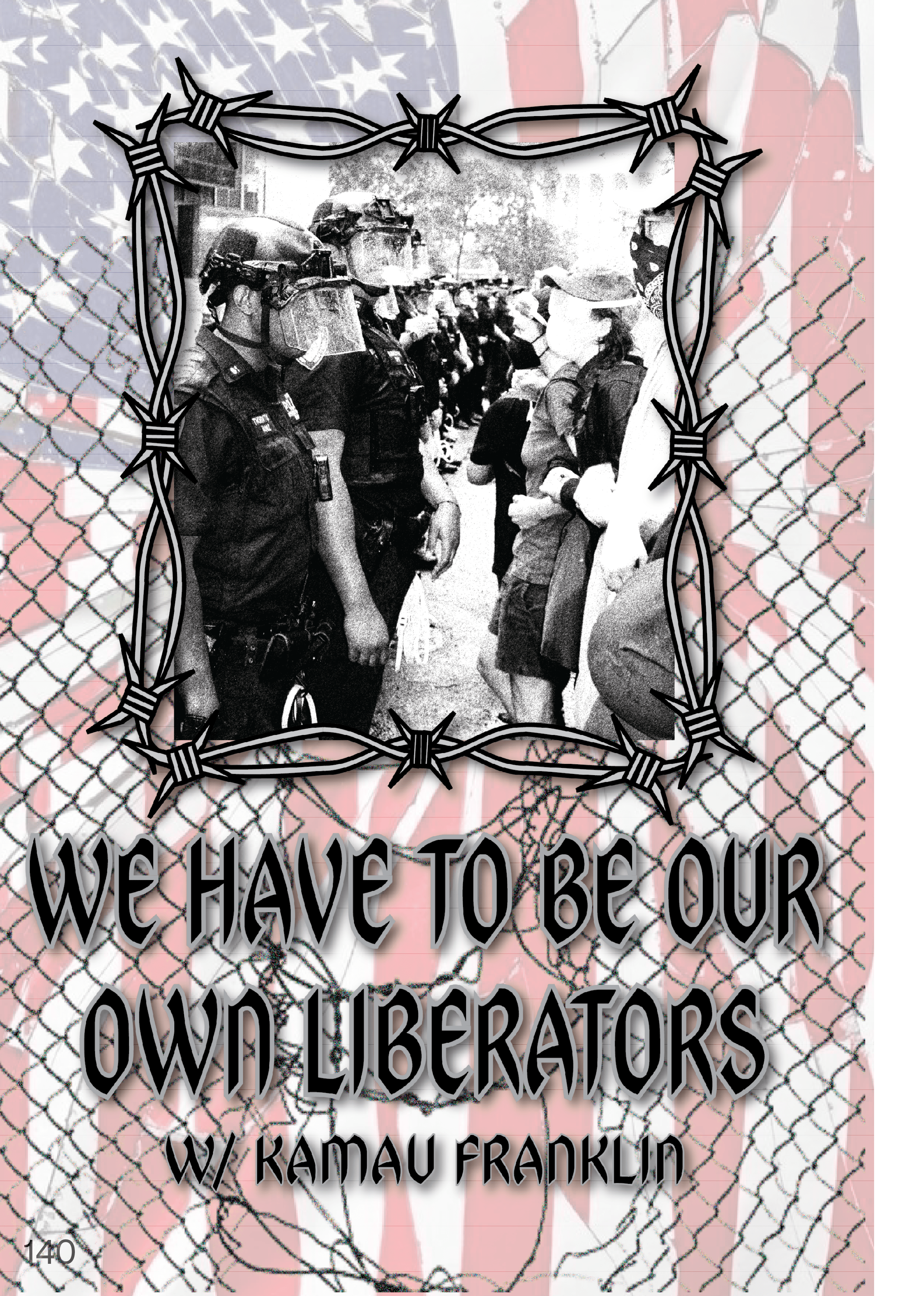
In the wake of ongoing state repression and the accelerating construction of Cop City in Atlanta, it’s clear that the U.S. is shifting more openly toward authoritarianism. As surveillance expands and dissent is criminalized, grassroots organizers are confronting these realities head-on. To understand the scope of this struggle and the history behind it, I spoke with Kamau Franklin, founder and director of Community Movement Builders, a radical Black organization fighting for self-determination through cooperative economics and grassroots resistance.
Shadowbanned Magazine: For readers unfamiliar with your work, can you explain what Community Movement Builders is all about?
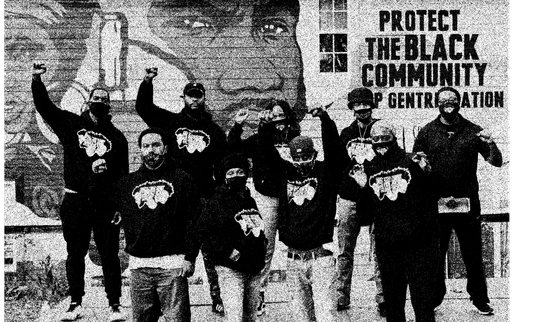
Kamau: We’re a grassroots Black organization focused on self-determination through radical organizing, economic development, and building models of what progress can look like for us, by us in our communities.
SM: How did you come to this work personally?
KF: I was born and raised in Brooklyn. What really politicized me was my mom. She grew up in Jim Crow South Carolina and shared painful stories, including how a cop struck her in the back when she was a child for being in a white-only playground. She carried the scar until she passed four years ago. Those stories opened my eyes. I began reading everything I could Black history, Malcolm X, the civil rights and Black Power movements. That led me to join radical Black organizations in my 20s. I realized that without building our own institutions and power bases, we’d always be subject to systems designed to exploit and harm us. Liberation means control over our own lives, not integration into systems built to destroy us.
SM: What exactly are “Cop Cities,” and why are they being built?
KF: During the pandemic and BLM, people were not being good consumers. They were not just going to shops and stores. They were not watching their favorite TV shows. People had come out during a pandemic to protest against police violence in ways that had never been seen before.In that time period, I think the plans for Cop City, this larger militarized police training center, were already being thought about. But that moment became the opportunity to bring it out and present it. Again, this was a time period where organizers were speaking about, and getting into mainstream conversations, about defunding the police, abolishing the police, alternatives to policing. Not that any of that would have ever happened without that mass mobilization, but the fact that it was reaching mainstream discourse made the lifting up of a militarized police center all the more important for the police, for the political elites, and for the economic elites.
Also during that time, you saw the great expansion, what I call the great funding of police foundations. Atlanta now has the second biggest police foundation in the country. These foundations existed before 2020, but they weren’t huge entities. During the uprising, these institutions became massive multi-million dollar institutions because, just in case some city or municipality decided to actually reduce the funding of police, this became the alternative measure: private funding could be built out to continue fully funding, or even excessively funding, the police.In Atlanta, the idea of Cop City was presented through the Atlanta Police Foundation. The claim was that it would be funded through private dollars. These same corporations (huge multinational corporations), not local Atlanta companies, the same ones that, several years earlier, said they were funding Black Lives Matter intitiatives now doing the antithesis of that.This Cop City wasn’t only reliant on private funding. Public money was given to a police institution that was going to be controlled not by the City of Atlanta, but by a private entity: the Atlanta Police Foundation. So it was twofold. One, to put themselves in a position to stop the kind of mass mobilizations that had taken over the streets in response to police violence. And two, to continue the over-policing, particularly of Black communities.
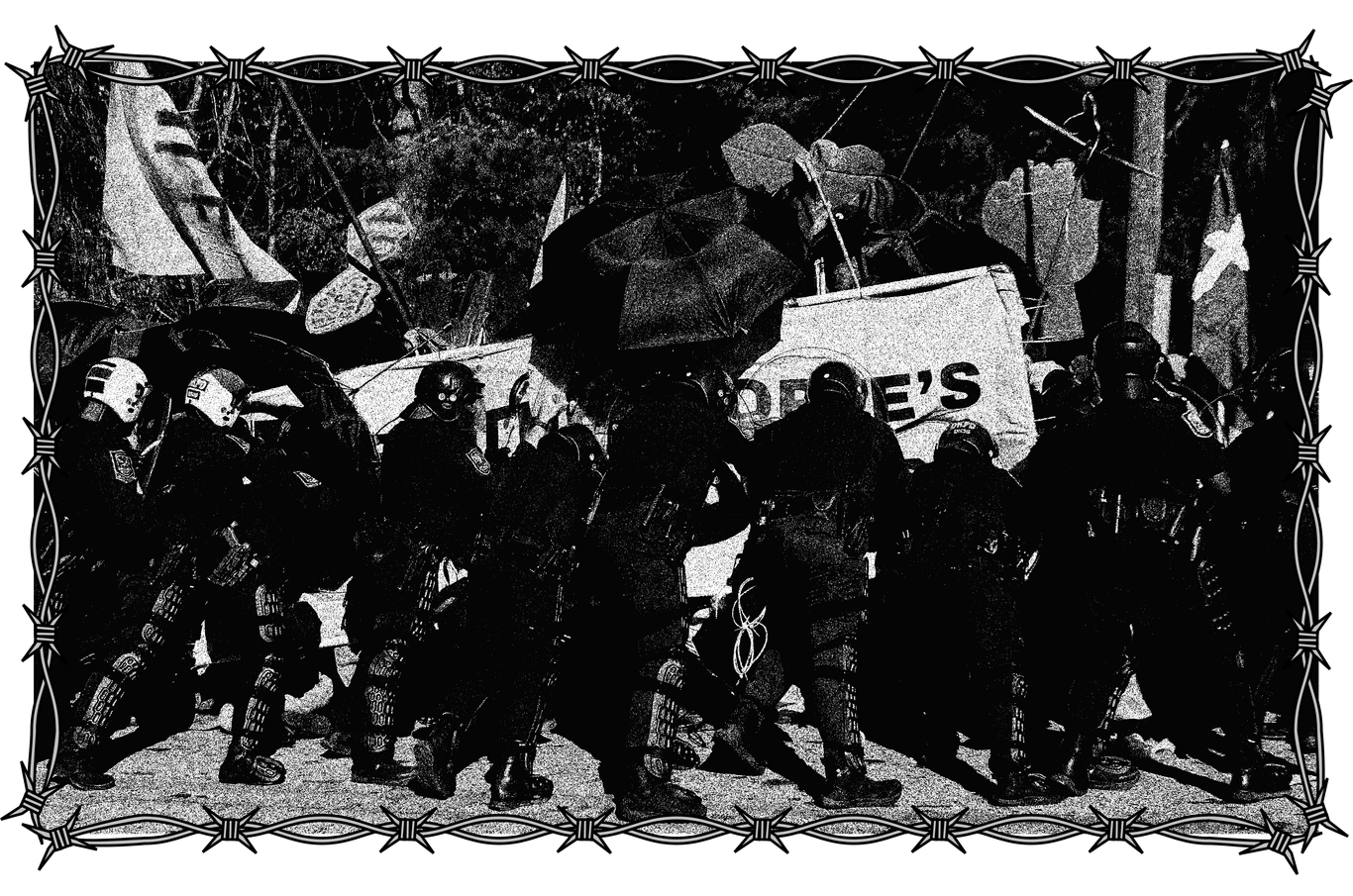
The scale of Cop City, and the militarized nature of it, are the reasons I think I dubbed it a “mock town.” Early iterations of the plan said they were going to have helicopter pads for Black Hawk helicopters, multiple firing ranges. They called it a “military-grade” facility.
SM: These carceral institutions are often placed in low-income communities where people need jobs and opportunities and elites frame them as investment for economic development. Have you seen people who were actually supportive of the development for those reasons? And how can people like us counter that messaging and push back against that kind of framing?
KF: Yeah, I would say another reason why they choose to build it in our communities, in low-income or working-class Black communities, is because they think we’re less organized to fight back against it. And like you said, I think they believe that if they give us trinkets, then we’ll be more accepting of it.
I think that dichotomy can be real sometimes. You’ll have local leadership in Atlanta, that means Black leadership, who are told this is good for us. This is good for us because of job production. This is good for us because of better training for the police, which will supposedly lower the level of police violence in our communities. That’s always the promise, even though it never actually happens, right?
Anytime they do anything for the police, they claim that this new training, whatever it is, will somehow lower the levels of police violence in our communities. Atlanta, more than any other police force in Georgia, already receives the most training: de-escalation tactics, racial sensitivity training, all of it. And yet, Atlanta continues to be a police force, and a majority black police force at that, to over-arrest Black folks in their own communities at the highest levels of assault during arrests in the country. But I think Atlanta has a particular history, this idea that we are a Black Mecca. And I think that reinforces the idea that when Black politicians or elected officials or businesspeople say this is a great idea, the goal is to try to get the Black masses, or at least a critical mass of Black folks, to either support it or stay silent. In some cases, that worked.Our role as an organization and the role of other formations similarly situated, whether Black-led or working within a broader ecosystem of organizers and activists, is to be the vanguard in calling out the Black bourgeoisie, or what we sometimes call the Black misleadership class. We want to put a spotlight on them for basically selling out the broader Black community for corporate interests, for white-dominated interests, and for the interests of the police. Which ultimately means using physical violence to control our communities, our neighborhoods, and to suppress organizing.
SM: Organizers have spoken out about Cop City being a direct extension of U.S. militarism abroad. You’ve written about this “imperial boomerang.” Can you unpack that?
KF: Absolutely. The U.S. exports methods of repression globally through military force, surveillance, psychological warfare, and those same tactics come home. The Atlanta Police Department trains with the Israeli military through the GILEE [Georgia International Law Enforcement Program ]. I think it was the second-in-command, or maybe even the first-in-command at the time—who went on one of these trips to Israel, along with several high-ranking police officers. They were visiting Israel, studying their policing methods, and were shown the surveillance system used in Jerusalem and basically, he said, We need something like that here in America. That became the model for Atlanta’s surveillance system. And now, Atlanta is the most surveilled city, not just in the country, but in the world, outside of authoritarian regimes.The idea of exchanges between militarized police forces, armies, and militaries, especially between the U.S. and Israel, but also with other Western nations, is a phenomenon happening all across the country and the world right now. Remember, the United States doesn’t have a national police force. So, this becomes the closest thing to one. Shared, regulated tactics, strategies, and ideas that can be replicated across the country through these common training spaces where departments gather, learn, and standardize their practices.

SM: How does U.S. militarism and foreign imperialism inform attitudes towards marginalized groups here domestically? A lot of people feel like they should only be focused on what’s happening at home. How do you make the case to them that what happens over there eventually comes back to affect them?
KF: It’s a difficult case to make. Because we are so propagandized now that we’re in a place, and this is especially true for Black folks as a large community, though not exclusively, where we’re told that we are strictly Americans, and that we should just want our piece of the pie.And this, again, comes out of a civil rights movement that transitioned into a Black Power movement, but that movement was destroyed by the U.S. government, right? Literally destroyed. And what was left in its place was voting rights and nonprofits as the primary avenues through which we’re supposed to fight for our liberation and freedom.If we go back to the ideas of Black Power, to the Black liberation movements of the ’60s and ’70s, there was an understanding that we were a world people, right? That we are a people of the world. And I think there’s still a good understanding of that in our community. The question is whether people feel like we have the resources or the know-how to fight back against that system. But, I think what we have to do is present to people that there’s a long history of Black folks internationalizing our struggle and seeing ourselves as part of a global movement.
Malcolm famously said that you won’t understand Mississippi unless you understand what’s happening in the Congo, right? So, the linking of our struggle as an international one, as Pan-Africanists, as people who have to understand what’s happening in Africa in relation to empire, those connections have always been there. And again, the same tactics used to suppress people abroad are brought back home.And vice versa. Nazi Germany got some of its ideas about segregating European Jews from Jim Crow and U.S. apartheid in the South. South Africa developed its apartheid system by studying Jim Crow, right? These white supremacist ideas have been swapped and shared across borders for generations.So when we look at our own history, we have to understand that we represent an oppressed people. One that’s in a similar position to others around the world. The tactics used against us, like over-policing, mass incarceration, the assassination of Black leaders, the imprisonment of Black organizers, the dismantling of Black institutions, these are the same tactics used both internationally and domestically.And I think our job is to find ways to explain that to people, especially in this current atmosphere. I do think there’s been a bit of an awakening because of the overt fascism we’ve seen under Trump. Sometimes, when we have Democratic leadership, people become subdued. They think, “Oh, this is better, maybe because the leaders look like us.”
But with someone like Trump, a figure who openly embraces white nationalist policies and ideas it becomes clearer for some people: these folks will do anything to suppress us. So our role is to figure out: how do we fight back? And how do we fight back with the understanding that the tactics and strategies that have helped liberate people around the world can be some of the same ones we use right here at home.SM: We’ve talked about how the U.S. has historically taken down movements, and we’re seeing that play out again from Cop City protesters to the Uhuru Three. There’s been this broad criminalization of dissent. What does this pattern tell you about the state’s approach to resistance, the direction the country is heading, and the attitudes of the political and economic elite?KF: I think one of the most important documents to come out of the post-2020 uprising during a time when they really began criminalizing organizers and activists with charges like domestic terrorism, RICO, racketeering, and even after the murder of Tortuguita in the forest—is the indictment itself.When you look at the RICO indictments in particular, in their own statement explaining why they’re bringing these charges, they claim that a criminal conspiracy began not when we started organizing against Cop City, but the day George Floyd was murdered—and the mass mobilization that followed. So for them, it was criminal in and of itself for people to take to the streets in response to police violence.
That’s important. Because it means, by their own logic, this so-called conspiracy started well before anyone had even heard of Cop City—more than a year before organizing around it began. In their documents, they go all the way back and say that’s when it began. So I think it’s important to understand that we’ve entered a new period—one in which white nationalism has returned to the United States in a very overt way. This isn’t the first time it’s happened, of course, but for a particular generation, it may be the first time they’re seeing it so openly—without the camouflage of neoliberal, Democratic leadership, or Black and LGBTQ figures standing in front of the system and rationalizing it.Now it’s more naked. It’s more honest. It’s more obvious. We’re seeing book bannings, attacks on DEI, and even things like the deal to bring in white South Africans under so-called Afrikaner refugee status. We’re seeing mass deportation campaigns targeting Latin Americans. These are signals—they’re letting us know that this is, quote-unquote, a “white man’s country,” and that they intend to rule it on their own terms. And there’s a clear pecking order. We as Black folks can be here, but we need to “know our place.”I’ve had conversations with organizer friends where we ask: What era is it they’re trying to return us to? Is it Jim Crow—where white working-class people had access to industrial jobs, nuclear families, and Black folks had subservient roles and “knew our place”?
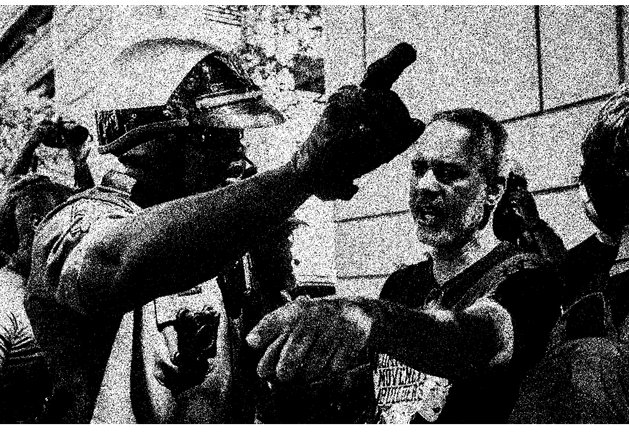
Or is it post-Reconstruction—when there was mass violence against Black people, loitering laws, rampant arrests, and courts that openly said Black people had no rights white people were bound to respect?And then some of us just say, “Hell no, they’re trying to go all the way back to slavery.” Maybe not chattel slavery as we knew it, but a modern version of it—through incarceration, or other mechanisms—where poor and working-class people are forced to work, and it’s justified by stereotypes of our so-called laziness, our shiftlessness, and what we supposedly represent in contrast to white norms and white politics.There is a real drive within white supremacy to harken back to a different era. And we have to see that clearly.Now, I’ve always said: Democrats—the so-called lesser of two evils—can sometimes be worse than Republicans like George Bush when it comes to actual policy. But even still, I think people miss the nuance of what’s happening with Trump. What’s different about Trump is the overt white nationalism. It’s not coded anymore. It’s not hidden behind polite language. It’s open. It’s brash. It’s out there. Now they can go on social media, do Hitler salutes, and people will still debate whether they really meant it. But they did. They absolutely meant it. So we’re in an extremely dangerous moment—not just in terms of government repression of Black people, organizers, and marginalized communities, but also with the unleashing of white nationalist sentiment in the form of militias and vigilante groups.
And some of these people are inside the police. Some are outside of it. But they operate with freedom. They act like the brownshirts, controlling the masses through intimidation, violence, invasions into communities. That’s the level of danger we’re facing.How dangerous it gets? That’s still up in the air. But either way, we need to prepare. We need to organize. We need to build unity. We need to create alternative institutions. We need community self-defense models.Because once this genie is out of the bottle, it’s not going back in after one election. You can already see that, even among Democrats. So we’re in an extremely dangerous moment—not just in terms of government repression of Black people, organizers, and marginalized communities, but also with the unleashing of white nationalist sentiment in the form of militias and vigilante groups. It’s their way of saying, “We’re a smarter, more polished version of white supremacy. We can manage the empire better. Put us in charge, and the chaos won’t be so loud. But we’ll keep things moving just the same.”SM: Right, right. So do you feel like Black Americans, broadly speaking, are meeting this moment? I’ve seen a lot of expressions of fatigue. Maybe it’s just online, but things like, “We voted for Kamala,” or, “We tried to tell y’all,” or even, “This isn’t our fight. Why are we always the ones expected to save democracy?” Have you seen this as well, and what are your thoughts about it?
KF: I think it’s a combination of both. I’ve seen both responses. There’s definitely been that kind of online discourse, particularly from the ADOS [American Descendants of Slavery] ideological camp. They’ve made some bizarre suggestions, like aligning with racist conservatives, which I think has put them in a tough spot.But I also see more people talking about the need to build Black institutions, recognizing that this country isn’t going to save us. What we’re witnessing is a broad ideological spectrum of Black folks battling it out, especially online. And there’s a segment of the Black bourgeois middle class that leans into this narrative of, “If only you had listened to us and voted for Kamala Harris.”The issue for us is: how do we, as Black people, respond? The idea that we just need to elect another Black, white, LGBTQ, or woman Democrat is going to fail us. Like I said earlier, these people are not here to stop fascism—they’re here to manage empire. Maybe with more inclusion, maybe with better job access for some of us—but they’re not challenging how the system itself operates. Not capitalism. Not the distribution of resources. Not power.
So it’s on those of us who identify as Black and on the left to challenge this ideological fatigue. When people say, “I’m tired of saving America,” we need to say, “Nobody asked you to save America, and you weren’t. What you were doing was helping the U.S. keep up the illusion that it’s a democracy that protects Black rights.” But there’s no economic or social data that shows any significant progress for Black people just because Democrats were in power.We are still at the bottom of every statistical category; economics, political power, housing, health. What we have lost over the last 50 years of integrationist policy is the idea that we must build our own Black institutions, Black resistance, Black organizations that put forward visions rooted in what’s good for us.The Democratic Party doesn’t serve us. It serves itself. It serves its donors. It serves its corporate interests. If Black people ever actually took over that party and tried to implement a genuinely pro-Black agenda, all those wealthy backers would drop it immediately and create a new party overnight.These institutions are not designed to serve our liberation. So, the question becomes how do we convince ourselves and our people that we can still fight for something better? Even, if it’s difficult. Even if it’s repressed. That fight is more meaningful, more transformative, and more liberatory than simply trying to integrate into the system and keep your head down.
SM: So what are the most common misconceptions you hear about abolition? And how do you challenge them through your organizing?
KF: The biggest misconception is that abolition That without police, crime will spiral out of control. That’s the main line used by the right wing—and even by moderates. I just believe you can’t abolish institutions of white supremacy without first confronting white supremacy itself. They’re not going to dismantle policing, prisons, or the military because those are the very tools tat maintain their power.Sure, we can win reforms, and we should push for those. But we have to think of them as part of a broader strategy, not the end goal. During the 2020 uprising, the rhetoric around abolishing and defunding the police actually scared some moderate and right-wing folks because it broke through the mainstream narrative.But again, there is no statistical evidence that more police equals less crime. None. Crime in Atlanta, for example, has been going down before Cop City was built. It went up during the pandemic, sure, but it’s still at historically low levels. Yet, the city says they need Cop City to boost police morale and fight crime. It’s not true. The purpose of police has never been to stop crime, it’s to protect property and control our communities.
When crimes happen, they usually show up after the fact to fill out paperwork. They don’t stop street crime. They don’t solve it either. So, this idea that we’d collapse without police is pure propaganda.
That’s one of the biggest battles, challenging how people understand the police, prisons, jails, and those who wear the uniforms. They’re branded as heroes through media and culture, but their real function is control. That’s it.
Even in our own communities where the harm is felt most we’ve been convinced we need them. We don’t. We can build community alternatives. We can police ourselves. We can organize for safety and accountability without relying on people with guns and badges.
Take Atlanta: it’s now about 46–47% Black, down from 60%. That’s due to gentrification and displacement, even under Black mayors. But Black people still account for 95–98% of arrests. That tells you everything.
SM: How do you see AI amplifying state violence? And what are the dangers of embedding biased technology into the future of policing?
KF: I think it’s a sweeping opportunity for the state to monitor us and make its own judgments about who we are. As the saying goes, “garbage in, garbage out.” When the people building AI design it through the lens of their own experiences, ideas, and worldviews which are often white, elite, and racist, AI will be steeped in the same systemic biases that already shape our society. It’s similar to existing surveillance technologies. The way they label us, profile us, and define us through language, data, and programming. AI makes this process more efficient, more far-reaching. In terms of the state, it opens the door to manipulating or doctoring information, shaping how things are run, and justifying repression. In private hands, AI means more data collection, more consumer manipulation. In both cases, it’s working-class people, especially Black working-class people, who are most impacted. Whether it’s replacing human creativity and labor or using predictive analytics to justify surveillance, it’s a massive danger. Technology might be neutral in theory, but in practice, when it’s designed and controlled by people who don’t represent us and don’t have our interests at heart, it becomes a tool of oppression.
SM: Do you think resistance to AI should be part of abolitionist organizing? What might that look like in practice? Have you encountered digital policing either directly or through people you know?
KF: I definitely think it should be incorporated. Surveillance, whether it’s powered by AI or just advanced camera tech, is already being used against activists and organizers.
We’ve seen people charged under RICO have surveillance cameras installed outside their homes, monitoring them 24/7. Through Freedom of Information Act requests and public records, we’ve uncovered how police gather data on activists—scraping social media, pulling names, and creating searchable databases. It’s happened to Community Movement Builders too. We’ve held marches, rallies, demonstrations and while no one in CMB has been charged, we know we’re being watched. There are dossiers on people like me. Our financial records were seized through search warrants. We only found out through legal discovery in other people’s cases.
So yes, this is happening. And when we gain access to this kind of surveillance evidence, we need to make it public to show exactly how they’re monitoring and tracking us. In some cases, we need to dismantle these systems. Personally, I have no issue with someone spray-painting a surveillance camera if they think they can get away with it.
Another example: robo-dogs. Atlanta is already testing them. They try to market them as “officer-friendly” police dogs—but in reality, they’re robotic surveillance machines equipped with 360-degree cameras. I’ve seen them in apartment complexes, patrolling predominantly Black neighborhoods. City officials have praised them as crime-fighting tools. But these are spy devices. They collect data on our every movement. There’s no privacy anymore.
On a broader level, we have to talk about the use of AI and automation in labor. Some unions are already pushing back, recognizing that this tech replaces workers with no job protections or retraining. Look at what happened with the Hollywood writers’ strike. They demanded boundaries on how AI could be used to replace writers and actors. That kind of pushback has to grow.
Ultimately, this technology is being used to increase corporate profits, not to make our lives better. You walk into a grocery store now and you don’t see any cashiers. They’ve replaced them with machines. For the company, that means saving tens of thousands a year. salaries, no healthcare, no time off. But for our communities, it means more unemployment, more people pushed to the margins—an “excess population” that the system then criminalizes, surveils, and locks up.
SM: I want to end on a note of hope. In the face of all this—Cop City, surveillance, fascism – what keeps you going? What gives you the strength to keep organizing with Community Movement Builders?
KF: For me, it goes back to that first question—organizing and base-building are the only real ways to fight back against a state and corporate apparatus this powerful. Unless we get a critical mass of people who understand what’s happening and are willing to fight, we can’t defeat empire.
But every day, I meet people who do understand, even if they don’t use the same language I do. They feel the impact of oppression, and they’re just waiting for a way to resist it. Historically, Black organizations have shown us the way forward. When we build real institutions and organize our people, we can win. The UNIA [Universal Negro Improvement Association] had over a million members. The Black Panther Party, SNCC [Student Nonviolent Coordinating Committee], Republic of New Africa, they dug deep into the Black community and created real models of resistance.That’s what gives me hope. Our people want to fight. They’re just waiting for the chance to build something new. And that’s what keeps me doing this work, after 30 years, I’m still here.

.jpg)
.jpg)