
Hit Enter to Search or X to close

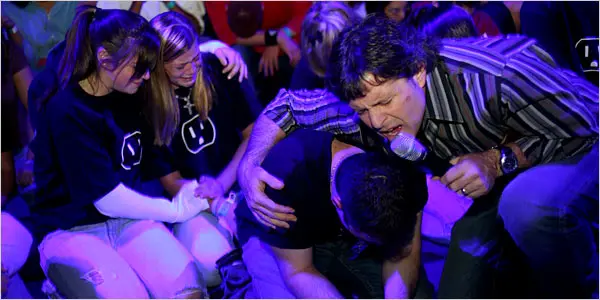
In this conversation, we speak with Mica Ringo—a survivor of Teen Mania Ministries, recently featured in the docuseries Shiny Happy People, where they spoke about surviving the abusive youth ministry, breaking free from its control, and helping others do the same. Drawing from their own experiences, Mica examines how the evangelical church manufactures submission, tracing how shame, fear, and repetition become neural architecture—how what begins as “faith” becomes psychological conditioning, exporting authoritarian logic from the pulpit to the state.
Shadowbanned: You’ve talked about growing up completely inside a Christian world—Christian school, Christian media, even “Christian night at Disney.” How did that shape your sense of the world outside it?
Mica: By the early ’80s, there was a whole separate culture—completely parallel to mainstream America—and that’s what I was raised in. We thought we were just living normal Christian lives, but we were being trained into an entirely different society. I didn’t know anyone who wasn’t Christian. I was scared of them. We were taught that nonbelievers were dangerous, that they were part of this world we had to keep ourselves separate from. So you end up with two groups of people living side by side, thinking they’re in the same country—but really they’re living by totally different values, different realities.
And you can’t argue someone out of that. When you’ve been raised in that kind of indoctrination, you can’t just logic your way free. It’s cellular. It’s in your nervous system.
Shadowbanned Magazine: How do you think that idea—saving souls—mutated into fear and demonization?
Mica: If you believe you’re saving someone from hell, it means they’re wrong, they’re broken, they’re evil in some way. It’s not a relationship of equals—it’s colonization.
And you assume everyone else is doing what you’re doing. You’re plotting how to convert them, so you assume they’re plotting to convert you. You’re living in this asymmetry—half the people think they’re in a holy war, the other half don’t even know there’s a war going on.
That’s why empathy dies. If God is love, and you’re at war with empathy, you’re at war with God. But the movement teaches that empathy is weakness. That’s how you get the war on love. The only way to stop it is to cut off the systems that keep creating it—the Christian schools, the music, the movies. That whole propaganda pipeline.
People call it “freedom of religion.” But when your religion demands my destruction, that’s not freedom.
Shadowbanned:Teen Mania’s hierarchy mirrored a kind of Christian-nationalist power structure. How did that authoritarianism take root inside the organization?
Mica: It’s all hierarchy. You think, who would want that? But people love being middle management. They love having a tiny bit of power over someone else—it gives them meaning in a system where they otherwise feel powerless.
That’s what Christian authoritarianism feeds on: broken people in a broken, capitalist world who are desperate to feel control. It gives you a false sense of purpose. But that’s not freedom—it’s projection. It’s people recreating externally the powerlessness and violence they feel inside.
And it’s seductive, because it looks like community. But it’s not real connection—it’s control dressed up as belonging.
Shadowbanned: Were you taught to equate religious devotion with patriotism or nationalism in explicit ways? Or even not in explicit ways?
Mica: It’s insidious because it’s tied to identity. You’re not just voting Republican—you are Republican. You are Christian. You are American. Those things fuse into one self-image. And nobody betrays their own identity.
For me, it took years to unwind that. I couldn’t even vote for Obama the first time. I just froze. It wasn’t that I believed the right-wing stuff anymore—it was that I couldn’t yet imagine being something else.
And it runs in families. My ex-husband’s parents were deep in it—precinct captains, canvassing their neighborhoods for Reagan in the early ’80s, organizing through their church. They were super into it. His whole family is super MAGA now, except for him. I pulled him out, but everyone else? Still in the cult.
That’s how it happens—it’s passed down. If your parents did it, you’ll probably do it. A few people get out, but most don’t. Based on my own experience, maybe five percent actually deconvert. The rest stay. It’s generational indoctrination.
Shadowbanned: You said it took a long time for you to commit to voting for a Democrat, even after you weren’t right-wing anymore. Can you expand on that?
Mica: Yeah. It takes a long time for people to move across the spectrum. You can’t just flip a switch. Some people can—and I love them for that—but for most of us, it’s slow. It’s painful. You’ve built your whole identity around one worldview, and unbuilding that is like surgery without anesthesia.
I wish I could’ve just woken up one day and said, “Nope, I’m done,” and instantly become the opposite. But that’s not how deprogramming works. You have to walk people through it, and we don’t have the fucking time. That’s part of the tragedy.
The levels of propaganda are so much worse now. Before, it was your whole life because it was your school, your church, your neighborhood. Now it’s your whole life because it’s on your phone—twenty-four hours a day, seven days a week—feeding you a personalized feedback loop of fear. It’s propaganda on demand, custom-fit to your trauma.
Shadowbanned: Looking back at the psychological and social conditions that made young people especially vulnerable to being recruited into a program like Teen Mania—beyond just parental influence—do you think there were other cultural forces at play in the world you grew up in?
Mica: Definitely. Most of the kids who ended up at Teen Mania’s Honor Academy—the ones who actually stayed and worked on the campus—came from really rigid Christian homes. There were a few who got sent there as a kind of punishment, like, “straighten this kid out.” They didn’t last long. And honestly, lucky them—they dodged a bullet.
What people don’t realize is how much the whole family and church community were invested in sending you there. You had to raise thousands of dollars to attend, and no teenager has that kind of money. So you’d write these monthly newsletters to your church supporters—telling them what you were learning, how you were growing—and they’d send donations to “keep you on the mission.”
That creates a complicated sense of obligation. How do you leave and tell those same people, “Actually, it was abusive”? You feel like you’re betraying everyone who paid for your experience. That’s part of the trap.
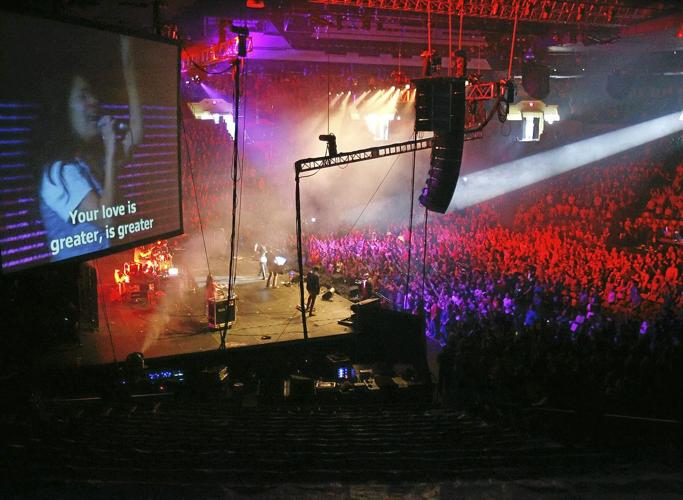
And for kids like me—completely sheltered, never exposed to the outside world—graduating high school meant facing this terrifying “big bad world.” I didn’t want that. I wanted to be surrounded by people like me, people who made me feel safe. So when I went to Teen Mania at seventeen, it felt like family, like purpose. There was community, intimacy, trauma bonding. You felt powerful—part of something cosmic.
It colonizes your nervous system. Leaving it is like an exorcism. People underestimate how deep that runs—it’s not just in your brain; it’s in your body. Those belief systems regulate you, and when they’re gone, you’re dysregulated. You feel unsafe, unmoored, like you’ve lost the rhythm of who you are.
We think people can just “change their minds,” but it’s not that simple. It’s a total rewiring. You’re destabilized. You realize everything you believed—everything you were taught—was a lie. That’s not just an intellectual shift; that’s trauma.
Shadowbanned: You seem to lead with a lot of empathy, which is rare in conversations about deprogramming. A lot of people rely on shame to try to get others out. Have you had any personal success stories with helping someone move away from that mindset? You mentioned your ex-husband earlier.
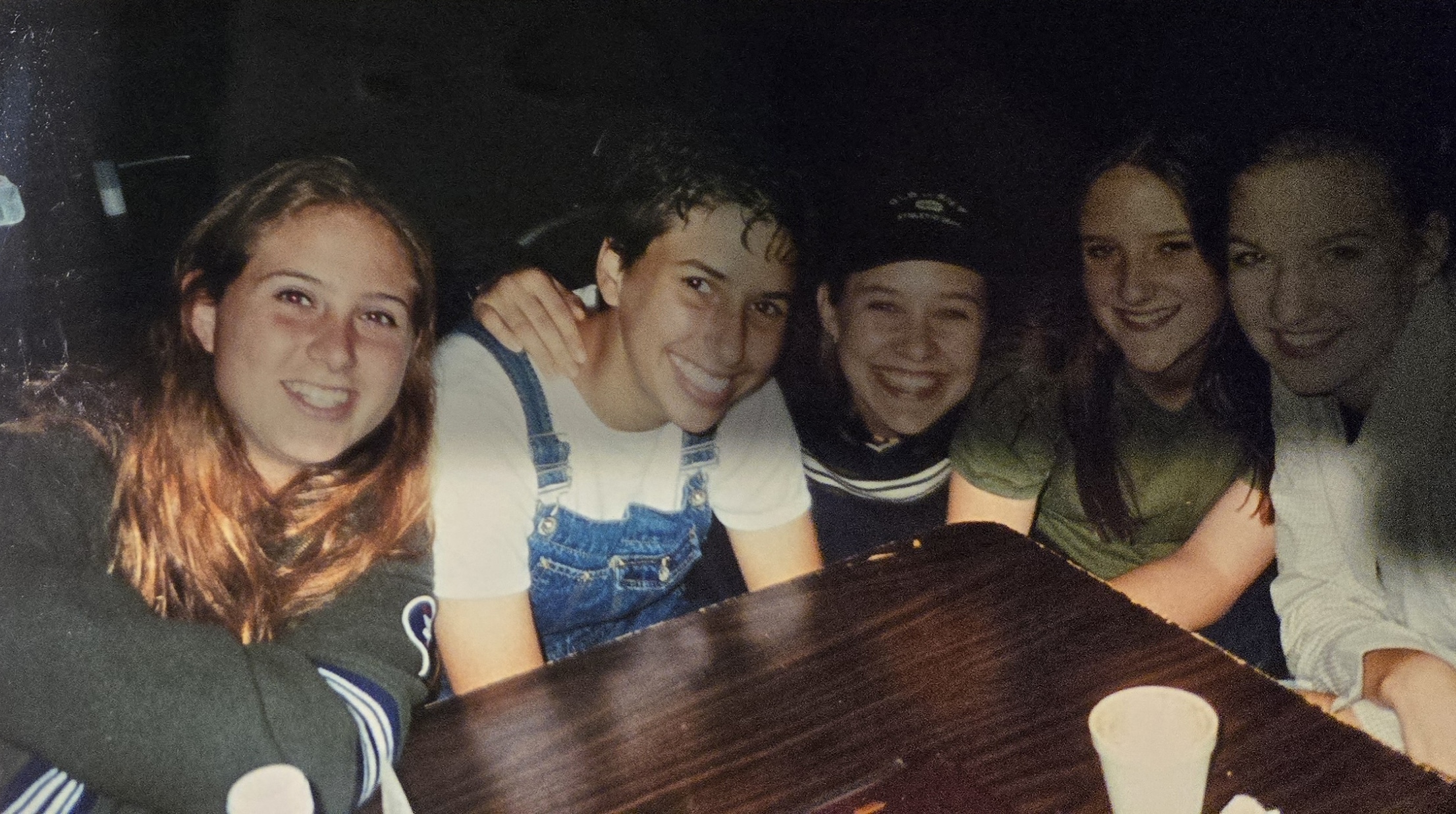
Mica: Yeah—ex-husband. He actually just got remarried last night. He sent me photos this morning, and I was like, Oh, you two look so happy. It’s sweet.
With him, it was a long process. When you live with someone, you can do it gradually—drip, drip, drip. He was motivated, too, because he didn’t want to lose me. But during the Obama–Romney campaign, it was rough. Our house was like a war zone.
The real breakthrough came when I got him to stop listening to right-wing radio. I made him quit Sean Hannity, and things got better after that. It was like pulling poison out of the bloodstream.
But more broadly, the shift for me came when I got free from shame. I spent so much of my life drowning in it—deep, deep shame. I went to conversion therapy for literally nothing. I hadn’t kissed a girl; I’d just looked at one. And I remember sitting there thinking, I don’t even know what I did wrong. I didn’t have time to process what was happening. I was terrified.
I lived in that shame for decades—shame for how I looked, who I was, what I felt. In my forties, when I finally started shedding it, I thought, You can’t make me go back to that prison. I’m free. And if I’m free, why would I ever put anyone else in that prison?
So no—I don’t lead from shame. I don’t even see it as useful. The people who need shame don’t have it anyway. Empathy, though—that’s harder. I’ve had to learn boundaries around it. You can’t empathize your way out of someone trying to kill you. Sometimes you have to believe people when they show you who they are, when they say they want you gone or in hell. You take them at their word and act accordingly.
And it’s not just religion—it’s the whole country. The United States runs on shame. Capitalism runs on shame. Your skin’s bad, buy this. You’re fat, buy that. You’re not enough—keep buying until you are.
It’s a hamster wheel. They get richer and fatter while you get anxious and depressed. There’s nothing in that for you. It’s all transaction. Once you see that, once you step off that wheel, you realize: they never meant for you to get better. They just need you to keep feeling broken.
Shadowbanned: yeah, that's a really good point
Mica: Totally. It’s a fantasy world, and because it doesn’t actually exist, they have to work so hard to make it seem real. None of it is natural. That’s why authoritarianism is necessary—because you can’t sustain something artificial without violence or control.
If it were natural for women to be “traditional wives,” you wouldn’t have to legislate our bodies or oppress us to keep us there. The whole system is one giant overcompensation for its own fragility.
Shadowbanned: How do you see that same kind of moral panic operating right now?
Mica: I mean, look at what’s happening with trans people. It’s DARVO on a national scale—deny, attack, reverse victim and offender. They accuse others of the very harm they’re inflicting.
The panic is simple: if trans people exist, if gay people exist, if women exist outside men’s control, the whole worldview falls apart. Their entire belief system depends on hierarchy—on someone being beneath them. So the existence of free people becomes a threat.
That’s why they create these panics. “Trans people are dangerous.” “Gay people are corrupting kids.” No, actually, trans people are good. Gay people are good. Women are good. People of color are good. Disabled people are good. The fact that they call us evil means they’ve inverted reality, inverted love.
If you believe God made all people, then all of us—everybody they’ve othered—are divine. But they’ve been propagandized for so long they can’t even see the truth anymore.
Shadowbanned: What are the similiarities you see with an organization like Turning Point USA, and the types of youth-oriented orgs you grew up with in the 90s and how do you think they have evolved?
Mica:Yeah. I would have been one of those Turning Point kids if I’d grown up with social media. That’s horrific to admit, but it’s true—and it’s important to say, because we’re all capable of that in the right circumstances. We like to think it could never be us, but it absolutely could.
Turning Point is scarier than Teen Mania ever was because it’s billionaire-backed. It has unlimited money and reach. Acquire the Fire was powerful—it shaped culture beyond the kids who actually went—but this new wave is everywhere. It’s algorithmic, omnipresent, piped into every home through TV and social media.
And you can’t bankrupt it. You can’t starve it out. The billionaires will keep funding it no matter how much harm it does. In that sense, it’s worse—because it’s an ideology with infinite money behind it. There’s no check, no natural endpoint.
Shadowbanned: Right. Yikes. What was the message surrounding dissent within the church?
Mica: There were both explicit and implicit rules against dissent. That’s actually when I started getting in trouble—because I’ve always asked questions when things don’t make sense. And they don’t want questions. You’re not allowed to ask unless you have authority.
You’re just a peon. You don’t talk back. Authority is God-given, mandated by God. You’re told your job is to submit. That’s beaten into you from childhood. And if you do question, you’re punished. Maybe not physically, but through social retaliation. You get frozen out, humiliated, labeled rebellious.
So what happens? People learn not to dissent. They watch what happens to the ones who do—people like me—and they stay silent. At Teen Mania we even had to sign a paper our very first week saying we would not portray, or allow Teen Mania to be portrayed, in a negative light. Everyone was terrified to talk.
Shadowbanned: And that obedience—does it extend to the leadership? For example, when there’s abuse or misconduct, are people allowed to question it?
Mica: Totally. If you question a leader, if you point out something’s wrong, you’re gone. Doesn’t matter what church you’re in—it could be evangelical, charismatic, Baptist, whatever—you’ll be pushed out. Sometimes they’ll do it quietly, like “maybe you’d fit better somewhere else,” but the result’s the same: you’re exiled.
Shadowbanned: Where does protecting children or vulnerable people fit into that?
Mica: It doesn’t. If protecting kids was actually a value, we wouldn’t have new church rapists in the news every single week. My friend in Dallas keeps track—she sends me articles all the time. “Here’s another one.”
I don’t know if people are bad at pattern recognition or just willfully blind, but at this point, what profession attracts pedophiles more than pastor or youth pastor? You’ve got people who want access to kids and no oversight. And the kids? They’ve been taught obedience from birth—don’t question, don’t speak up, trust authority.
So where do predators go? To churches. That’s the ecosystem. They find places where kids don’t have rights, where adults will defend abusers in the name of “forgiveness.”
Shadowbanned: That sounds generational, too—like cycles of silence and repression that repeat.
Mica: Exactly. After Shiny Happy People came out, this guy reached out to me—he’d left another big church group in Texas and found out there’d been decades of abuse. He started a website, and suddenly hundreds of survivors came forward.
It turned out there’d been this homoerotic “spiritual” cult dynamic inside the Assemblies of God in Texas—total grooming and exploitation masked as religious practice. One of the abusers had been in college ministry since the eighties, grooming kids that entire time.
It’s sinister, the way they twist faith. One of his victims was so thoroughly groomed he eventually brought his own child to this man—and the predator raped his kid. It’s that level of horror. And it becomes normalized, like it’s part of the system.
Luckily, that survivor eventually woke up, filed a lawsuit, and put the guy in prison. But that’s rare—especially for men. Most male survivors don’t talk about their childhood abuse until their fifties. So predators get thirty years to keep offending while the silence protects them.
That’s the real cost of a culture that worships authority and punishes dissent. It doesn’t just breed obedience—it breeds predators.
Shadowbanned: How do you think these institutions manage to maintain credibility—public trust—even after repeated scandals and exposures?
Mica: It’s laundering. Reputational laundering. They wash themselves clean through each other. It’s all about borrowed authority.
When someone like Ron gets in trouble, he calls on everyone in the Christian ecosystem to vouch for him: “Hey, everybody, endorse me, tell the world I’m still good.” And they do. They circle the wagons. Because if one of them goes down, it threatens all of them.
Predators protect predators. Always. Doesn’t matter if it’s church leaders, Wall Street guys, or politicians. Every predator class protects itself. But the prey? The prey doesn’t protect each other. We just breathe a sigh of relief—“Whew, they got him, not me.”
Shadowbanned: So that explains the predator side. But what about the followers—the everyday people? Why do they keep trusting these leaders even after seeing all the harm?
Mica: It’s the conditioning. They’ve been groomed to submit to authority their whole lives. They don’t even think they have the right to decide what’s true. So they just default to giving their power away—“Oh well, can’t do anything about it.”
But that’s the lie. You’re not powerless. They want you to believe you are. If your vote didn’t matter, if your voice didn’t matter, they wouldn’t try so fucking hard to take it from you.
That’s the whole mechanism of authoritarianism—convince you that you’re too small to fight back. Powerless people don’t resist; they accept. So they use fear, shame, ambition—whatever will make you betray your own instincts.
They’ll dangle status, security, belonging. “All you have to do is throw these people under the bus.” And a lot of people take that deal. We’re all going to face that choice at some point—whether to comply for comfort, or to risk something for truth.
Shadowbanned: You’ve touched on this already, but what do you think it would take to actually deprogram a mass movement like Christian nationalism?
Mica: First, you have to cut off the propaganda pipeline. That’s number one.
In an ideal world, we’d stop letting these massive Christian media networks use public airwaves to radicalize people. If you’re running “Christian television” that preaches hate and control, you don’t get to keep that platform. Same with the so-called “Christian textbooks.” Have you looked at them lately? They’re still teaching the same whitewashed garbage I learned as a kid.
From kindergarten on, we were told that Thanksgiving was this beautiful story of Americans and “Indians” living happily together. Total fiction. I remember reading that and believing it, and then in my twenties, learning the truth and feeling betrayed. That’s not education; that’s indoctrination.
It grooms kids from day one to believe America is perfect, chosen by God, incapable of wrongdoing. Why would you ever question authority if you think your country—and by extension your religion—is infallible? That’s patriotism as programming.
So no, we shouldn’t be teaching children that nonsense anymore. And it’s the same hypocrisy they project onto everyone else. These are the same people who don’t want Muslims having Islamic schools—but they want to use taxpayer money to run Christian ones. It’s the same thing, just rebranded.
If you stop brainwashing kids young, you don’t have to rescue them later. And that’s why they’re desperate to get those Christian curricula into public schools now. That’s the next frontier—turning every classroom into a little mission field.
Because once all those kids grow up on propaganda, who’s going to fight you? Who’s going to dissent? That’s the long game: control the story, and you control the people.
Shadowbanned: So finally, what warning would you give Americans about where this movement is headed if it’s left unchecked?
Mica: Safety doesn’t keep you safe. Not really. There are worse things than fear—like giving away your soul for comfort. If survival means surrendering your humanity, what are you even surviving as? What are you living for?
If you have to betray yourself or watch harm done to people you love just to stay on the “winning side,” that’s not safety. That’s complicity. And that’s not a life worth living.
I was raised to be a martyr, sure—but now I think about it differently. There are things worth dying for, yes, but more importantly, there are things worth living for. And that’s where the fight really is: refusing to give up your humanity, even when everything around you tells you it’s the price of survival.


.jpg)
.jpg)