
Hit Enter to Search or X to close
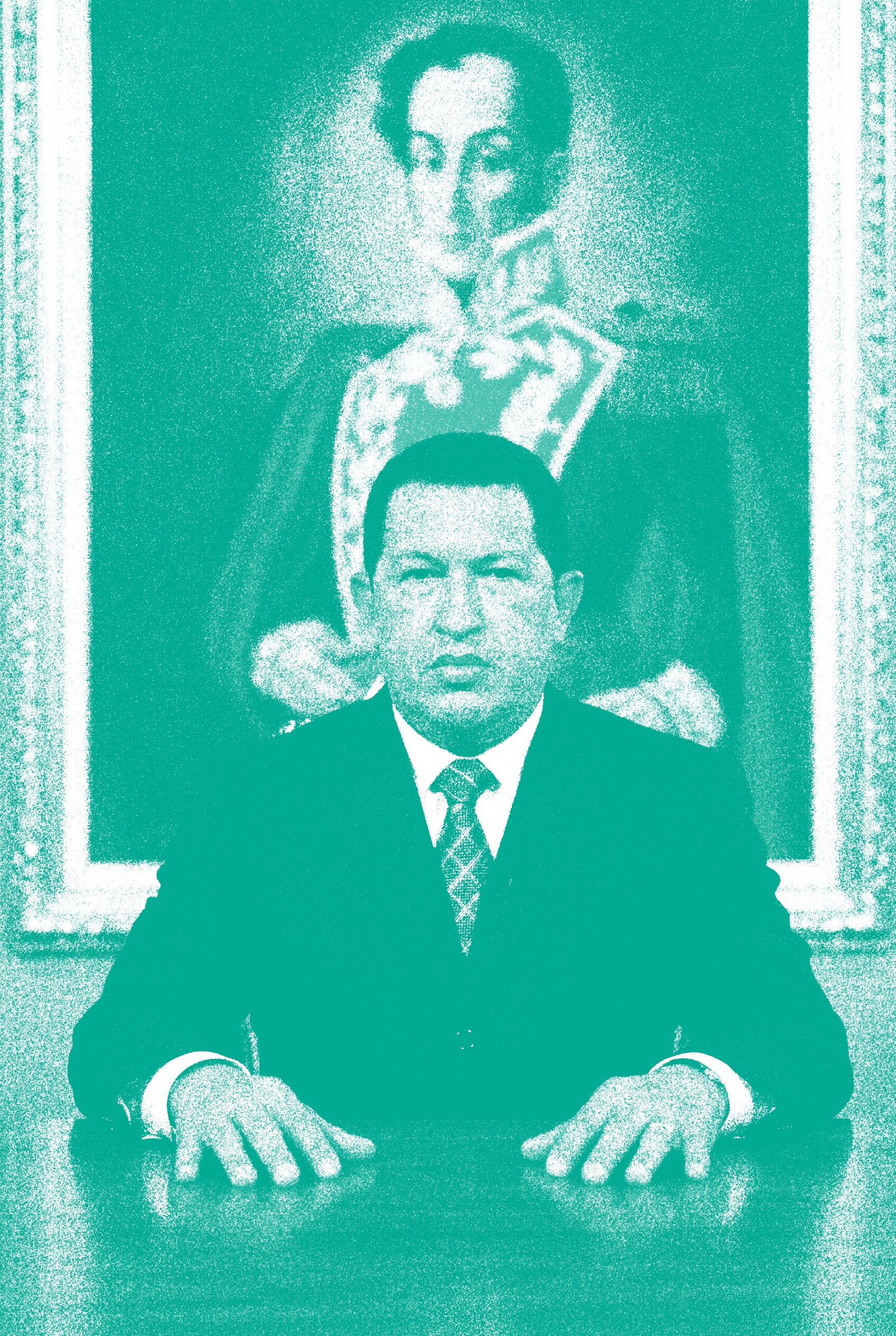
I am half Venezuelan. My dad emigrated to the United States in the 1980s, long before Hugo Chávez was a major political figure, chasing the promise of better opportunities and the "American Dream." Within the Venezuelan diaspora, I belong to a minority: someone who supports the Bolivarian Revolution. This perspective is likely shaped by the timing of my father’s departure. Although he built a life in the States, he and the majority of my family back in Venezuela remained steadfast supporters of Chávez. I have vivid memories of visiting family in Venezuela, where Chávez’s televised addresses, Aló Presidente, were always on in the background. Members of my family worked within his government and even served in the military under his command.
Yet, I didn’t always share this attitude. As a young person growing up in the United States, I often found myself confused by my family’s political leanings. I was a self-proclaimed news junkie, deeply tuned into liberal American media outlets like MSNBC and CNN. Immersed in that narrative, I struggled to reconcile the portrait of Chávez as an authoritarian dictator with the respect and admiration my family held for him. My perspective was one of a distant observer, looking at a country without sprawling suburbs and homogeneous malls and unconsciously assuming it was doing things wrong, that it needed to learn from the U.S.
Over time, however, my views underwent a profound shift. This change came not from abandoning a critical eye, but from deepening it, by directing that scrutiny toward my own country and its actions abroad. The more I learned about the realities of U.S. foreign policy, propaganda, and the consistent pattern of intervention aimed at undermining sovereignties that defy its influence, the more my understanding of Venezuela’s story transformed. I began to see the Bolivarian Revolution not as a simple media caricature, but as a complex project of sovereignty and social justice, besieged by immense external pressures.
Today, at a moment when many are finally seeking to listen to Venezuelan voices, it often feels like only one type of narrative is amplified. I am here to offer a more nuanced take. My position is a particular one. I possess a degree of objectivity, afforded by the distance of not living on the ground amidst the daily crises, and by residing at the heart of the empire whose actions have so dramatically shaped Venezuela’s fate. Yet, I am not entirely detached. I carry the subjectivity that comes from having loved ones who live with the consequences of both internal policies and external sanctions, who have experienced the revolution’s gains and its severe hardships. It is from this intersection, between the empire’s narrative and my family’s reality, that I attempt to understand the intricate and painful story of modern Venezuela.
What follows is an exploration of that story, an attempt to hold the complexity of a nation fighting for its sovereignty while grappling with internal challenges, all under the relentless shadow of external intervention. It is an argument rooted in the belief that the path forward must begin with a fundamental principle: respecting the Venezuelan people’s right to self-determination, free from the corrosive influence of sanctions, covert operations, and the hypocritical paternalism of powers that have yet to solve their own profound democratic crises.
To give some context: once upon a time, Venezuela had good relations with the United States. The country’s entire east coast is dotted with refineries designed specifically for Venezuelan oil, which is heavy and different from oil in the Middle East. Venezuela operated like a bourgeois republic with significant wealth disparity, which led to a socialist revolution and the presidency of Hugo Chávez. Chávez redistributed wealth, nationalized oil, and provided free education and healthcare. However, there was mismanagement, similar to many other countries. Like many single-resource-dependent nations, Chávez overly relied on Venezuela’s oil reserves and didn’t diversify the economy. Investment in technology for self-sufficiency was not prioritized, and the country depended on Western companies like Chevron to extract the oil. When Western relations soured due to Venezuela’s new socialist and anti-imperialist regime, its GDP tanked. It was too late for the Chávez regime to implement programs to diversify the economy for the working class. This is a significant issue that is often missing in leftist discourse.
The situation becomes even more complicated because the United States has been desperate to regain access to Venezuela’s oil. To maintain the ever-present Cold War agenda, they can’t allow any socialist or communist country to thrive, as it would undermine the propaganda we have been force-fed all our lives. If the U.S. were to work diplomatically with Venezuela, this mutually beneficial arrangement would allow Venezuela to thrive. It’s not just oil; with climate disasters becoming more prevalent, water is becoming another invaluable resource, and Venezuela ranks third in the world for natural spring water. Other natural resources like lithium are also abundant, which is why Elon Musk is tweeting about invading Venezuela. The U.S. has tried various methods to control Venezuela’s resources over the years, from attempting to assassinate Chávez and Maduro and planting NGOs to stoke dissent, to funneling money to candidates who represent U.S. interests and implementing harsh sanctions. These sanctions aim to make the population so desperate that they turn against the current regime. And you know what? It’s working.
The country is pretty much split: half wants to side with María Corina Machado, while the other half supports Maduro. With 19 parties contesting the presidency, Machado and Maduro have the most influence and resources to reach the people effectively. So, people are left choosing between the lesser of two evils. Sound familiar? It’s truly an imperfect situation for the Venezuelan people. Defend their sovereignty and suffer, or choose the U.S.-backed candidate and suffer.
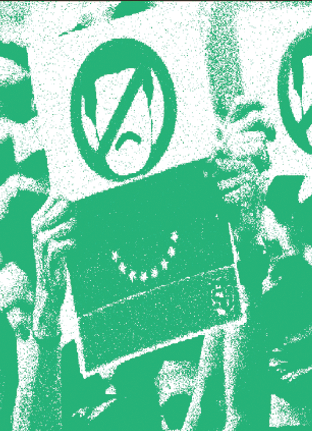
There is so much rhetoric about how the Bolivarian regime is brutal dictatorship, which I think is a gross misrepresentation. However, even if that were true, no one bothers to explain the "why." Most of the time, the media relies on age-old caricatures of oppositional leaders. "Power-hungry, crazy, corrupt" are common adjectives used. Another point often made is that they are "violating human rights" and people’s "civil liberties." These accusations are ironically alleged by a country whose government is pretty much known for being bought and paid for by the likes of Elon Musk and the Adelsons, the same country that is currently funding and assisting in a genocide against the Palestinian people. The hypocrisy is laughable, but more importantly the situation just is not that simple.
The United States ultimately empowered "authoritarian-like" policies in Venezuela through its constant interference in Venezuelan politics. If there was a foreign entity constantly trying to overthrow your government, you would take measures to prevent that very valid threat from occurring. In all honesty, though, the Bolivarian government, despite constant threats from the opposition, has been pretty conservative in its efforts to maintain control of the situation. For example, take María Corina Machado. She has been leading efforts to overthrow the Bolivarian government since it took power in the early 2000s. She was a prominent figure in the coup attempt to overthrow Hugo Chávez. This flagrant coup attempt and total disregard for Venezuelan sovereignty were shown in the 2002 documentary produced by two Irish nationals called The Revolution Will Not Be Televised. María and the opposition were, of course, backed by U.S. forces.
Mind you, even if you believe that Chávez or Maduro were not democratically elected in their subsequent terms, there is no doubt that Chávez won the election in the year 2000. If there was a candidate in the United States who collaborated with China to overthrow the democratically elected leader, do you think they wouldn’t be locked away in jail for the rest of their life and tried for treason? Yet, we have María Corina Machado, who has continued to be a political player and continues to plot and scheme with the United States to undermine Venezuela and its sovereignty. Not to mention the fact that the opposition controls most of the media within the country. The Bolivarian government has left itself vulnerable for years to outside influence, all to prove that it is not a dictatorial society.
I have heard so many people, even my own family, say they are violent with protestors, that their friends have been killed, that Maduro is a dictator. As someone who is often in the streets and has clashed with the police, I do not approve of excessive force against protestors or the restriction of the right to protest freely. However, as much as I believe in these values, and regardless of what I have been taught about the United States’ commitment to those rights, the reality is that I have seen reports of plenty of protestors dying at the hands of the state here. I have seen my own comrades beaten by the state. I know that political prisoners exist here, as well as political assassinations. We have Leonard Peltier, Malcolm X, Julian Assange, Edward Snowden. Even more low-profile people who have been forgotten, like Manuel Esteban Paez Terán, also known as Tortuguita, a Venezuelan environmental activist and eco-anarchist who was shot and killed by Georgia State Patrol troopers during a raid of the Stop Cop City forest encampment in Atlanta, Georgia, on January 18, 2023.
Authoritarian behavior is not foreign to either U.S. political party; when the state feels threatened, it acts. The key distinction lies in the narrative of American exceptionalism. This propaganda encourages citizens to view repression abroad as inherently "other," creating a hypocritical moral cover that, in turn, justifies ongoing U.S. influence and intervention in those regions.
I think it’s actually more impressive that people in Venezuela are so empowered to take such radical action. If anything, it shows a lack of fear of the government. In contrast, here most of us would never roll up with Molotov cocktails because we know exactly how ruthless and authoritarian the state is. Also, the fact that we do not have any third parties supporting us, providing us money and weapons to help overthrow and cause political chaos, plays a part as well.
Over the past several years, as the veil of democracy has been lifted in the U.S., I have ironically found that my political position and my family’s position in Venezuela have completely flipped. For most of my life, I have been very tapped into liberal politics. MSNBC and CNN were always on. I was running high on a liberal-left superiority complex with no sense of class consciousness. I was so propagandized by the media about Chávez being an evil dictator and the "third-world" conditions of Venezuela. Since there weren’t sprawling suburbs everywhere and homogeneous shopping malls, I assumed Venezuela was doing things wrong and needed to learn from the U.S. I didn’t see what an achievement the Bolivarian Revolution was, even if it wasn’t perfect. I didn’t see why my family was so supportive of this guy shitting on my "perfect country."
Please know that I am truly horrified by my previous beliefs. I was a teenager at the time, growing up in an affluent white neighborhood outside of D.C. I thought most things, including myself, that were "different" were in some way or another "not right." My dad would try to tell me that I wasn’t seeing the whole picture. However, as a teenager, I pretty much rejected every point of view my parents held. I didn’t forget the lessons my dad was trying to teach me about American values and propaganda. He planted a seed that needed to be watered. Nowadays, when I speak, I invoke the same language as Chávez. Now, when I listen to his speeches, I feel seen. I laugh at his criticisms of the U.S. I respect his bravery when he speaks out against U.S. imperialism.
However, on the flip side, most of my family has fallen out of love with the Bolivarian Revolution. Between losing loved ones to crime, pensions being compromised by inflation, the cost-of-living crisis, and more, they are worn down. They just want life to be livable again. They want to stop being the collateral damage of a global ideological fight.
I sympathize with them, but I also know this is the outcome of a highly effective U.S. propaganda campaign. Sanctions have deliberately targeted essentials like medicine and even tampons to create desperation. Meanwhile, opposition-aligned media exclusively blames President Maduro.
Although I don’t want to be at odds with what some of my family on the ground wants, especially while I am basically spectating from the comfort of the empire, it would essentially require me to forget about everything I know about U.S. counter-intelligence operations to provoke regime changes, from Radio Free Europe to Operation Gladio. I can’t help but conclude that these beliefs are not entirely their own, that they are being manipulated, and are only pawns in a transnational oligarchal game.
My dad used to always tell me that in Venezuela there is a saying: "Sure, in other countries, there will be a leader who tells you what to do, but in the United States they will brainwash you, and you will do it happily." It seems like the United States has effectively learned how to weaponize the same techniques it uses on its citizens to gain influence over populations in the Global South.
So, where does that leave me, a Venezuelan leftist in the heart of the empire? In a place of difficult solidarity. I align myself with the principle of sovereignty, not with any single outcome dictated by external pressure. My support is for the Venezuelan people’s uncoerced right to self-determination—be that a renewed Bolivarian project, a new political path, or something in between. While I admire the revolution's original mission and understand the siege that has warped its progress, my ultimate loyalty is to the democratic will of a population allowed to breathe freely.
This means my role is not to prescribe solutions from afar, but to fight the interference that makes authentic solutions impossible. I must advocate, from within the empire’s belly, for an end to the sanctions that are acts of collective punishment, for an end to the covert operations that poison political discourse, and for an end to the hypocritical lectures from a nation failing its own people. I can hold space for my family’s desperate desire for normalcy without endorsing the U.S. playbook that intentionally creates the crisis they wish to escape.
The path forward begins with a simple, radical demand: the United States must get out of the way. Let Venezuela’s resources benefit its people. Let its political conflicts be resolved by Venezuelans, without foreign-funded destabilization. This is not about endorsing Maduro or Machado; it is about endorsing the basic right of a nation to manage its own affairs, flaws and all, just as we insist on doing in the United States despite our profound failures.
Our energy is better spent confronting the authoritarianism and oligarchal control growing within our own borders, rather than projecting it onto others. The most genuine solidarity we can offer is to dismantle the machinery of intervention and face our own reflection. The Venezuelan people have endured enough of our empire’s "salvation." It is time to respect their intelligence, their resilience, and their right to forge their own future, unchained from our ambitions.

.jpg)
.jpg)