
Hit Enter to Search or X to close
“It was very weak and ineffective at disrupting Amazon’s operations. In three hours, we let in two union drivers and one UPS manager with no resistance. Local officials didn’t seem to care. Even simple tactics—like talking to truckers as they entered—weren’t used. One warehouse worker actually pulled over, eager to learn more about organizing efforts, and only I and another member spoke to her. A huge missed opportunity.”
Amazon ended without a clear resolution, but the union hinted at future actions with a simple “Stay tuned.” Beginning on Thursday, December 19, the Teamsters called strikes in response to Amazon’s failure to meet their demand to come to the bargaining table four days earlier.The Teamsters declared it “the largest strike in Amazon’s history.”
In an official statement, the union’s General President Sean O’Brien said:
“If your package is delayed during the holidays, you can blame Amazon’s insatiable greed. We gave Amazon a clear deadline to come to the table and do right by our members. They ignored it. These greedy executives had every chance to show decency and respect for the people who make their obscene profits possible. Instead, they’ve pushed workers to the limit—and now they’re paying the price. This strike is on them.”
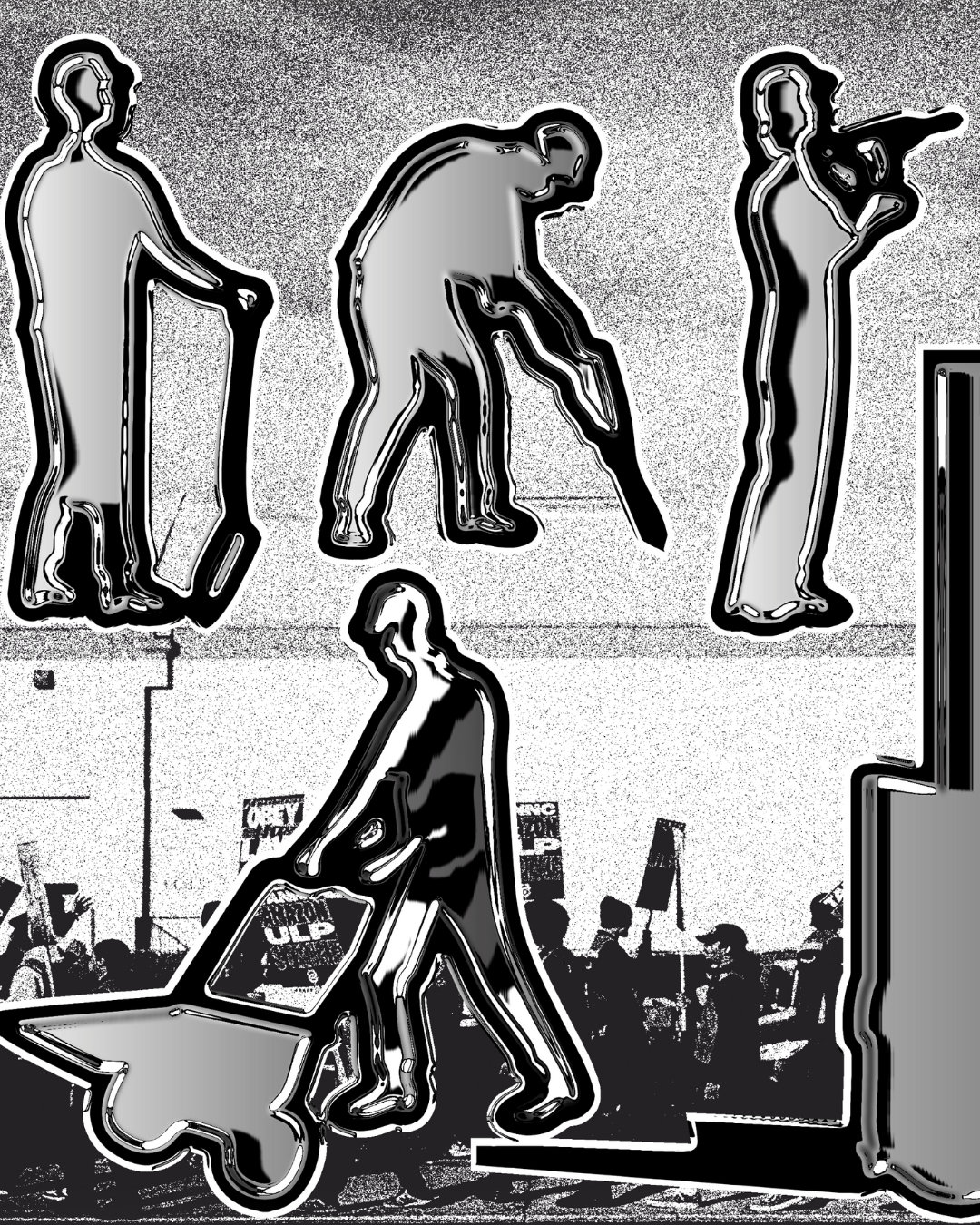
The Teamsters called for strike action at eight locations across four states, including Amazon centers in Queens and Staten Island, New York; Atlanta; Southern California; San Francisco; and Skokie, Illinois. They claim to represent the drivers or warehouse workers at these sites through elections or card check. In addition, the Teamsters sent Unfair Labor Practice (ULP) pickets to scores of Amazon locations across the country. These pickets were mostly made up of local officials and union stewards with little or no direct connection to Amazon. The union has not publicly stated how many locations were picketed or what the results were. The Teamsters also called on community supporters to join the picket lines nationwide.
On one level, the Teamsters’ actions were bold. But their sparse presence—possibly representing only one percent of Amazon’s entire U.S. workforce—has raised serious questions. Among them: Was there any tangible goal beyond the Teamsters maintaining their franchise at Amazon? And what are the next steps, if any, When I spoke to longtime labor lawyer and negotiator Joe Burns, author of several influential books on strike strategy, about the Teamsters’ efforts, he told me:
“While it is hard to tell due to the lack of credible reporting, these ‘strikes’ seem very similar to the approaches used in fast food, ride-share, and Walmart over the last decade or so— where the union would put out press releases claiming a giant corporation had been struck. This would gather publicity and generate some excitement on the left but did not impact production or draw out more than a tiny fraction of the workforce. The actions are really more like informational picketing with a media spin of a strike tacked on to it.”
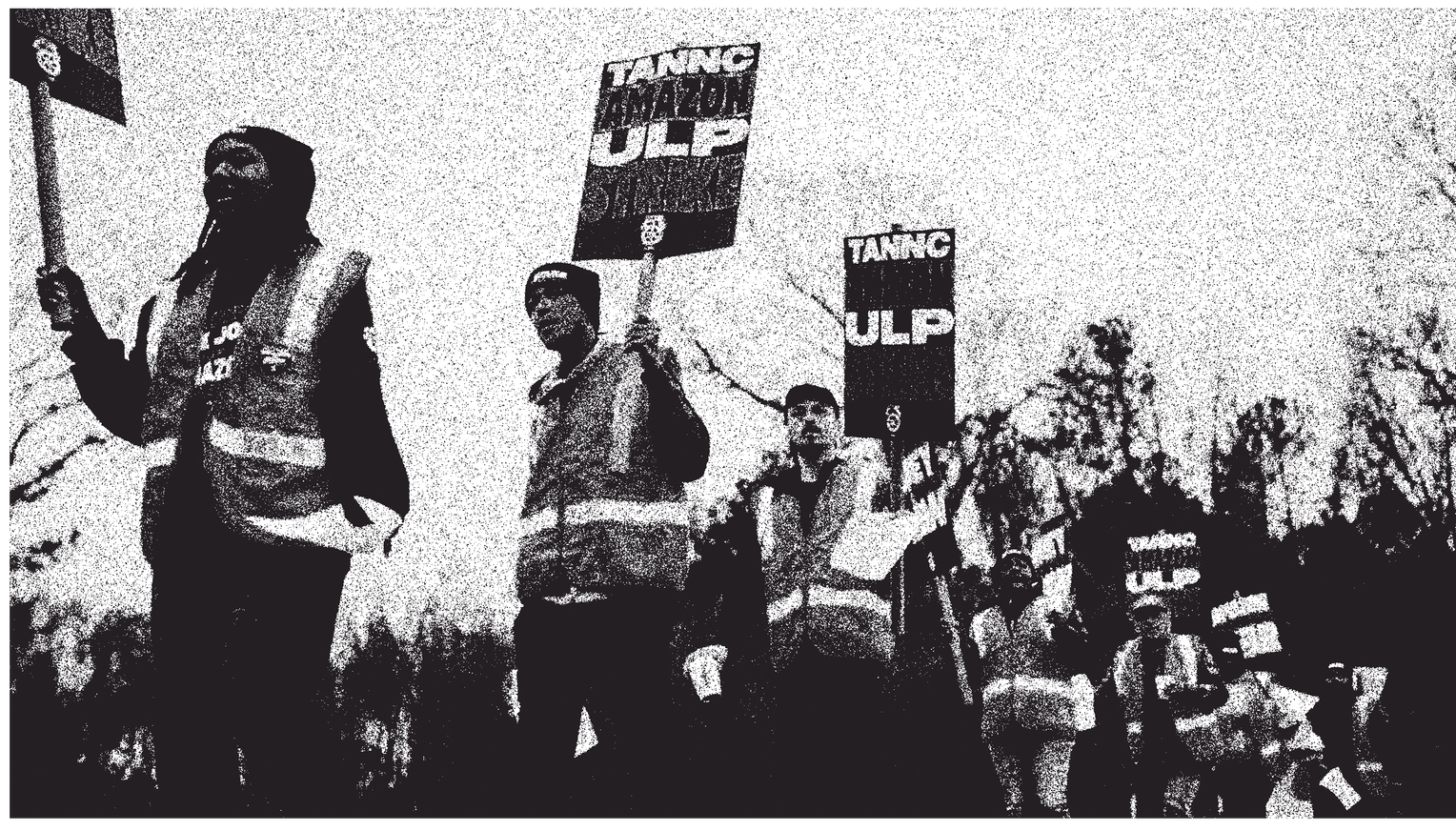
The problem is, we have over a decade of evidence showing that such efforts don’t really work. They gather press and can help unions or liberal groups pass labor legislation, but they’ve shown little success in achieving lasting union organization. It’s hard not to agree with Burns’ assessment. So why are the Teamsters recycling a failed strategy? Or is something bigger coming—perhaps even an existential threat? At the Teamsters’ thirtieth convention in 2021, delegates overwhelmingly passed a series of resolutions aimed at combating what then-General President James P. Hoffa called the “existential threat” Amazon posed to the union.
The special resolution, Building Worker Power at Amazon, stated:
“Amazon is changing the nature of work in our country and touches many core Teamster industries and employers such as UPS, parcel delivery, freight, airline, food distribution, and motion picture, and presents an existential threat to the standards we have set in these industries... We fought for workers’ rights to organize and build power any way we could, including shop floor strikes, city-wide strikes, and actions in the streets.
It concluded:
“Building worker power at Amazon and helping those workers achieve a union contract is a top priority for the Teamsters Union... and the Union commits to fully fund and support the Amazon Project, to supply all resources necessary, and to ultimately create a special Amazon Division.”
The Teamsters followed through, creating an Amazon Division and appointing California Teamster leader Randy Korgan as its first director— initially by Hoffa, and then reappointed by his successor Sean O’Brien. Yet, considering Amazon was labeled an existential threat more than three years ago—and arguably a decade too late—it’s remarkable how little the Teamsters have actually done. The most significant breakthrough at Amazon was not led by the Teamsters at all, but by the independent, underfunded Amazon Labor Union (ALU), which made headlines with its victory at the JFK8 warehouse in Staten Island. That success turned ALU leader Chris Smalls into a media figure. But despite an initial burst of interest, the ALU failed to replicate its win and eventually went into crisis. Facing decline at JFK8, the ALU negotiated a merger with the Teamsters as an autonomous unit.
I took no position on whether they should join the Teamsters, but I cautioned that it wasn’t a silver bullet:
“Some ALU reformers and supporters argue that to succeed at Amazon, the ALU needs a ‘big gun’ backing it. While understandable, recent history doesn’t suggest this is the solution. In April 2021, the RWDSU—affiliated with the massive UFCW—lost 2 to 1 in a union election at Amazon’s Bessemer, Alabama facility, despite a successful organizing record in the South. Now that the ‘big gun’ has been fired—what were the results?”
Understanding these strikes is made more difficult by the lack of detailed reporting from the labor left, including outlets like Labor Notes and Jacobin.
As Joe Burns pointed out:
“Labor reporting should focus on participation levels—how many workers walked off, not just what the union’s press release says. According to the New York Times, only 100 workers joined the strike at Staten Island’s massive facility. That’s a tiny fraction. Other reports show similarly low turnout, mostly outside Teamster officials and supporters, not Amazon workers."
In some cities, particularly in major media markets, the Teamsters worked to boost picket-line attendance. But in smaller remote locations, the absence of Amazon workers were glaring. I asked several rank-and-file Teamsters and union activists who visited picket lines for their firsthand accounts. Most asked to remain anonymous or use pseudonyms.
Kat from Florida, active in Teamsters Mobilize, said:
"“It was very weak and ineffective at disrupting Amazon’s operations. In three hours, we let in two union drivers and one UPS manager with no resistance. Local officials didn’t seem to care. Even simple tactics—like talking to truckers as they entered—weren’t used. One warehouse worker actually pulled over, eager to learn more about organizing efforts, and only I and another member spoke to her. A huge missed opportunity.”
Alyx from Salem, Oregon reported:
"“Only retirees were on the line. No visible participation from current Amazon workers. The facility was remote, with little public exposure. Picketers didn’t impact access. I saw no effort to build any internal organization before this.”
Joe from Southern California offered a more positive take:
"“We had about 45–50 Amazon drivers on the picket line. Some were good at talking to coworkers. The local Teamster union helped move workers between picket sites. The actions I brought visibility and gave workers a platform—this felt like a structure test.”
Karl, a long-time union steward in Oklahoma City, said:
“We picketed two facilities, talked to maybe 20–30 workers out of 4,000– 6,000. None joined the picket, but some gave contact info and showed interest. The local union did little prior organizing. It remains to be seen if they’ll follow up.”
Despite Amazon’s claim that operations weren’t disrupted, these holiday-time actions did damage the company’s reputation. Media coverage highlighted the low pay and hazardous conditions faced by workers. But we’ve been here before—public shaming hasn’t changed Amazon’s. ways. With just around one percent of the workforce participating, there’s clearly a long way to go.
This isn’t to discount the courage of those who did strike. Hopefully, it inspires more action.
But history shows publicity strikes rarely lead to sustainable organizing. A real analysis f participation levels is needed—yet unions often declare victory prematurely. Ultimately, we must ask: What kind of labor movement do we need to organize a corporate giant like Amazon? Without picket-line militancy, solidarity tactics, and mobilization across the entire labor movement, organizing Amazon may remain a dream deferred. The U.S. left repeatedly claimed we were on the eve of the biggest strike in modern history. That strike didn’t happen. This has left hundreds of young radicals—many DSA-affiliated—demoralized after joining UPS in hopes of transformation. We now face a much tougher political climate under a Trump administration poised to attack trade union rights—including the Teamsters—despite O’Brien’s personal ties to Trump. The political terrain can shift quickly. But it will take a clear-eyed assessment of what happened at Amazon—and a reimagined, bolder labor movement—to seize the next opportunity.

.jpg)
.jpg)