
Hit Enter to Search or X to close
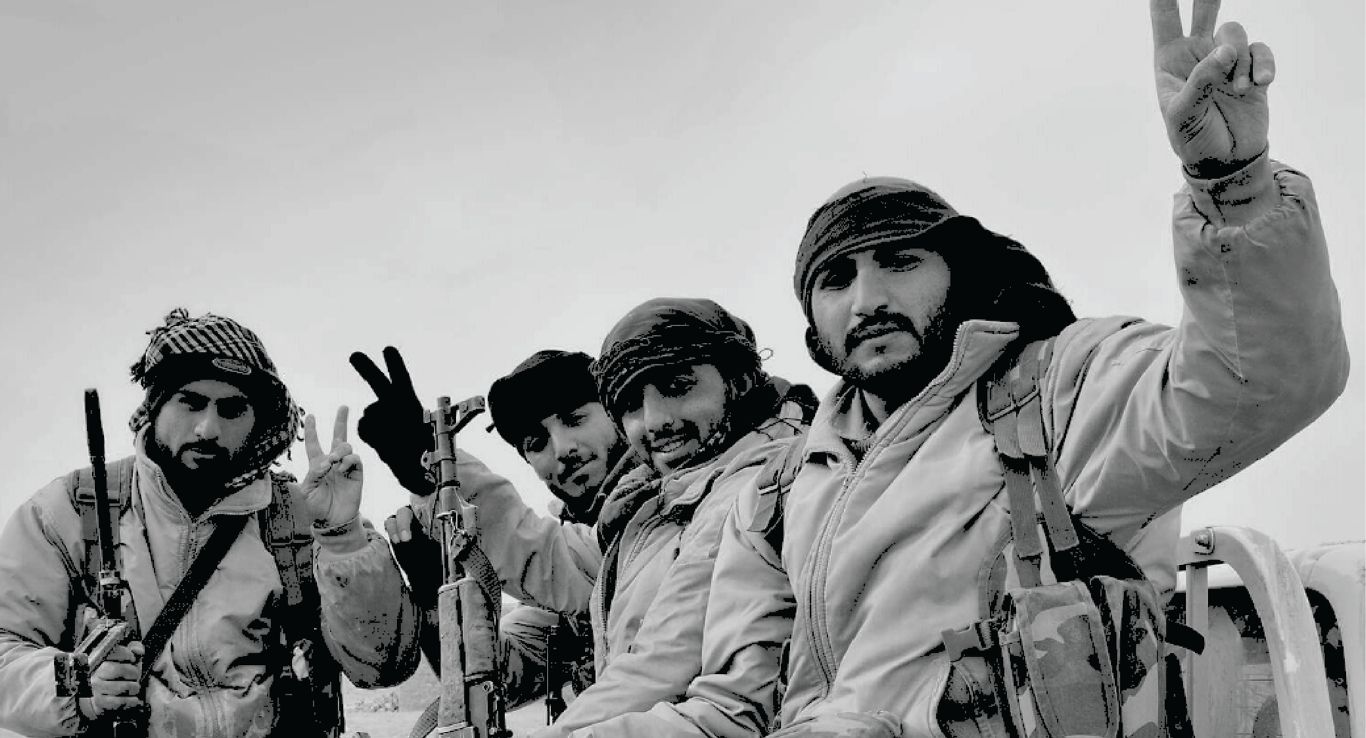
Between late 2025 and early 2026, the Kurdish-led autonomous region of northern and eastern Syria, also known as Rojava, has faced one of the most dangerous moments in its 14-year-long history. After the fall of Bashar al-Assad’s regime in late 2024, hopes soared among Kurds for rights, dignity, and self-rule. But what followed was far from straightforward. Armed groups like Hayat Tahrir al-Sham (HTS), which seized power in Damascus in December 2024, unleashed anti-democratic violence that deepened chaos and exposed a brutal truth: international silence often means tacit allowance of violence against the Kurdish movement.
The wave of HTS repression in 2025 marked by violence, discrimination, and repeated assaults on civil liberties struck hard at Kurdish communities that had spent over a decade building grassroots governance, women’s liberation structures, and democratic self-administration across Rojava. Instead of sparking global outrage or substantial intervention, these assaults were met mostly with diplomatic rhetoric and cautious calls for “stability.” In this vacuum of moral leadership, Kurdish people did something few predicted — they transformed grief and betrayal into a broad and dynamic mobilization that has reshaped resistance politics across the region.
By late December 2025, intense fighting between the Kurdish-led Syrian Democratic Forces (SDF) and HTS-led government forces erupted after months of fruitless negotiations over how Kurdish autonomy would be respected in a new Syrian order. A long-planned integration deal collapsed as Damascus and the interim government sought to impose terms that undercut Kurdish self-rule, leading to open hostilities in early January 2026.
In the face of stark military pressure where the Syrian army advanced from Aleppo into Kurdish districts and threatened key cities like Raqqa and Deir ez-Zor, ordinary Kurds responded not with despair but with collective determination. Residents across Rojava immediately answered the SDF’s call for a general mobilization. Communities in and around Kobani, Qamishli, and Hasakah declared their intent to defend their neighborhoods, their way of life, and the revolutionary gains of the past fourteen years.
Democratic Confederalism Grounds Rojava’s Resistance
What makes the resistance in Rojava unique is not only did the Kurdish movement defeat ISIS on the battlefield. It also reorganized social, political, and economical life in the region under wartime conditions in accordance with the model of Democratic Confederalism developed by the Kurdish people’s leader, Abdullah Öcalan.
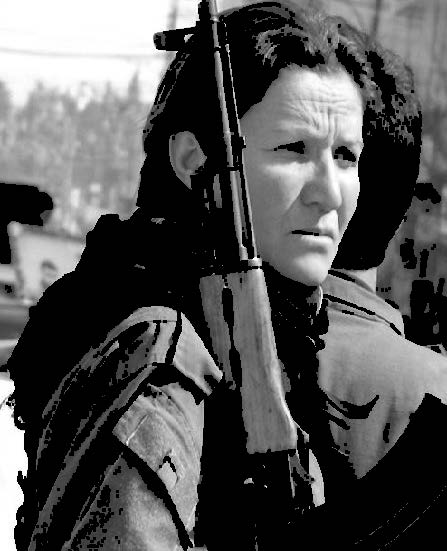
Since 2012 until today, popular structures of direct democracy have been established at different levels across Rojava. Women have formed autonomous organizations in many different aspects of life, such as councils and armed defense units, and have been leading the democratic transformation of the region. This aligns with another principle of the revolution, Jineology, or the social science of women and their liberation. Ecological concerns, rather than capital accumulation, have been central to economic reorganization in northeast Syria as well — a strong contrast to the neoliberal global market today.
With this foundation, the recent Kurdish-led resistance was not a passive defense force of a few fighters. It was a societal mobilization. Women, youth, workers, and rural communities, long accustomed to organizing around Öcalan’s model of Democratic Confederalism, took to the streets to support local defense units, secure supply lines, and keep the social fabric stitched together even under the threat of aerial bombardments and ceasefire violations.
It is precisely this grassroots mobilization, as opposed to military might, that upended expectations and frustrated strategic plans to erase Kurdish autonomy. Even where ceasefires were brokered, such as those in late January and early February, Kurdish vigilance remained high. Shelling continued around places like Kobani despite the agreements, reminding the world that peace is more than mere paper stopgaps.
What is especially striking is how this spirit of resistance spread beyond the borders of the region. Kurdish diaspora networks, cultural associations, and political movements across Western Asia, Europe, and the United States organized hundreds of marches and political actions in short time-span. In mid-February, nine cities across Rojava held mass gatherings to commemorate the anniversary of the capture and imprisonment of Abdullah Öcalan in 1999, a symbolic moment that drew widespread participation and reinforced a shared political identity of resilience and defiance.
These mobilizations not only memorialized past struggles but also reaffirmed a living commitment to collective resistance. In the face of global silence or hesitant diplomatic statements, Kurdish communities have taken ownership of their narrative to show that they are not victims awaiting rescue but actors shaping their destiny in real time. This shift from defensive survival to proactive assertion has energized political discourse and encouraged international solidarity movements to reframe their approach to the Syrian crisis.
Negotiations Versus Reality
Despite the heavy pressures of war, displacement, and territorial losses, the Kurdish political leadership has continued to push for negotiated recognition of Kurdish rights. Negotiations resumed under strong international mediation with U.S. and French involvement to stabilize a ceasefire and chart a pathway to political integration — still while preserving Kurdish collective rights. Beginning in early February 2026, Syrian government security forces entered cities like Hasakah and Qamishli under joint frameworks with the SDF aimed at phased institutional integration.
This complex dance of guarded ceasefires, cautious diplomatic engagement, and grassroots unrest speaks volumes about the resilience of Rojava revolution. Rather than being extinguished by the reassertion of Syrian central control, Kurdish forces leveraged the contradictions of international politics to win concessions. This included assurances that Kurdish local governance, language rights, cultural expression, and civil administration remain intact even as military integration talks progress. Such outcomes were unimaginable only a few years ago, when Kurdish political structures were fringe actors in global diplomacy.
While political negotiations and mobilizations grab headlines, everyday life tells a harsher story. Tens of thousands of displaced families remain stranded after camp closures in northeast Syria and the abrupt moves by government forces. This has left many vulnerable to exploitation, trafficking, and recruitment by armed groups. Humanitarian conditions have worsened, with camp closures exposing deep structural neglect.
In Kobani and surrounding areas, continued shelling and artillery fire have exacted a heavy toll on civilian life. Reports of entire families killed and widespread infrastructure damage deepened the climate of fear and uncertainty for civilians already traumatized by years of conflict.
Yet, through every setback of territorial encroachment and geopolitical abandonment, the Kurdish response has been resilience as opposed to retreat. Networked civil society structures, cooperatives, and women’s councils have sustained communities where others falter. Even as ISIS and other hostile actors seek to exploit instability, local Kurdish internal security units have conducted successful counter-operations and dismantled jihadist sleeper cells to protect civilians.
Transforming Grief Into Action
What is happening in Rojava is not merely a regional skirmish, but a political renaissance. The Kurdish people’s collective refusal to cede the revolution’s gains, despite uneven international backing and powerful regional adversaries, reflects a deep conviction that self-determination cannot be negotiated away on an actor’s timeline.
Looking forward, 2026 promises to be another turbulent year for Rojava and Syria. The integration of Kurdish institutions into the broader Syrian state is likely to continue under a fragile ceasefire framework. Yet it need not mean the end of Kurdish autonomy, so long as political guarantees and constitutional protections are codified in writing, rather than vague assurances.
Moreover, grassroots mobilization is not fading with the winter winds. Kurdish social movements are cementing networks of solidarity from within and across borders, expanding the idea that popular power is the true source of political legitimacy. Rural militias, community defense councils, and united protest actions show that Rojava’s society is still actively shaping its political future rather than passively waiting for external actors.
The catastrophic period from December 2025 to February 2026 has shown that Kurdish communities in Rojava are not just survivors of war but stakeholders in a dynamic political transformation. Faced with repression, territorial pressures, and global silence, they have turned mourning into mobilization and territorial collapse into renewed political engagement. Rather than fading into historical tragedy, the revolution in Rojava remains alive, fiercely defended by those who refuse to let it die. Through this resilience, the Kurdish struggle continues to redefine what autonomy, resistance, and collective self-determination can look like in a fractured region where, too often, the voices of the oppressed are ignored until they rise as undeniable forces of history.
Freedom of the press is under attack! Support our work and let us continue to uplift marginalized and working class voices. Become a member or subscribe to our print publication today. Tiers range from $3-15/month.

.jpg)
.jpg)