
Hit Enter to Search or X to close

I had to drive to a film shoot in Deir Ghassaneh, a village towards the north west of Ramallah. Overconfident in my knowledge of the roads, I was sure that I could take an alternate, more scenic route. I wanted to pass by my village to the south of Nablus and drive through a new area, by Salfit, that I had never visited before. I looked at Google Maps and it seemed simple enough. I could cut through Yasuf, and if not Bruqin, and if not Zawiya, to get to Deir Ghassaneh. As it turns out, every single one of those villages had their gates shuttered by occupation forces. I was fucked. I kept driving, past the settlements of “Ariel” and “Kiryat” this and “Ma’ale” that.
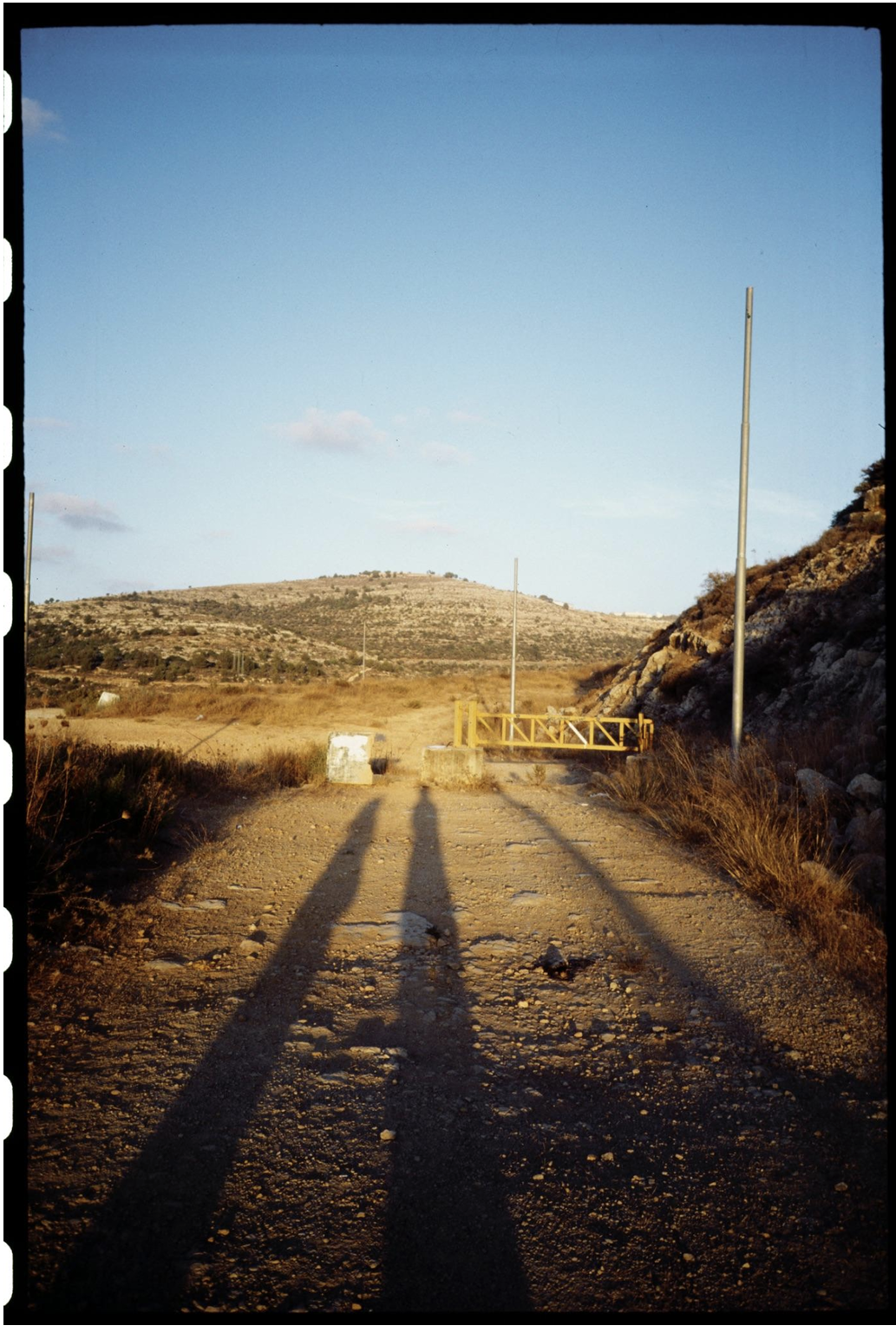
The traffic became increasingly Hebrew in nature. The white license plates that indicated Palestinian drivers grew more scarce, with each white plate that I tailed eventually turning off, until there was only a sole Arab car remaining. Every intersection we arrived at, I was pleading that he would make the same turn as me. The settlements grew denser and eventually I was nearly at the border to bdakhal, “Israel” proper; at this point I was panicking. The guard tower and yellow gate that signify the entrance to the village of Aboud is what finally lowered my blood pressure. I made eye contact with the soldier in the tower as I drove by. No longer were there neat suburbs and green parks towering over the road, but cracked streets with trash blowing across them under concrete buildings with their laundry hanging from the windows. I have never felt more happy to see potholes and wild dogs. I had never felt more like a loser.
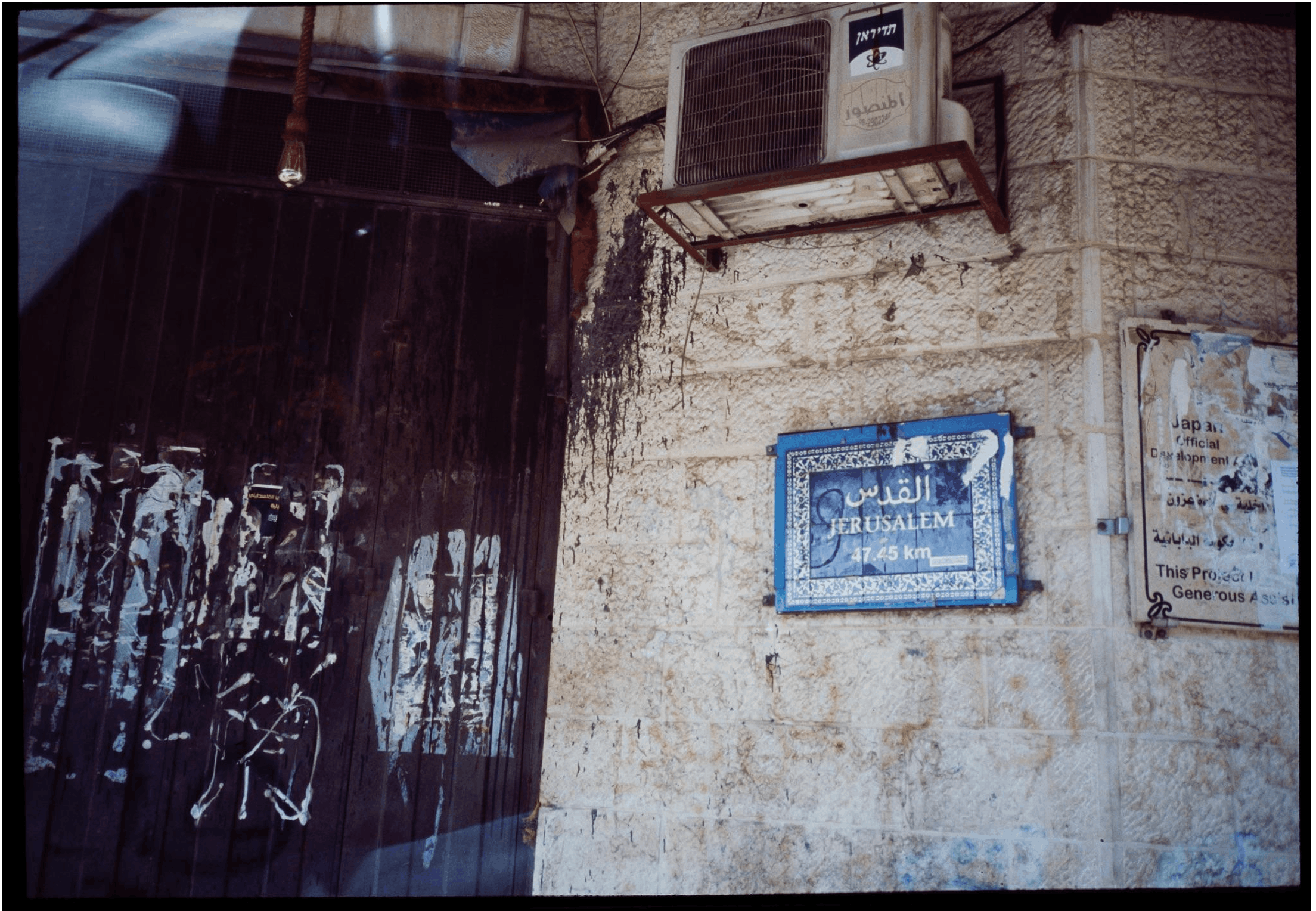
In John Berger’s 2007 Hold Everything Dear, he described the Palestinian condition as an "undefeated despair.” I’ve lived most of my life in the United States, watching the situation of my people grow more dire; remotely. I hear of operations or martyrdoms via Instagram direct message or a WhatsApp call – if I’m lucky. The distance and pixelation ensures a defeated despair. When you’re on the ground, settler attacks and army raids feel so much smaller, yet the situation is much more hopeless. The young Jewish thugs throwing rocks at our car are funny from the passenger’s seat, much less threatening than when I see them later on Instagram Reels. Each interaction with the military or the settlers becomes a challenge, almost like a puzzle. When the soldier levels his rifle towards you, the occupation is realized, despite the fact that you’ve been driving by settlements and jeeps all day. Now that the projectile—aimed at you—is in the air, it’s real. When it misses though, and hits the berm in front of you, the occupation is once again ridiculous. We laugh and advise the soldier to correct his aim. The young boy standing next to you, maybe eight or ten years-old, clicks his tongue “no” when you ask if he was scared. It didn’t seem that way a second ago, but we’ll tell the story about how we all stood up to the soldiers. We go on about our day, heads held high.
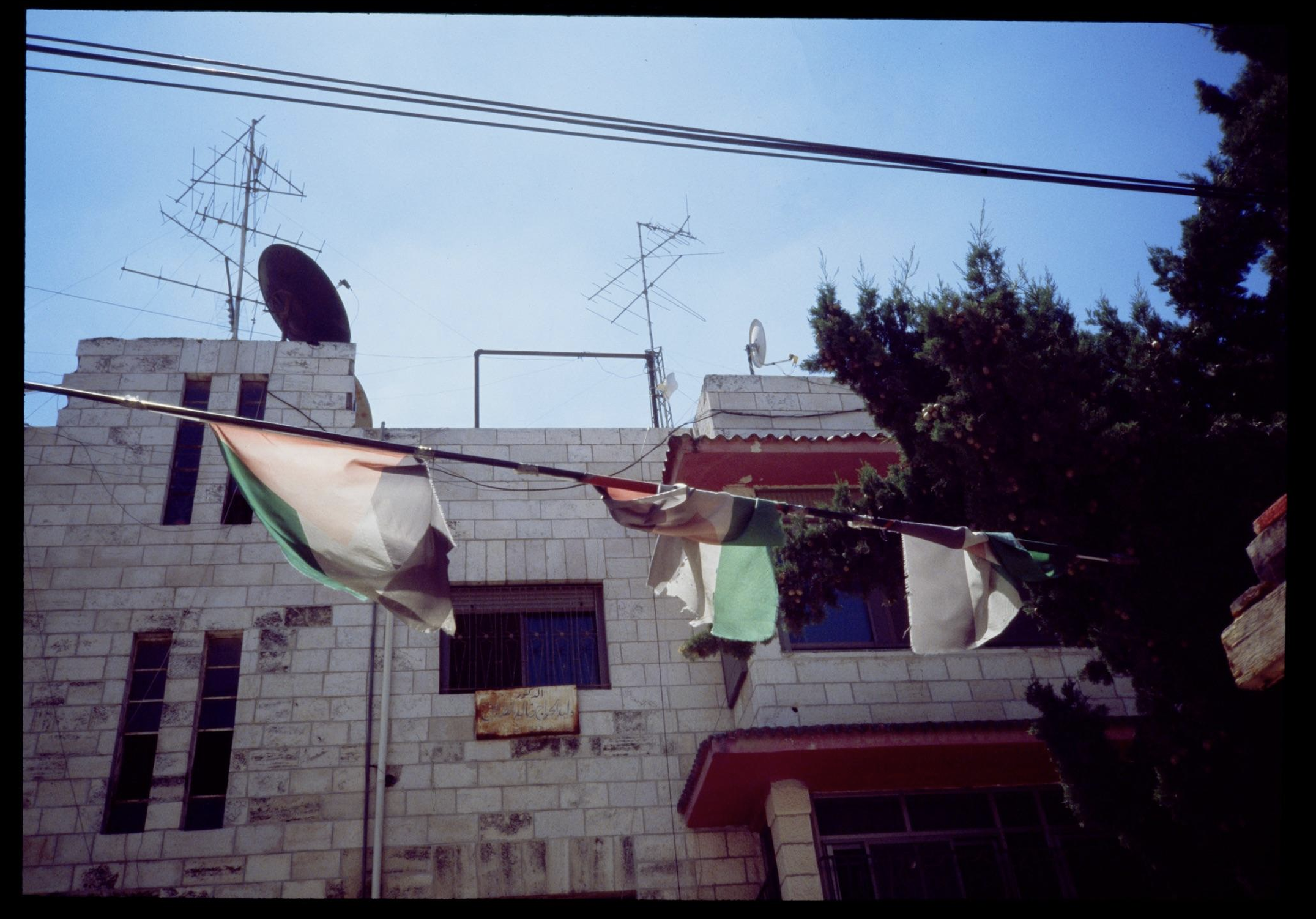
Americans allies are convinced that Palestinians, and especially the lucky few of us who are allowed to come home, are heroes. We are projected as the frontline soldiers in the battle for the future, less a Palestinian future, and more a future where the complicity of the occident is minimized once more. Revolutionary aspirations are lived vicariously through our material and armed resistance. Americans wear our clothes, proudly display the logos of our brigades, and learn our chants. “Gaza is our compass; Palestine is our compass.” They know every resistance operation, weapon, and catchphrase. When you tell them a story about the homeland (they love it when you call her that), you might as well be another prophet. Being a Palestinian is like being an actor. The “undefeated despair” that Berger describes is an act. The night my uncle and I were nearly beheaded by a soldier’s bullet that zipped right between us, he ran and I calmly walked towards cover. He told my family that I was brave; a hero. I realized later that I was acting. I wanted to look cool in front of the other shabab. I wanted to look like the “Israelis” didn’t bother me, that maybe we were the chosen people for a change. In reality, I was petrified. He acts too. After beating up a settler who attacked him and his friends while they were drunk in the hills of al-Khalil, he told me it’s never good to lead a boring life: “You need some action to keep life interesting.” This is how we rationalize the close-calls: it morphs into a joke.
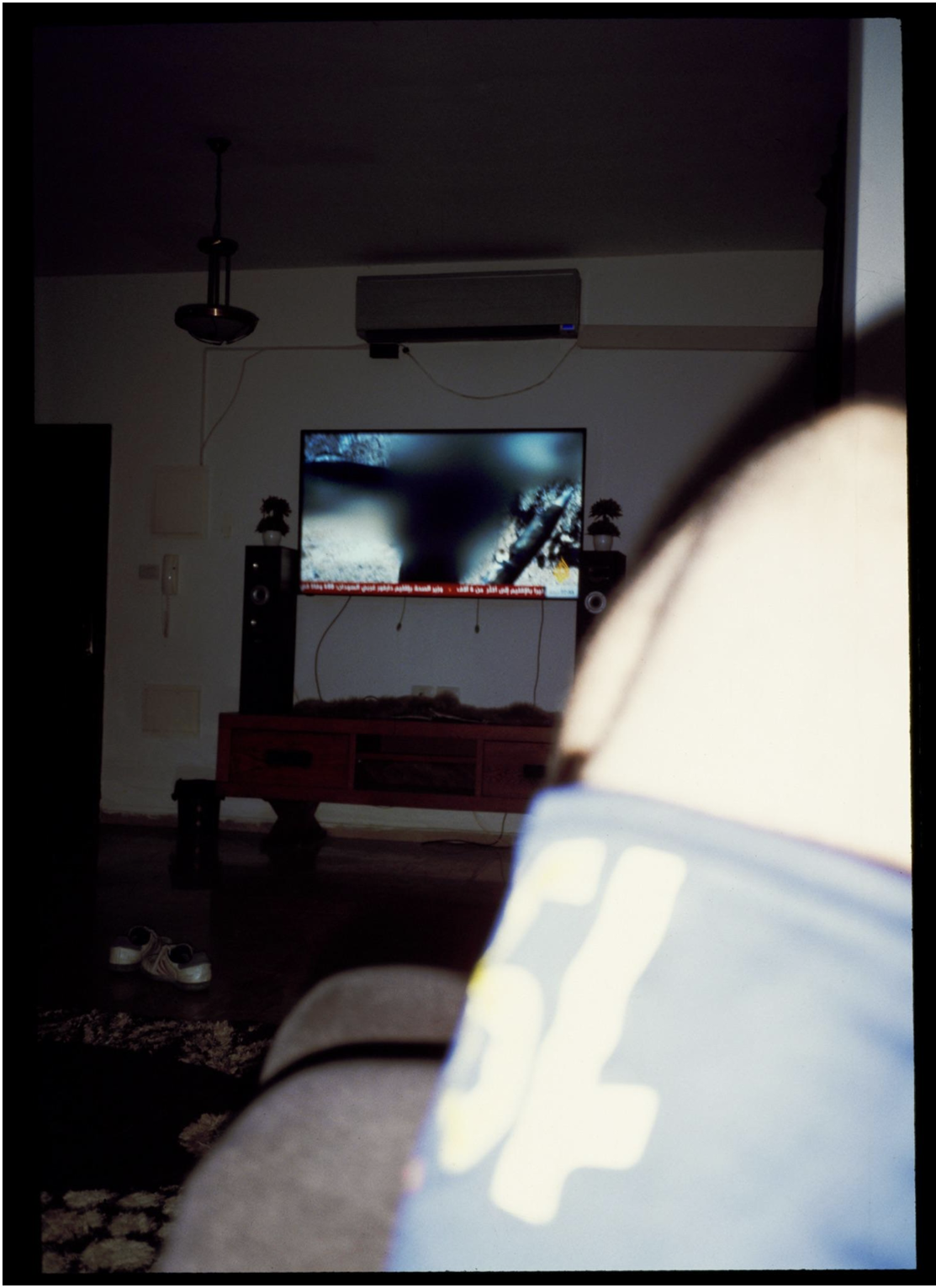
It becomes necessary for us to continue through the despair. Driving to any of the cities in the West Bank you usually spot a few men being searched and arrested at checkpoints, think to yourself “they’re fucked,” and continue. Driving friends who stay holed up in Ramallah, a relatively calm part of the country and our de-facto “capital,” it was amazing to me how shocked they were to see the expansion of settlements and walls and military bases once they left the metropole. When you’re in Palestine, you live like a rat, scurrying from one enclave to the next, as fast as you can, praying your car doesn’t break down along the highway–and if it does please at least let it be in front of a village and not a settlement. Every day there is something new. A new auxiliary road making access easier for soldiers. New graffiti on the roadblocks by the checkpoint that declare (in Arabic) la mustakbal: “no future in Palestine.” The occupation has been meticulously designed to ensure our humiliation. “Wait for the soldier to wave you on! Don’t drive too fast! Back up before he shoots us!” Checkpoints close at sundown, or sometimes soldiers will purposefully hold up the lines to ensure less Arab traffic for the Jewish drivers getting home for work. Bored soldiers will perform mock executions against you before they wave you on. What can we do but laugh and say “we must’ve scared them.”
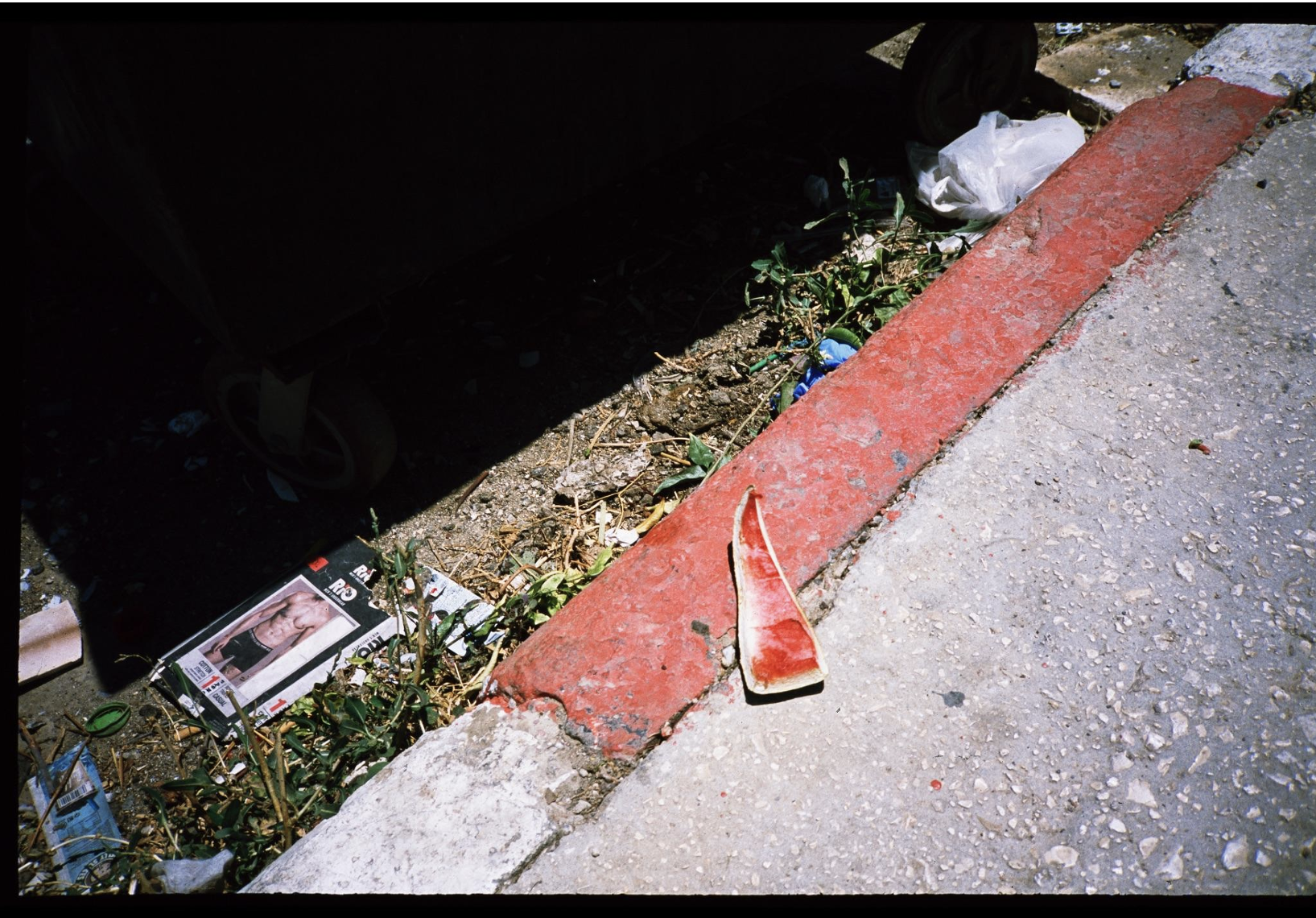
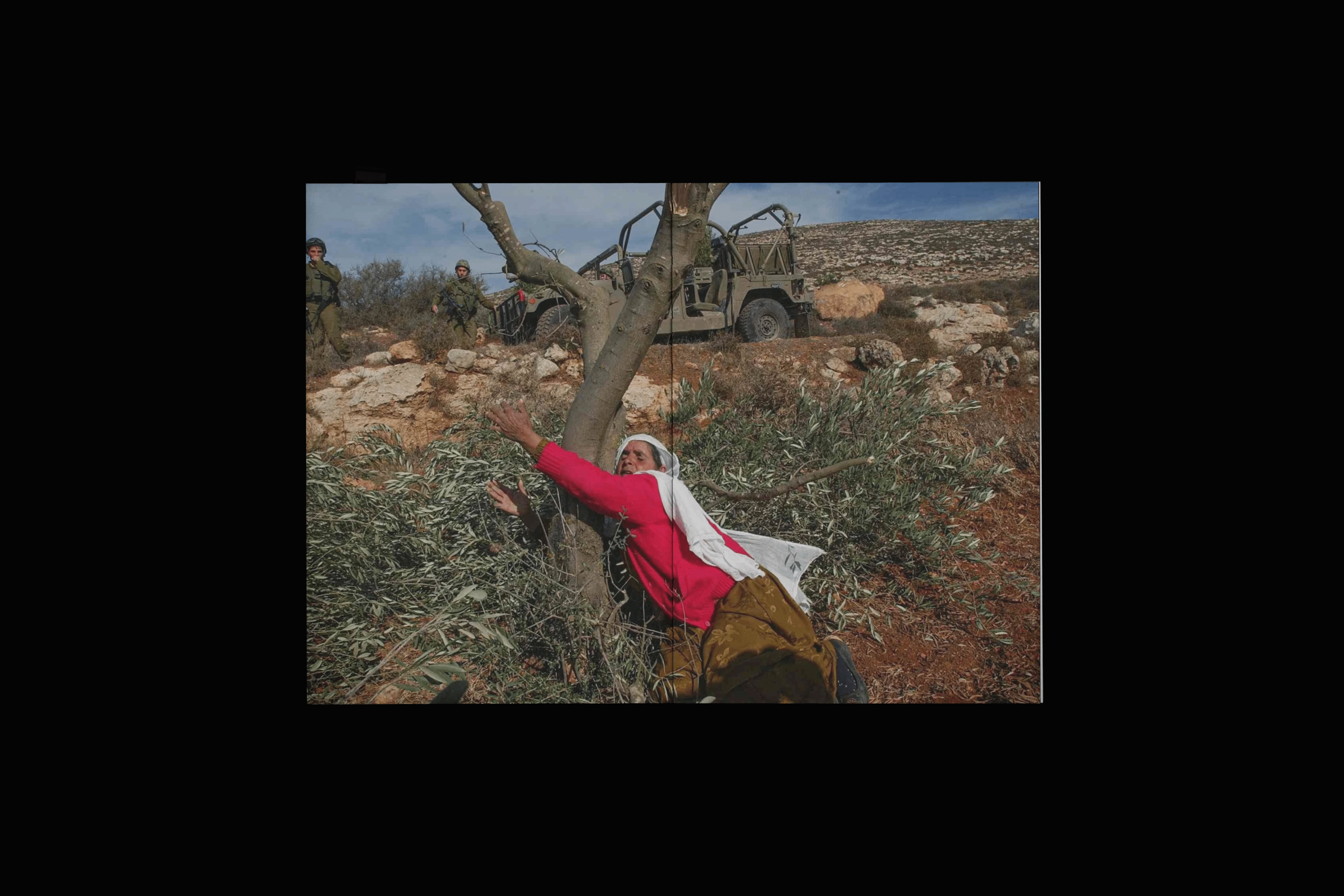
It is an exhausting existence. Constantly on edge, prepared for any number of threats: one day a drone, one day tear gas, maybe a bullet or if you’re lucky a rock. But it is an experience that is consistently rewarding. Every time we laugh off the violence, every time we make it through a checkpoint or a raid, it’s like we’ve won. You feel so proud just to kick dust around waiting at the checkpoint: “I will wait as long as it takes. Fuck you. I am going to get my knafeh in Nablus.” My father, who never spent much time in the West Bank, had an epiphany this summer. While on a hike in the villages to the north of Ramallah, he looked out at the mountains dotted with olive trees and pomegranates and decided he would be content to die there. “I thought that if a settler comes, I will fight him. It is our land. Why should I be afraid of them?” I often wonder how crazy we must look to the soldiers. They have the total firepower of the West behind them; the most advanced military technology and are able to enact complete supremacy over our lives. Imagine you are an “Israeli” kid and you and your 700 comrades are invading a town; drones deployed, live ammunition loaded. You’ve been shooting and gassing anything that moves, and still you see Arab guys getting haircuts, walking to the store, eating shawarma in the streets; laughing, whistling, jeering. You shoot one of them and the guy next to him says “wowww” and thinks that the first one should’ve ducked. From every military and tactical perspective, the “Israelis” have been dominating us for decades. But on the ground, they must know it is lost. What else can it mean when Arab kids sneak past settlements and risk death just to go to a pool? What else can it mean when the resistance no longer has guns, but throw themselves in-front of soldiers, armed only with molotovs and stones? We always lose, no matter what. How many setbacks and capitulations we’ve suffered over the years! Resistance cells get captured and any successful operation is responded to ten-fold by the “Israelis.” I know that we look crazy; people always ask me why we keep trying. We keep trying because even though we’re losers, we know that we will win. We are crazy motherfuckers and it has to scare them right to the core.

.jpg)
.jpg)