
Hit Enter to Search or X to close
.jpg)
Cuba’s land holds generations of resistance deep in its soil. You can feel it if you really look. Cuba isn’t just a country — it’s a mirror showing us what’s broken in the world and a roadmap for how we might actually escape capitalism.
For me, this hit in a personal way. I’m a child of Pakistani immigrants. My family came to the U.S. fleeing instability caused by imperialist interventions — the same kind of political manipulation and economic pressure the U.S. now uses in Cuba. Growing up, I saw firsthand how policies shaped by powerful nations can uproot entire communities. Last week, I saw it again—this time in Cuba.
I went with the Nuestra América Convoy, organized by Progressive International, Code Pink, and Global Health Exchange. Hundreds of people from all over came together for two goals: break through the U.S. blockade to deliver much-needed aid, and show the world what the U.S. has been doing there. And let me tell you, it is brutal, and most Americans don’t even know.
Before I went, I didn’t either. Like most Americans, I had no clue how deep the cruelty runs. Seeing it firsthand changed me. It hit me in the bones. I felt radicalized in a way I can’t unsee. I understood suddenly why Cubans fought so fiercely against the U.S. takeover, why Fidel Castro and Che Guevara mattered, why revolution is in their DNA.
The U.S. is starving Cuba. Not because Cuba is a threat. No. It’s because the U.S. wants to own it, colonize it, turn it into resorts and maybe even a Trump Tower (gross). And it doesn’t want us seeing a working alternative to capitalism because that would shatter the story we’ve been fed—that there’s no other system and we’re doomed to live in this depression forever.
Look online, and you’ll see endless hate toward the Cuban government, much of it coming from right-wing Cuban communities in Miami who fled the revolution to keep their wealth. Sure, Cuba isn’t perfect, but even with everything stacked against it, the government has done way more for its people than the U.S. ever has.
Education is free. Healthcare is free. Housing is free. Cuba literally built a society where families stay rooted, neighbors interact, communities survive. People are outside, playing cards, chatting, laughing. It doesn’t feel like the lonely, isolated survival mode that defines life in the U.S. It feels alive. It feels like actual community.
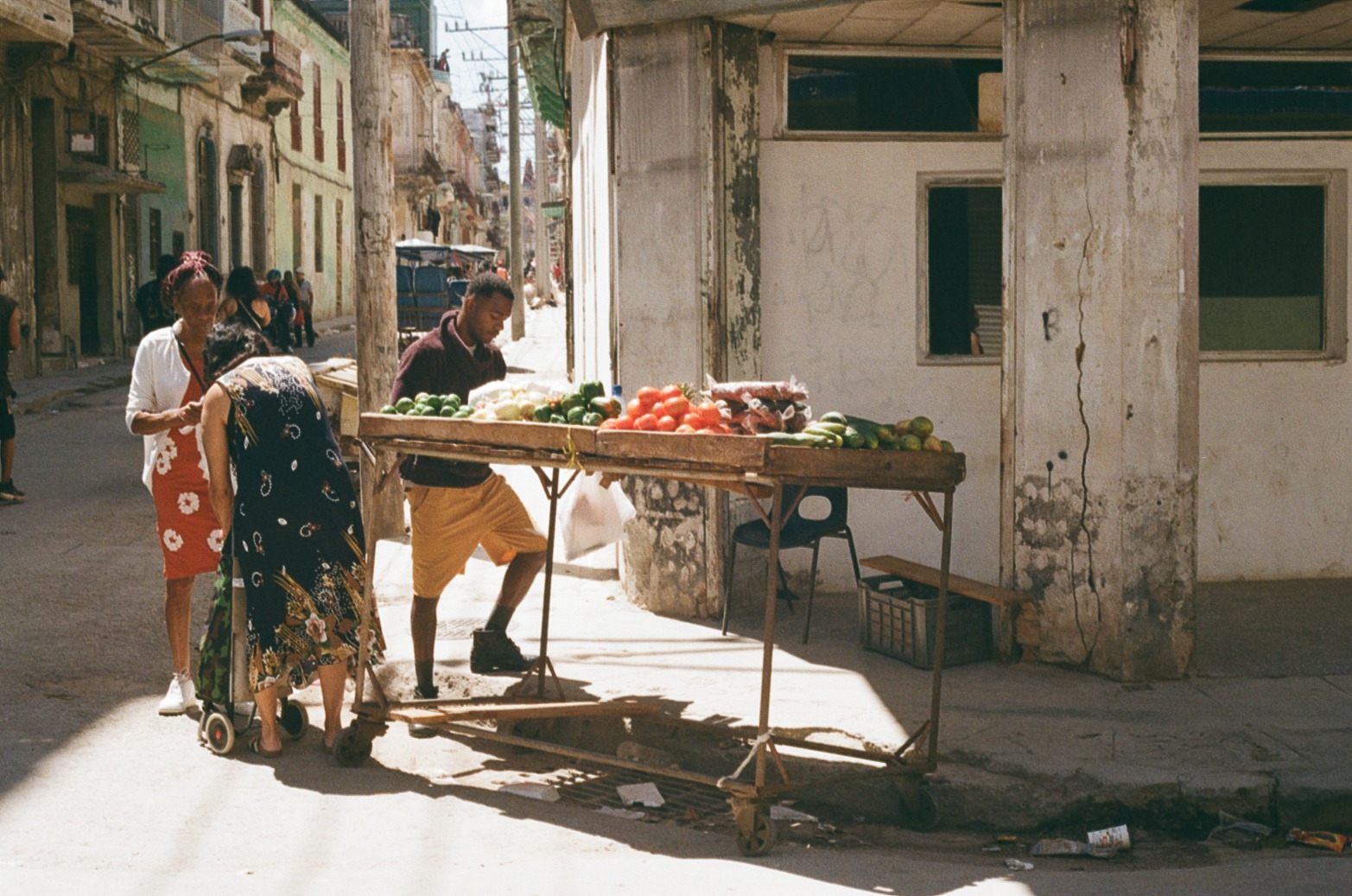
And yet, Cuba struggles. Badly.
We’ve been told that this proves communism doesn’t work. But that’s a lie. Cuba has been strangled for over 60 years by the U.S. blockade. The embargo isolates the country, blocks trade, and punishes anyone who dares do business with them. Ships can’t dock in U.S. ports for months. Executives lose visas. Loans are denied. Medical breakthroughs exist that could save lives around the world, but sanctions make sharing them impossible. Your grandma could be missing a cure for Alzheimer’s, your cousin a treatment for cancer, all because of politics and control. It is insane.
Everywhere you turn, the consequences hit you. During our visit, Cuba went through nationwide blackouts for days. Hospitals struggled to keep life-saving equipment running, food spoiled in fridges, and trash piled up in the streets. People survived by candlelight, phone light, or small solar lamps. And still, they kept going. Still, they tried to live and connect, even under a system intentionally strangled from the outside.
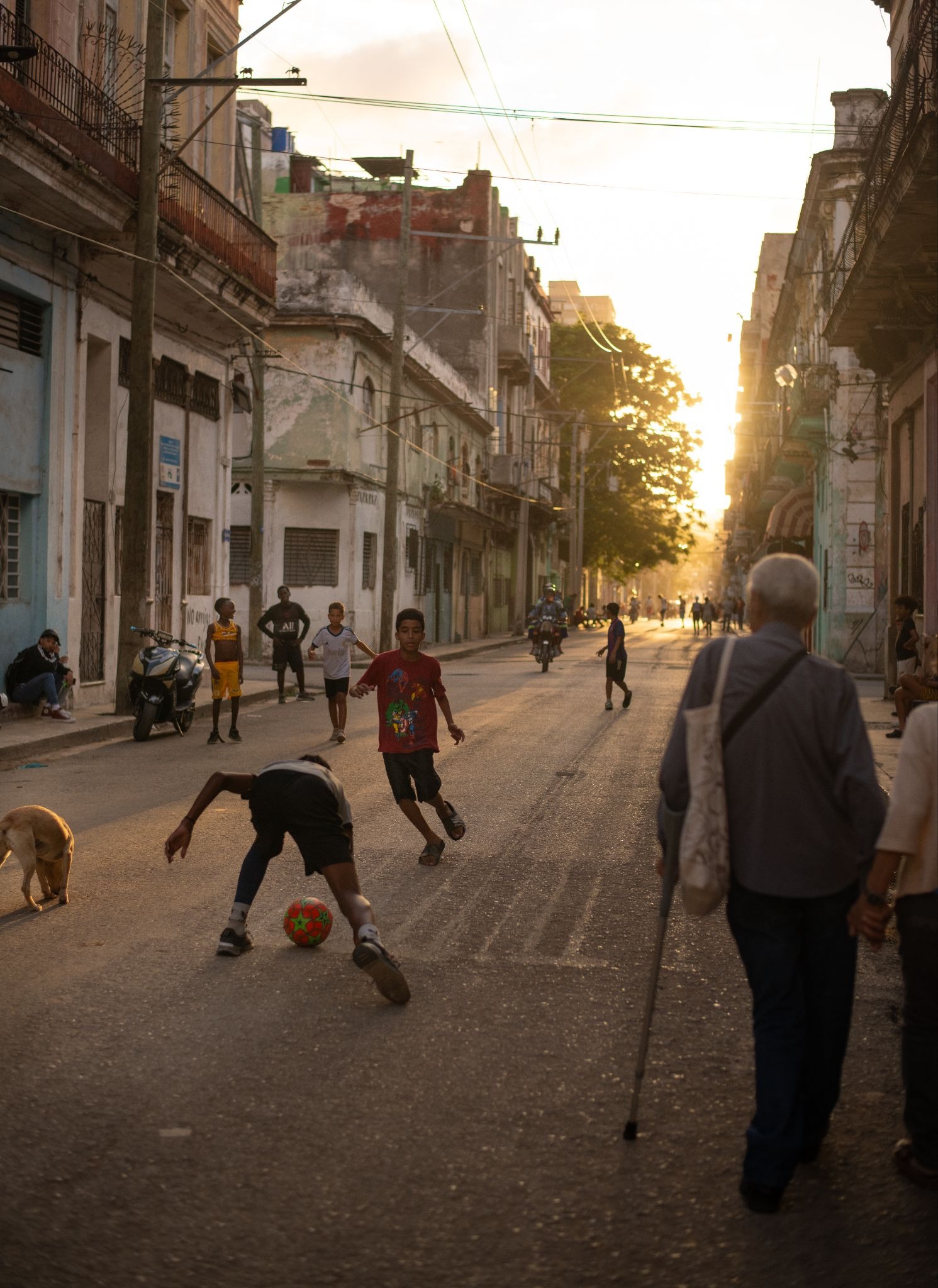
Those outages shaped everything — including how we tried to document what was happening. Part of our mission was to get on-the-ground coverage and hear directly from Cubans. We planned to film an interview in the courtyard of Casa de México, I watched fellow convoy member Katie Halper prepare to interview Jeremy Corbyn. They had a “perfect” setup, but the moment they began, the power cut out. A backup generator roared to life and swallowed the audio. We scrambled, grabbing the camera and moving into the street to chase the last of the setting sun
As we filmed in the fading natural light, a group of local kids swarmed the shot with infectious charisma. When Corbyn asked about their lives, they didn’t talk about the darkness or the heat. They just beamed at the camera and shouted, “¡Yo amo a Cuba!” Cubans love living in Cuba — they just don’t love the conditions that make life desperate.
When we spoke to regular Cubans, many blamed their own government for these hardships. That’s understandable —i t’s what’s closest, what’s visible. But the bigger picture is clear: if the U.S. wasn’t deliberately blocking Cuba at every turn, the country would look completely different.
Even under decades of blockade and sanctions, Cuba keeps giving to the world. Its doctors develop treatments and cures that could save millions, yet political pressure and sanctions keep these breakthroughs from reaching the people who need them most. Meanwhile, the U.S. lectures on morality while holding entire populations hostage for politics.
And still, Cuba resists. For generations, this land has fought to remain free. José Martí led the independence movement against Spain in 1895, and decades later, Fidel Castro toppled the U.S.-backed Batista dictatorship in 1959. This is a country that refuses to be owned, over and over again.
And you can feel it. There is something about the land itself. Standing there under the Caribbean sun, hearing the history where it happened, I felt it in my body. Revolution is not theory. It is not something we read about. It is alive. It is possible.
The blockade is not inevitable. It is a policy. Policies can change. While we were there, after enough global attention, the U.S. eased part of the oil blockade so fuel could finally reach the island. When people make noise, things shift.
So we have to keep going. Keep speaking, organizing, demanding the truth be heard. Because when people come together, the people united will never be defeated.
Cuba teaches us that resistance is not just possible — it is necessary.
May we lock arms against U.S. imperialism.
And may we win.

.jpg)
.jpg)