
Hit Enter to Search or X to close
.jpg)
It’s cold in Minneapolis. The cold is constant there, in the negative-teens. It narrows your focus and your breath hangs in front of you as proof of life.
In December, federal immigration authorities launched an operation they called Metro Surge. By the time I arrived on January 8, the day after Renee Good was killed, people were already talking in shorthand. Whipple. Metro Surge. Renee. The deportation struggle moved onto the same residential blocks we drove past to get coffee before 12 to 15 hour shifts to track Immigration and Customs Enforcement (ICE) agents crawling around the Twin Cities.
In late January, after weeks of raids and confrontations, residents called for a general strike. Some businesses closed for the day. Clergy members staged a sit-in at the airport and were arrested. In subzero temperatures, thousands gathered downtown to protest the surge of federal immigration agents.
The morning after the strike, around 9 a.m., federal agents shot and killed Alex Pretti, a 37-year-old I.C.U. nurse at the V.A. hospital. It was the third time that month federal agents shot a Minneapolis civilian. The second fatality. In the first grainy clip that reached my phone, filmed from across the street at a donut shop, we see agents pile on Pretti before they shoot him multiple times from behind.
“Not again, are you fucking kidding me?” a voice in the video says.
The Department of Homeland Security (DHS) said Pretti had approached officers with a handgun. Local officials later confirmed he was licensed to carry. In the video, the weapon appears holstered and was removed prior to Pretti’s murder.
I recall a phone call with a reporter friend from Michigan. He let out a deep sigh, lamenting “our martyrs couldn’t even get a shot off.”
Earlier in January, an ICE agent and firearms instructor, Jonathan Ross, shot and killed Renee Nicole Good during a confrontation between activists and federal agents. A week later, Julio Cesar Sosa-Celis was shot in the leg as he fled from ICE agents. Federal affidavits and family accounts told vastly different stories; ICE and the Department of Justice eventually opened an investigation into the officers’ apparent “untruthful statements.”
Women Want Me, ICE Fears Me
For weeks before Pretti’s death, I had been travelling through South and North Minneapolis with reporters and volunteers, tracking unmarked SUVs using a robust community-led rapid response network on Signal. The system ran on tips, screenshots, and license plates.
With heaters blasting, cameras on passenger seats, we chased sightings. We called it ICE fishing.
Once you knew what to look for, the vehicles were obvious. Large SUVs with tinted windows. Out-of-state plates. Engines idling outside mercados or gas stations.
Sometimes, if the angle was right, you could glimpse metal partitions bolted into the back. Cages. Sometimes, if the light was kind, you could see the masked agents giggling at the wheel as protestors and rapid responders blew their whistles. Sometimes, you could see someone in the back, a pair of eyes, bruised and scared.
We pulled alongside an SUV one night idling in the Longfellow neighborhood outside a residence and asked if the driver was with ICE. He told us it was “none of your fucking business” and to move on. Later, we would be led dozens of miles north in a wild goose chase where the agent would turn on his hazards to obscure his turn signals until a sheriff’s department car starts tailing us. The agent pulls into a shoulder, forcing us to pass. The sherriff’s vehicle peels away after ten minutes of being on our ass.
We soon learned this wasn't accidental. ICE agents have been deliberately leading trackers and journalists into counties where sheriffs were friendly to them.
.jpg)
On another day, rapid responders tracked a truck to a Wendy’s by using a license plate database that included vehicles known to be rented by feds. A friend and I got out of our car and walked into a Wendy’s where two unmasked, plainclothes agents were making out with their bacon cheeseburgers.
Almost immediately, keffiyeh’d college-aged volunteers surrounded the agents, who pretended to not speak any English. “No habla,” they said, ketchup on the corner of one of their mouths.
The Wendy’s manager was pissed. “Yall are gonna have to take this outside,” she said, waving off to the rapid responders.
”You’re going to let these motherfuckers eat here? They’re fucking nazis.”
”We will leave,” one of the agents said, slinking away from his burger, out the parking lot, and into a residential area. A few minutes later, four SUVs pulled into the Wendy’s parking lot and armed agents in full camo regalia pop out, escorting their two plainclothes into the car.
We ran back to our Jeep to follow.
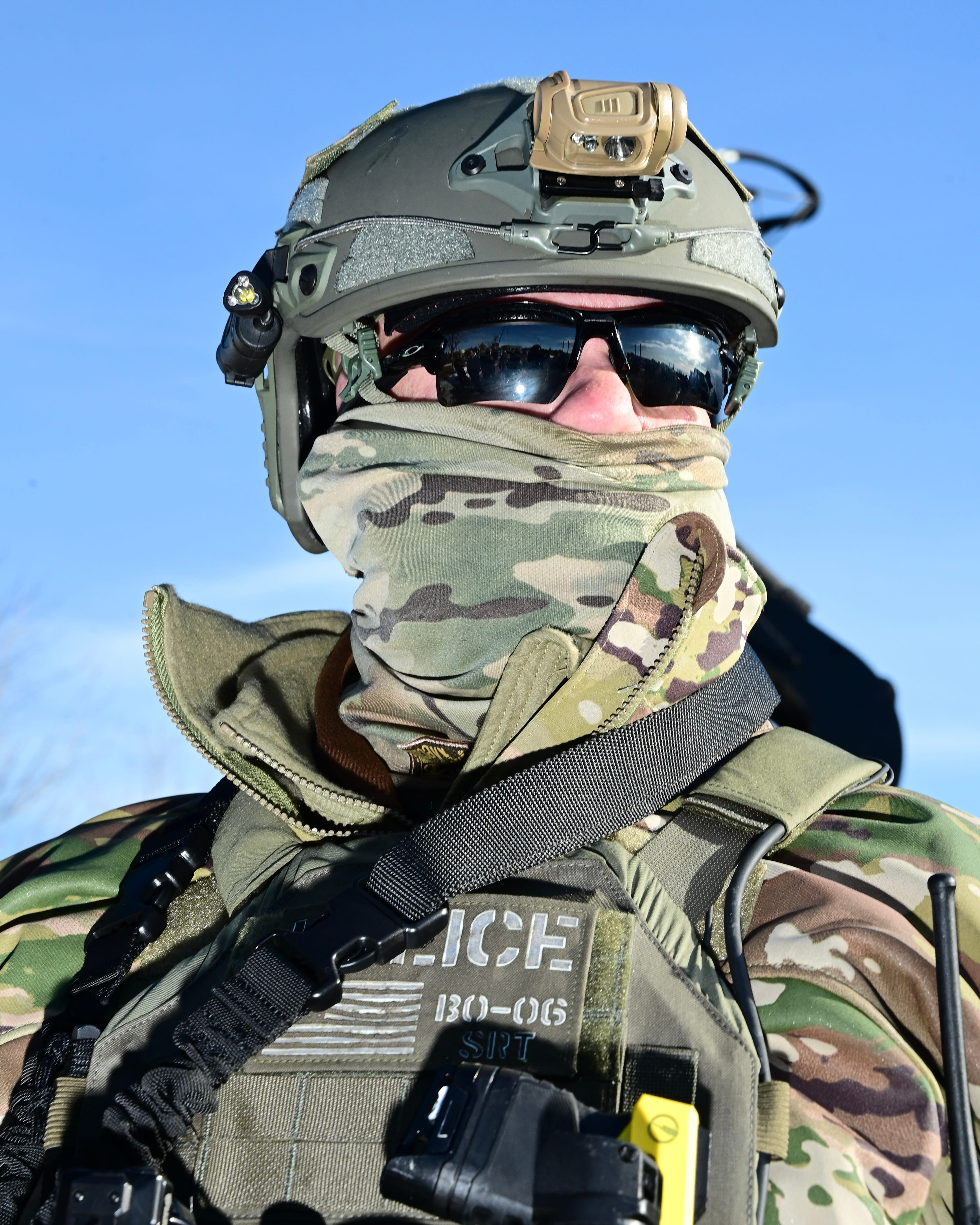
At a traffic light, the agents left their vehicles and approached our car, shouting at me, full of rage.
”YOU FUCK AROUND YOU’RE GONNA GET ARRESTED. I DON’T GIVE A FUCK IF YOU’RE PRESS. IF YOU’RE PRESS DID YOU GET A PICTURE OF THEM POPPING OUR TIRE?! WE HAVE YOUR PLATE. WE HAVE THE VEHICLE. This is your final warning”
The irony is that, of course I would have loved to get a photo of them popping their tires, were it not for the agents interfering.
When the agent told me in his non-native accent that he “had our vehicle and our plate,” he had been referring to a database that was revealed weeks into the Minneapolis incursion that allowed ICE to track vehicles that were tracking them.
The city has muscle memory for this kind of vigilance. In 2020, after the murder of George Floyd, neighbors organized block by block. Group chats formed. When immigration agents flooded the city in December, it flickered back on.
Now thousands of residents monitor ICE from cars or on foot. Some drive coworkers to their shifts. Others wait outside schools at pickup time. A pastor in South Minneapolis transformed his church into a grocery distribution center for families afraid to leave home. At a small neighborhood restaurant, the owners told me they had begun driving employees to and from work.
ICE frequently targeted Boost Mobiles and laundromats. Tracy, a Chinese restaurant owner who dreams of her husband getting her papers to be with her after years of living apart in Minneapolis, told me that she was thinking of self-deporting.
Tracy showed me footage from her WeChat app of eight agents swarming the laundromat next to her restaurant. She shook her head. It was my fourth day, but her reality for weeks. Agents would frequently wait outside her apartment complex.
“After they killed George Floyd, it was a dark year but… things got better. There were brighter days ahead. Or so I thought,” Tracy told me in Mandarin. “But they’re killing white people. What chance do we have?”
When I asked about police funding going up everywhere in the country, she fell silent.
%20(1).jpg)
Life Imitates Sci-Fi
Days after my conversation with Tracy, Sosa-Celis was shot. On a residential street in North Minneapolis, tear gas lingered long after the ambulance left. Federal agents in camouflage and gas masks stood behind yellow tape, throwing flashbangs at protestors.
Onlookers shouted at them to go home. The houses were dark, curtains drawn tight against the frost.
After Good’s death, federal agents violently handcuffed several citizens observing raids and took them to the Whipple Federal Building. Some said their car windows were smashed. Some said they were pepper-sprayed. DHS has maintained that observers were “impeding” law enforcement.
Most were released without charges.
In the middle of my last week in Minneapolis, a woman whose car was driven off the road by an ICE vehicle near a sports arena sobbed, shaking her head. “They’re fucking crazy, they’re fucking crazy.”
As airbags hung against her dashboard, ICE agents joked quietly about reporters taking photos. “You would think that after three photos, they would be done. But nooooooo.”
When I asked the officers how long it took to become an agent, they told me that they didn’t even need to interview for the position.
“I applied under Biden. I’ve never heard of anyone getting the job through a six-minute interview,” one of them smirked through his mask, playing with snow at his feet. He was referring to a Slate article where a writer posed as an applicant and got the job as quickly as she had decided to apply. He was an ex-cop but refused to tell me where.
The other agent, a chubby man wearing a Blue Lives Matter neck gaiter, told me the flash from my camera was “potentially impeding” ICE operations, hinting that I could get arrested. He was wearing a Weyland Yutani hat; a fictional British-Japanese mega-corporation and the primary antagonist in the “Alien” franchise.
.jpg)
“Who the fuck do you root for when you watch Alien? The fuckin’ Alien?!” A rapid responder screamed at him.
Before we left, he told me his favorite movie was “Empire Strikes Back.”
The Whipple Federal Building, where current detainees are kept, sits on Fort Snelling which once held Dakota prisoners during the U.S.-Dakota War of 1862. Fort Snelling was a concentration camp used to imprison thousands of Dakota and Ho-Chunk people in abysmal conditions.
When a group of Minnesota’s congressional Democrats, including Representative Ilhan Omar, attempted to visit the ICE detention facility to oversee conditions, they were blocked by DHS officials under a new policy requiring advance notice for such visits.
One detainee who was released to applause from the protesting crowd told me that he heard crying from the other cells.
In the days after Pretti’s shooting, grief folded back into routine. A vigil formed at the intersection where he died. Candles clustered against snowbanks. A live CNN feed showed a woman kneeling on the sidewalk, cupping her face with grief. The area is usually busy with restaurant patrons and shoppers.
Online, officials framed the unrest as lawlessness. On social media, the president promised consequences for Minnesota’s leaders. Federal authorities said their agents’ actions were self-defense. State officials questioned the federal government’s role
in investigating its own personnel. The boundaries between agencies blurred.
Just Drive
The rapid response system is imperfect. Observers sometimes misidentify ordinary drivers. There is a thin line between vigilance and paranoia. But the people I met believed that without them, there would be no record of what was happening on their streets.
A reporter for The Times was burned when he rented a car that was previously rented by an ICE agent.
Hilariously, one night two other reporters and I tracked a truck down to Nicollet Ave where we sat for half an hour. When a lone volunteer approached it, we sprang out with our cameras only to find out those in the cars were also volunteers.
”Fuck ICE dude, we would never join those fuckers,” one voice from the car chuckled at the confusion.
Hospitals reported missed appointments after rumors of agents in maternity wards surged online. Some residents limited their movements, regardless of citizenship. Parents kept children home from school. The ripple effects were harder to quantify than mere detainment numbers.
On the coldest weekend of the winter, protesters returned downtown. The National Guard was activated. Businesses debated whether to close. A city suspended between defiance and exhaustion.
I keep coming back to an interview I did with Queen, a 27-year-old Minneapolis resident the night I arrived in the Twin Cities. Queen struggled with homelessness for a large portion of the last five years, living intermittently in her van, which she was kind enough to let me into as sleet poured onto the furious streets of Minneapolis.
“These people really think they’re safe. We turn a blind eye every day to police violence even after George Floyd, to our education being raped, to our EBT being lost. They’ve murked so many people. Let this killing serve as a reminder.”
As I sat on her pile of clothes, cushioning my ass against the potholes, she asked me about the other incursions in Chicago and LA.
“How do you beat this? Any pointers?” Queen asked, checking her mirrors as we whizzed past hundreds of protestors, some directing traffic to accommodate for the packed streets.
“I don’t know,” I said, “I think we just drive.”
You drive around with a friend. You follow, sometimes up close. You document what you see. You stand at the corner with candles when someone dies. You memorize the intersections.
You brave the cold.
.jpg)

.jpg)
.jpg)