
Hit Enter to Search or X to close
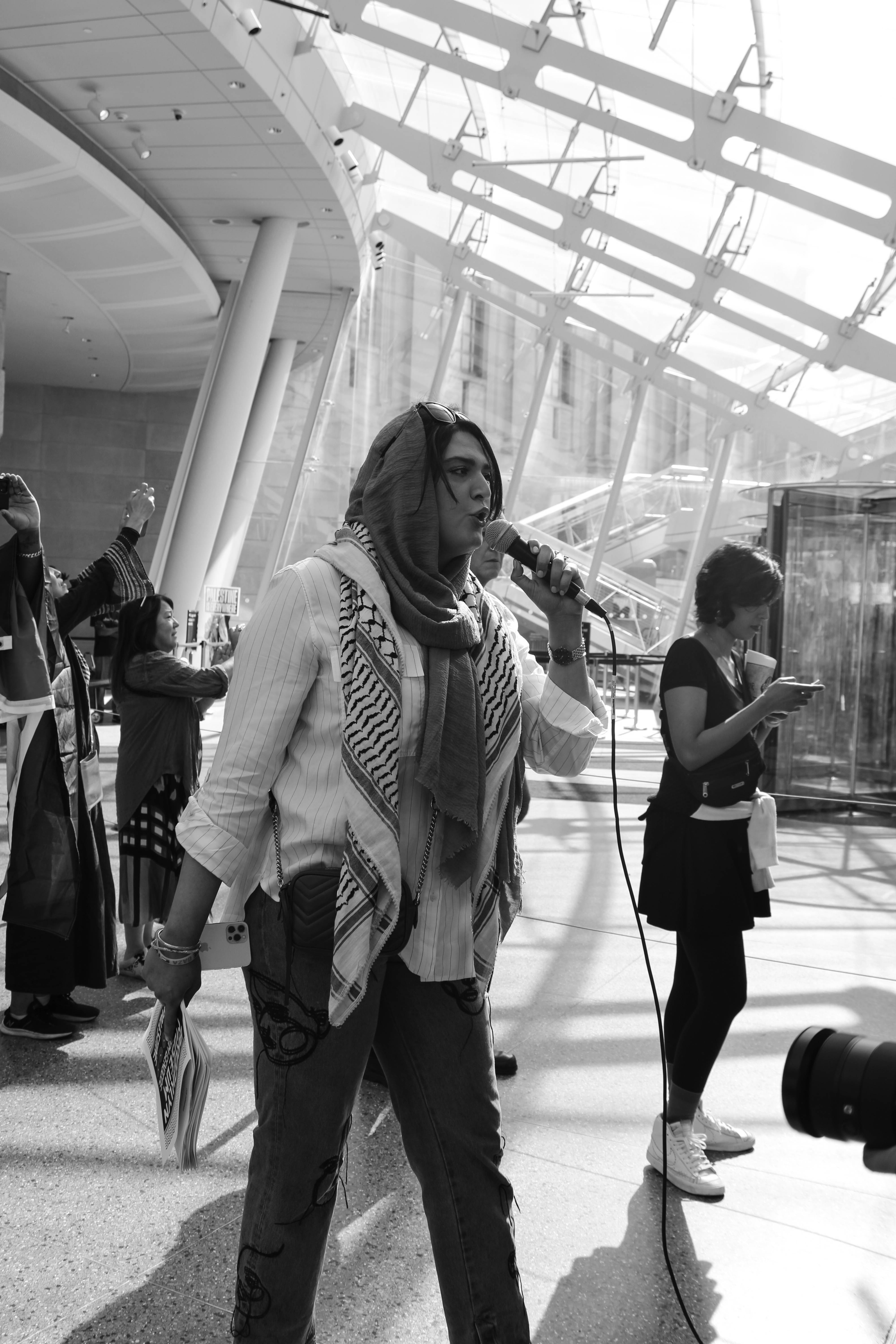
The arrest of a man accused of plotting to firebomb the home of Palestinian organizer Nerdeen Kiswani should be treated as a national reckoning. Federal authorities allege that Alexander Heifler was assembling Molotov cocktails with the intention of attacking Nerdeen's home in Brooklyn, where she lives with her husband and infant son. According to officials, he spent weeks discussing the plan in a group chat infiltrated by an undercover NYPD detective and intended to flee to Israel after carrying out the attack. That such a plot advanced as far as it did, targeting a new mother in her own home, reveals not only the severity of the threat but also the environment that has allowed it to take root.
For those of us who have organized alongside Nerdeen, this moment is part of a broader escalation of sustained harassment, intimidation, and institutional inaction that has persisted for months, if not years. I have participated in marches and actions she has led, and what stands out is the degree of hostility she consistently faces for her discipline and clarity. The attacks go beyond criticism or disagreement. They are repeated and targeted, aimed at silencing her. Not just her, but anyone who dares to speak up for Palestine.
Last spring, during a protest in Midtown organized by Nerdeen, a man in a high-rise apartment waving an Israeli flag dumped feces, heavy objects, and unknown chemicals onto the demonstrators below. The act was dangerous, vile, and deliberately intended to humiliate and intimidate. NYPD officers were present but failed to intervene. Even worse, when Nerdeen called out the NYPD’s inaction, she was physically assaulted by an officer. At the time, she was eight months pregnant, as she had announced at the start of the protest. The incident went entirely unreported by mainstream media. This is one of countless attacks that have been directed at pro-Palestine protesters since October 7.
One of the most disturbing incidents occurred in Crown Heights, Brooklyn, when an Israeli-American woman identified as “E.” was caught in the crossfire of a pro-Palestinian protest. Though her family attended a Chabad synagogue, she joined the demonstration alongside 30–40 other protesters waving flags and chanting. Pro-Israel counter-protesters threw eggs and unknown liquids, surrounded the crowd, and escalated the situation while police failed to intervene. As she attempted to leave, a mob of mostly men followed her, striking her in the head with a brick and shouting offensive phrases, including death threats in Hebrew. Fellow protesters shielded her while some members of Chabad reportedly laughed and took photos. An ambulance transported her to the hospital for stitches, and images of her bloodied face circulated as evidence of the attack.
Later, a local resident who had come to watch the protest found herself trapped by a crowd of hundreds of counter-protesters who mistakenly believed she was pro-Palestinian. Video footage captured the group, mostly men and boys, following her while yelling hateful phrases, including “death to Arabs” in Hebrew. She was shoved, kicked in the back, and struck in the head with a traffic cone. Only a single police officer escorted her for several blocks to a police vehicle and offered minimal protection. The woman later described feeling terrified and noted that the police had done little to ensure her safety. Throughout the attack, the mob hurled rape threats and demeaning insults, calling her “a waste of semen” and “a failed abortion,” showing how these incidents are designed to dehumanize.
University campuses have also failed to protect students advocating for Palestine. On January 19, 2024, Columbia students protesting Israel’s ongoing genocide against Palestinians were sprayed with a chemical weapon known as “Skunk,” developed by the Israeli military, causing burning eyes, nausea, and soaked clothing. The university remained silent and offered no protection. This was only the beginning of an ongoing intimidation campaign against pro-Palestine protestors. Columbia has since authorized an NYPD operation to break up a student occupation of Hamilton Hall, which left students injured, and has been accused of cooperating with the Department of Homeland Security in actions targeting pro-Palestinian organizers like Mahmoud Khalil and Moshen Modawi.
At UCLA, pro-Palestine students faced a violent attack when a mob of masked young men stormed an encampment, blasting loud sounds, spraying irritant gases, setting off firecrackers, and physically assaulting students. Reports show at least five students were injured, yet press coverage minimized the orchestrated nature of the attack. Across both campuses, students advocating for Palestine encounter danger while institutions and media provide little support.
Investigative reporting by The Washington Post shows that targeting pro-Palestinian activists extends from street-level harassment to the highest levels of power. In April 2026, a group of billionaires and business leaders secretly urged New York City’s mayor to deploy police to disperse protests at Columbia University. Figures including Daniel Lubetzky, Daniel Loeb, Len Blavatnik, and Joseph Sitt held a Zoom call with Mayor Eric Adams shortly after officers were first sent to the campus. During the call, participants discussed political donations and pressured Columbia’s leadership to allow police intervention. One member donated the maximum legal limit of $2,100 that month and offered to fund private investigators to assist the police—an offer reportedly accepted, though officials stated the NYPD did not ultimately use them. This demonstrates how wealthy and politically connected actors can manipulate institutional power to suppress pro-Palestinian organizing, leaving activists exposed to threats and intimidation.
Street-level harassment and these elite interventions are part of the same system. Ignoring attacks, holding those responsible to little or no accountability, and treating victims as provocateurs rather than people in real danger sends a clear and dangerous message: social, political, and legal space exists for this behavior to continue.This environment is exactly what makes plots like the one targeting Nerdeen Kiswani possible.
Betar USA’s repeated confrontations with Kiswani and their petitioning of the Trump administration to strip her of her U.S. citizenship show how these organizations operate with confidence that institutions will shield or enable them. The willingness of federal authorities to entertain such requests highlights systemic complicity, leaving pro-Palestinian activists isolated, vulnerable, and under constant threat.
Sustained harassment, intimidation, and the absence of meaningful protection have delivered real blows to organizing, creating an environment where protest is not only risky but suppressed. Outlets like The Atlantic, in its recent article “Where Are All the Campus Protests?”, do more than observe the movement’s silence — they gloat over it, framing the pro-Palestine movement as neutered while ignoring how their coverage, along with that of other media, contributes to an ongoing campaign of intimidation. By erasing struggles, demonizing protesters, and downplaying harassment, these outlets have actively strengthened the forces targeting activists and deepened their isolation.
Despite these threats, Nerdeen has made it clear she will not be deterred. In a statement posted to X, she said, “For months, Zionist organizations like Betar … have encouraged violence against my family and me,” emphasizing that she “will not stop speaking up for the people of Palestine.” Her response to the foiled attack is one of resolve, placing her within a long lineage of organizers who face extraordinary risks in pursuit of justice.
In a system that consistently fails to protect us, solidarity is urgent. Nerdeen Kiswani’s refusal to back down demonstrates that fear does not have to dictate our response. The more attempts are made to silence us, the louder we must become. Protecting one another, challenging narratives that erase or demonize movements, and refusing to retreat are essential for survival and sustaining the movement. Her courage reminds us that even under coordinated intimidation, resistance is both possible and necessary.
No matter one’s personal views, anyone who values the right to speak freely and hold beliefs without fear should stand with Nerdeen. You can support Nerdeen's legal defense here.

.jpg)
.jpg)