
Hit Enter to Search or X to close
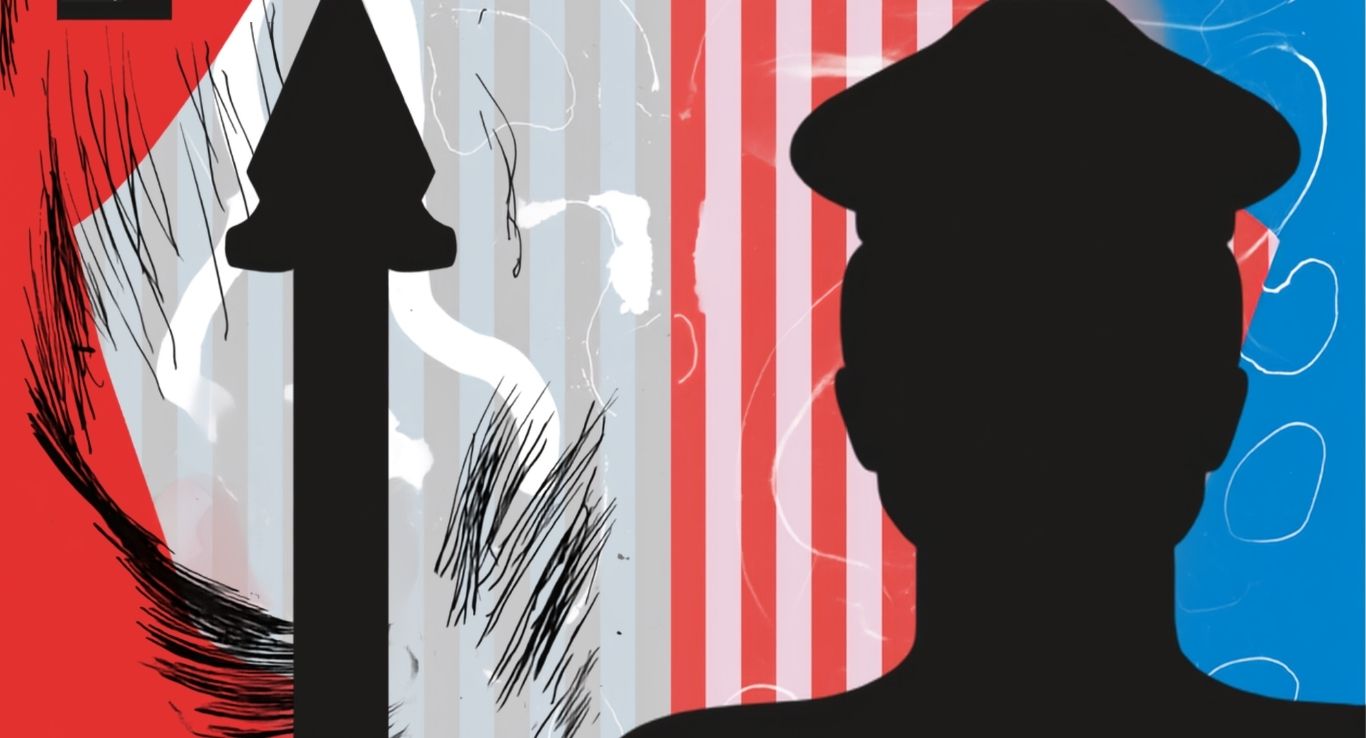
They Are Closer Than You Think
When are you in conversation with cops?
When do you follow the rules, and make sure others do too?
How old is your cop? What color are their eyes? Do they make you look down when you pass someone on the sidewalk?
Do they huff when the train is delayed because there is a body on the tracks?
Do they smile while reporting their low-income neighbors for gathering during quiet hours?
Asking the Right Questions
I attended BLM protests in 2020. I marched for six hours, carried my sore feet home, and felt proud of myself. But I did not begin to understand political resistance as a way of life until October 7, 2023, when Hamas counterattacked Israel. When I joined a local mutual aid collective, I discovered how different I truly was from the person I believed myself to be.
I learned new ways of being. I relearned my own history and the history of this country. Still, clarity did not arrive all at once. What to believe, who to trust, how to act. Those contradictions remained subterranean, like veins beneath the surface.
Most days, I wrestle with the creeping sense that I am surviving, not living. I know it is true. So I let it in.
I stand on a sidewalk beside a circus of cops and officials, gathering the nerve to approach someone holding a sign that reads, The Pentagon Is a Sex Ring. Friday, September 26, Midtown. I join the lingering crowd after the “Arrest Netanyahu” march. Colombia’s president, Gustavo Petro, and Irish Prime Minister Micheál Martin deliver stirring speeches, promising not to abandon Gaza. They speak of defense, solidarity, and alliances forming beyond U.S. borders.
Police presence coils around us like brambles. We are two blocks from the UN. A Secret Service tent sits just beyond a group of pro-Palestine protesters who are barred from crossing the street with their signs and noisemakers. A cop named Timmy barks orders through a megaphone.
I begin asking people, “How do you kill the cop in your head every day, besides coming out to legal protests?”
The answers are candid and complicated.
“Why are we doing what they say?” someone asks. Why are we asking permission for permit-approved marches? Why are we not teaching one another how to go limp during an arrest? Why do more organizations not provide jail support? If someone’s first arrest happens without community care, will they ever return?
Mine has not happened yet. I wonder whether fear of isolation deters people from organizing at all.
Part of the problem feels cultural. Many of us wait for an organization or a figure of authority to tell us the right way to act. We were raised to believe that if you need government assistance, you failed individually. That poverty is a personal miscalculation.
There is a hunger for strategy that moves beyond the oppressor’s rules.
Everyone shows up for the march. Fewer mobilize outside Netanyahu’s hotel the night before his UN speech. Some say the location was not circulated well. But there is a tangible cause and effect to disrupting power directly, to unsettling comfort, to forcing visibility.
Are our political organizations heavy on mobilizing but light on leadership development? Are we each empowered enough to act when we first think, I want to do something?
The moment passes. We are left wondering.
Who is the “Bad Guy”?
Earlier that day, I asked a cop for directions to the UN. She was helpful. I thanked her automatically and immediately felt angry at myself.
Is civility a betrayal? Does politeness soften anyone’s stance? Or do we overestimate its power?
One protester tells me he recognizes the same officers at every action. “You go to enough protests, you learn their faces,” he says. He knows Timmy well. He has been arrested by him before. When Timmy waves him over, he jokes that Timmy has a crush on him.
Another protester says, “My boyfriend and I just scream at cops when we see them. Otherwise we feel crazy.” When two officers pass, they shout obscenities. Businesspeople nearby suppress awkward smiles. A protester and I exchange a look and snicker.
Cops are soldiers following a script. Many do it for pensions and benefits. Some come from poor or immigrant families. That complexity unsettles us. It mirrors our own histories. But we are not actively policing our communities. We are not enforcing violence against our neighbors.
Many protesters speak of lineage, mothers and grandparents who resisted civil wars. “Resisting is in our blood,” one tells me. Another says simply, “Protest for life. There is always something to challenge.”
On an ordinary day, I see the same disbelief in others that I feel myself. How can so many remain passive? What do we do with the people in our lives who choose not to see? Do we excuse them? Do we resent them quietly after the holidays?
Surround yourself with people who care deeply about life and act on it. Build boundaries around apathy. Join those who look directly at the underbelly instead of turning away.
Action offers proof that something else is possible.
The Keeper and the Prisoner
Here is the question at the center of it all. What role do we play in policing our own communities?
The uncomfortable truth is that we assist our oppressor daily. I have abandoned friends at the first sign of conflict. I have tried to please people. I have swallowed my defiance to keep myself safe.
We were shaped inside systems that predate us. Realizing that freed me from self-loathing. It allowed me to see that rising above white supremacist and capitalist conditioning is not a solitary act of willpower.
For the first time, I felt worthy of being saved.
We are taught that success means isolating ourselves in sterile comfort. Private cells of achievement. In that cell, you are both jailer and prisoner.
As I leave the protest, dehydrated and overstimulated, I notice something. I am no longer afraid to look people in the eye. Hours of listening have shifted something. Once I stepped beyond politeness disguised as safety, I could see how deeply I had internalized the system I opposed.
We cannot afford to look away from that.
Where is Your Courage?
Assata Olugbala Shakur, a member of the Black Panther Party, died at 78, free in Havana, Cuba. In her autobiography, she wrote, “I didn’t want to wait for something to happen. I was into living and living for now.”
Something is stirring in our collective. New candidates canvass. Old slogans are replaced with new ones. There is a hunger for conversations that lead somewhere real.
Real change is slow. It is meant to outlive us.
Reader, I will speak to you directly. Name your humanity. Choose a name you love. Tend to it. During some small ritual, a meal, a shower, a moment in sunlight, say aloud, “This is a reminder. This is evidence that all is not normal. I will not be complacent.”
Resisting desensitization is the work. It requires repetition. It requires friends. Like love, it must be practiced daily.
I think about a boy from college who used to dance alone in our concrete courtyard. No music. No rhythm. He was mocked. I laughed too.
One day he told us, “I used to have depression so bad I wanted to kill myself. Since I started dancing, I do not feel that way anymore.”
What made it unforgettable was his certainty. He did not need applause. His dancing was enough to keep him alive.
Is that not art? Doing something that might save someone someday, but today saves you.
The subway screeches to a halt. I unlock my door. I take a warm shower and consider its quiet sacredness. I put on soft clothes.
What is enough to save you today?
Where is your courage?
It is only bravery if we are afraid?

.jpg)
.jpg)