
Hit Enter to Search or X to close
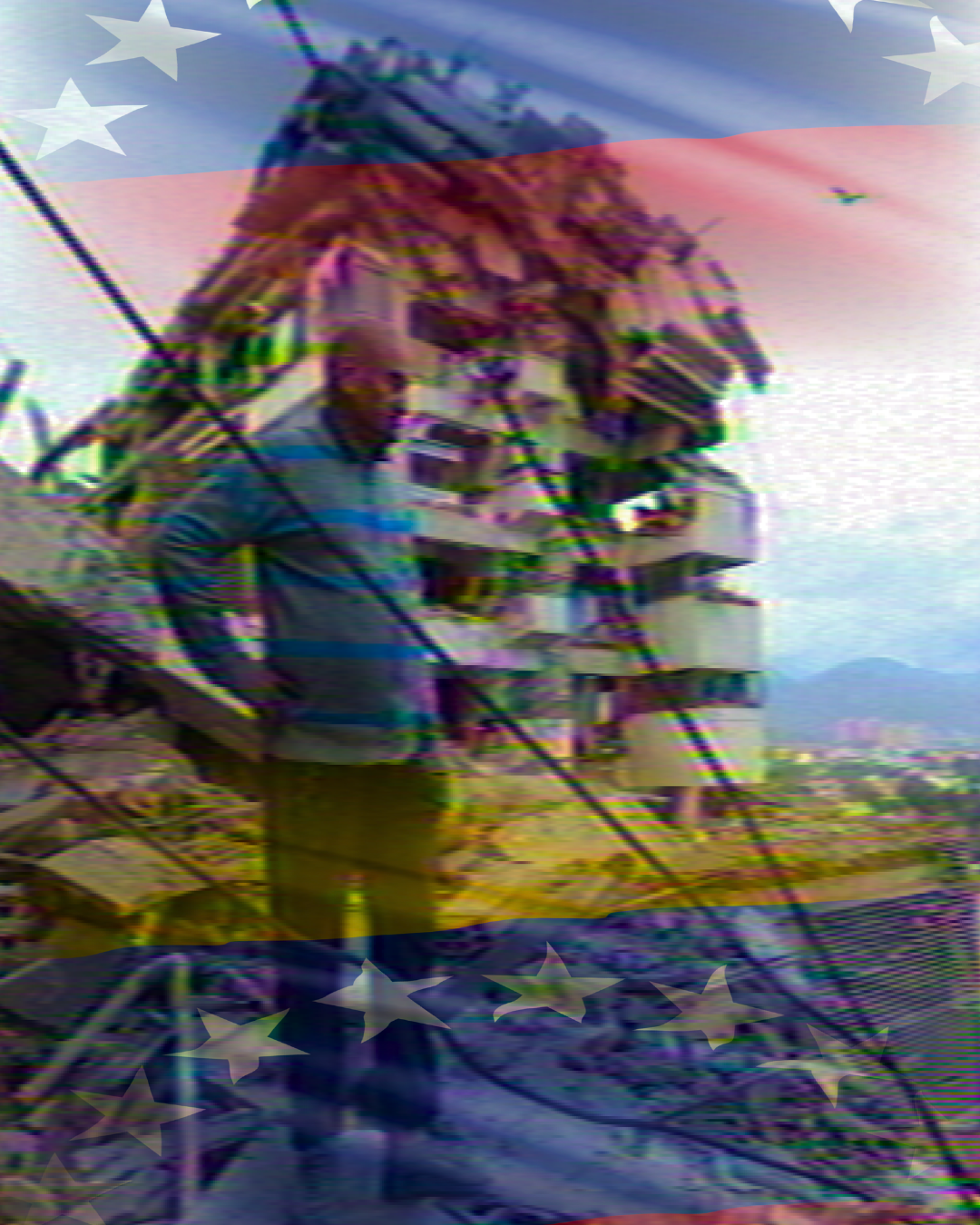
On the evening of June 24, 2026, the ground beneath Venezuela tore open twice. A magnitude 7.2 quake struck near the towns of San Felipe and Yumare, about a hundred miles west of Caracas. Thirty-nine seconds later, a second, larger magnitude 7.5 shock followed. They were the most powerful earthquakes to hit the country in more than a century.
By Thursday morning the official toll stood at at least 164 dead and 971 injured, and the numbers continue to climb with estimates from 10,000- 100,000 people. La Guaira, the coastal state that acting President Delcy Rodríguez declared a "disaster zone" and called "a true tragedy." In the Altamira neighborhood of Caracas, a 22-story building was leveled while neighbors clawed at the rubble shouting the names of the people inside. Simón Bolívar International Airport — the country's main gateway — was damaged badly enough to be shut down, and estimated the economic damage could run as high as a fifth of Venezuela's entire GDP.
A catastrophe of this scale would test any country, but Venezuela isn't facing it as a sovereign nation in control of its own resources. It's facing it as a country whose wealth is being held hostage by the United States.
Washington is holding the wallet
To understand why an oil-rich country cannot pay for its own earthquake response, you have to follow the money.
Since January 3, 2026, when U.S. forces seized President Nicolás Maduro and his wife and flew them to New York to face drug charges and Delcy Rodríguez was replaced as acting president, the United States has taken direct control of Venezuela's oil exports. In the first four months alone, by independent estimates, nearly 100 million barrels worth roughly $8 billion flowed through a pipeline of money that Washington controls.
Where did that money go? Nobody outside a small circle in Washington can fully say. The proceeds were first parked in an account in Qatar, conveniently beyond the reach of both Venezuela's creditors and ordinary public scrutiny, before moving into U.S. Treasury accounts. Venezuela must now submit monthly budget requests to the U.S. State Department for approval just to receive a portion of the revenue from selling its own oil. A State Department witness admitted to Congress that he didn't even know how much money was left in the accounts. Cory Booker called out the setup as being what it plainly resembles: a slush fund. Jose Manuel Puente, a professor at the Instituto de Estudios Superiores de Administracion in Caracas, put it more bluntly — "Venezuela is a state under tutelage right now by the U.S. The U.S. took control of all its income."
Even before the earthquake, Rodríguez's government had been pleading with the International Monetary Fund for access to roughly $5 billion in Special Drawing Rights (SDRs), money it says it needs for infrastructure, electricity, and water. The earthquake has only deepened that crisis, reducing much of the country's already fragile infrastructure to rubble. The government is now seeking to access $200 million from its SDR allocation to fund immediate earthquake relief and recovery efforts.
Those Special Drawing Rights are not a loan or foreign aid. They are Venezuela's own reserve assets, held at the IMF, that the country has been frozen out of since 2019. Accessing that money doesn't come for free either. Venezuela would have to accept provisions including IMF "surveillance," demands for data and audits, the looming restructuring of as much as $170 billion in foreign debt, a freshly created commission to evaluate which state assets might be privatized, and a parade of Western investors, circling Venezuelan assets like vultures. Among them is a bank backed by Trump ally Peter Thiel and the co-founder of Coinbase, whose executives have described Venezuelan assets as "deeply undervalued."
This is the oldest trick in the imperial playbook
None of this is an accident or an unfortunate coincidence of timing. It is a pattern as old as empire itself, just wearing a 21st-century suit.
For generations, the wealthy nations of the world have used debt and dependency as a mechanism of control. You don't need gunboats in every harbor when you can hold a country's reserves hostage, dangle "relief" in exchange for privatizations, and structure every loan and every audit so that the resource-rich nation can never quite extract the full value of what's under its own soil. All the wealth flows out, but the development never flows in. Essentially, these countries are being looted. That is how so much of the Global Majority has been kept underdeveloped, perpetually reliant, perpetually one "restructuring" away from sovereignty. It is no surprise that Chavez called the IMF and World Bank "instruments of US imperialism." From where the country sits today, that description has aged well.
On top of debt, some countries like Venezuela are unlucky enough to also have their economies crippled by sanctions. For years, Western sanctions have cut Venezuela off from the global banking system, froze it out of its IMF reserves, helped push it into a sovereign default, and has created a humanitarian crisis that drove more than seven million people to flee their homeland. Those sanctions were always justified in the language of human rights and protecting democracy, but they were actually a tool of economic warfare. The goal was to make life unbearable enough that the country would eventually accept whatever terms were handed to it.
Reject the paternalism
The people best equipped to manage this crisis are the people living through it. They know what their communities need because they are surviving the devastation firsthand. Strip away the language of audits and oversight, and what remains is a very old and very ugly idea: that the people of the Global South cannot be trusted to govern themselves, spend their own money, or rebuild their own homes without a Western hand on the controls. It is the logic of colonialism.
This paternalism deserves to be named plainly and rejected outright. A sovereign people has the right to make its own choices, and its own mistakes, with its own resources. Whatever anyone thinks of the government in Caracas, the answer to a "flawed" Venezuelan administration is Venezuelan politics, not an American "comptroller" holding the purse strings and robbing them blind from five thousand miles away.
What we should demand
There is nothing inevitable about any of this. The only thing standing between that money and the rescue crews, hospitals, and families who need it right now is a political decision in Washington — a decision that can be reversed the moment enough people demand it.
So demand it.
Release the funds. Every dollar of Venezuelan oil and gold revenue held in Qatar and in U.S. Treasury accounts belongs to the Venezuelan people. In the middle of a deadly earthquake, there is no defensible reason to keep it frozen, unaccounted for, and out of their hands.
Unfreeze the reserves. Stop forcing a devastated nation to beg the IMF for access to its own assets. Venezuela's Special Drawing Rights are not Washington's to ration.
Lift the sanctions. End the financial siege that helped break the country in the first place.
Stop the heist. No more offshore accounts, no more "monthly budget requests," no more selling a sovereign nation's resources through a process so opaque that even the State Department can't say where the money went.
A country shouldn't have to dig its own people out of the rubble while a foreign government counts its oil money. Venezuela's wealth belongs to Venezuelans — every barrel of it, every gram of gold, every dollar in every frozen account. Give it back. Stop robbing them!!
Yankee, go home.
How you can help
Below are some vetted channels to send money and resources to people directly on the ground in Venezuela via mutual aid and not charity.
People's Forum, which is directing funds to grassroots organizations and movements supporting first responders and recovery efforts. Our contacts on the ground are working with them to help ensure aid reaches the communities that need it most.
Por La Guaira, a grassroots initiative providing immediate food, nutrition, and hydration to families on the ground.
PayPal: www.paypal.com/giette22
Venmo: @sol-sitce
If you would rather donate supplies, community collection hubs in New York City and Miami are accepting emergency goods to be shipped directly to Venezuela.
New York City
- Casa Ora NYC
148 Meserole St, Brooklyn, NY 11206 - Lulla Brooklyn
169 Graham Ave, Brooklyn, NY 11206
Miami
- Global Empowerment Mission
1850 NW 84th Ave #100, Doral, FL 33126 - Miami-Dade County Supervisor of Elections Office Lobby
2700 NW 87th Ave, Doral, FL 33172 - Doral Legacy Park Community Center
11400 NW 82nd St, Doral, FL 33178 - El Arepazo
10191 NW 58th St, Doral, FL 33178
.jpg)
.jpg)