
Hit Enter to Search or X to close
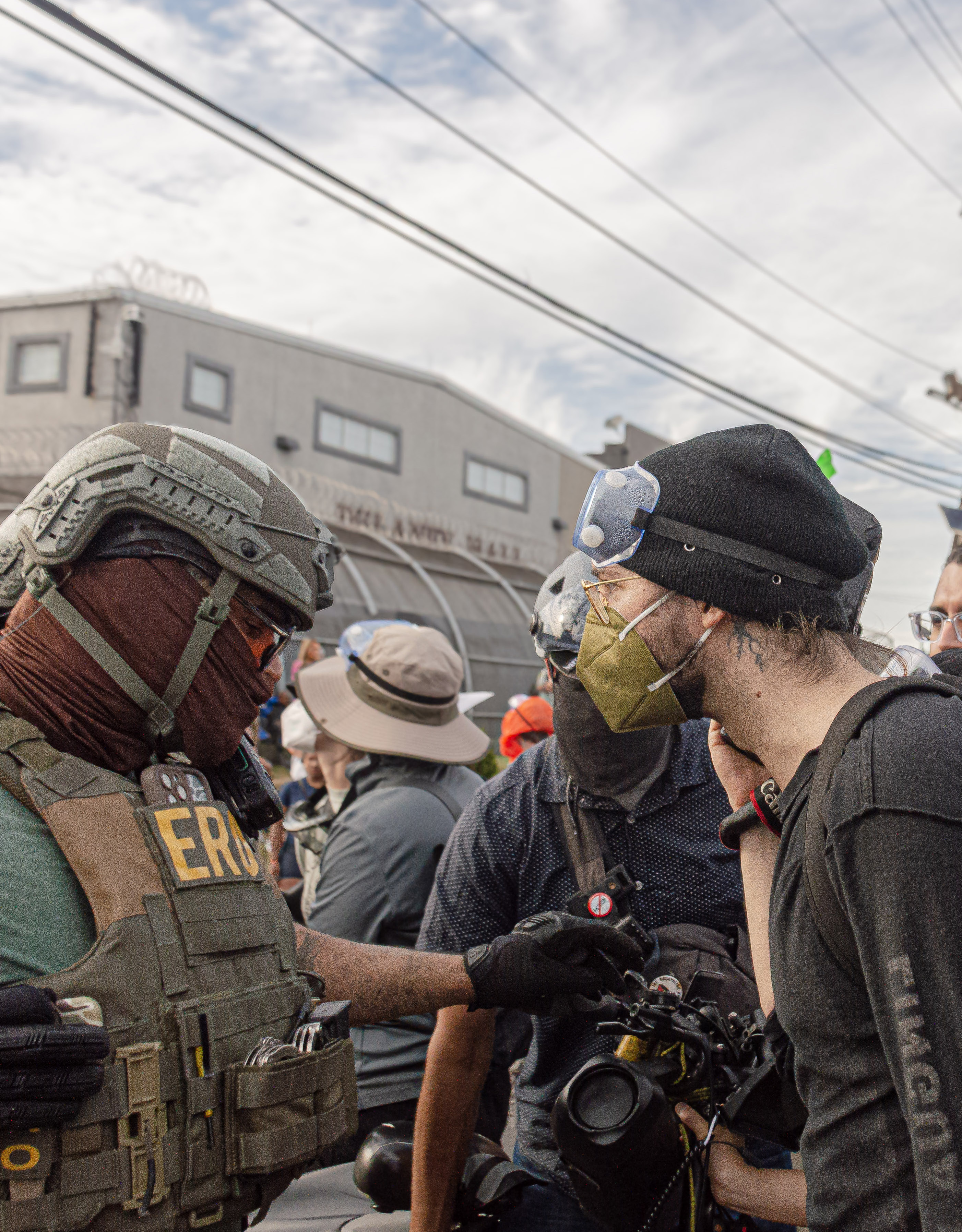
We spoke with Christian Vasquez, a freelance photojournalist who has spent days documenting the protests, the police response, and the human toll outside Newark’s
Delaney Hall, and says the right to document the truth is being eroded in real time.
For nearly three weeks, a low-slung private detention facility across from a sewage plant in Newark, New Jersey, has been the country’s loudest flashpoint over immigration enforcement. Delaney Hall — a 1,000-bed jail run by the for-profit prison company GEO Group, and the first federal immigration detention center to open under President Trump’s second term — is believed to be holding hundreds of people swept up across the Garden State.
Since May 22, roughly 300 detainees have been on a labor and hunger strike. Through handwritten letters and family members, they have described spoiled food, some of it allegedly crawling with maggots, scalding showers that left burns, denial of medication and bond, overcrowded cells without air conditioning, and pressure to sign documents that would speed their own deportation. The federal government denies all of it. Homeland Security Secretary Markwayne Mullin has flatly insisted there is no hunger strike and no substandard conditions. New Jersey Gov. Mikie Sherrill, denied entry to the facility on Memorial Day, has called for it to be shut down, and the state attorney general has gone to court to force health inspectors inside.
Outside the gates, the standoff has turned violent. Protesters have blocked unmarked government vehicles; masked ICE agents have answered with pepper spray, batons, smoke, and tear gas. Newark’s mayor imposed a curfew. Dozens of people have been arrested. And running underneath all of it is a quieter story that may outlast the protests themselves: what happens to the public’s ability to see any of this when the people documenting it become targets.
Nothing Accidental About It
The numbers are no longer anecdotal. The U.S. Press Freedom Tracker is investigating dozens of assaults on journalists at Delaney Hall since the protests began — pushing, chemical burns, tear gas, baton strikes — along with multiple instances of damaged equipment and at least three arrests of credentialed reporters. In early June, a coalition of 18 press-freedom organizations publicly condemned the arrests and demanded the charges be dropped, warning that the conduct ran against the state’s own guidance on how police are supposed to treat the press during protests.
“Through handwritten letters and family members, they have described spoiled food, some of it allegedly crawling with maggots."
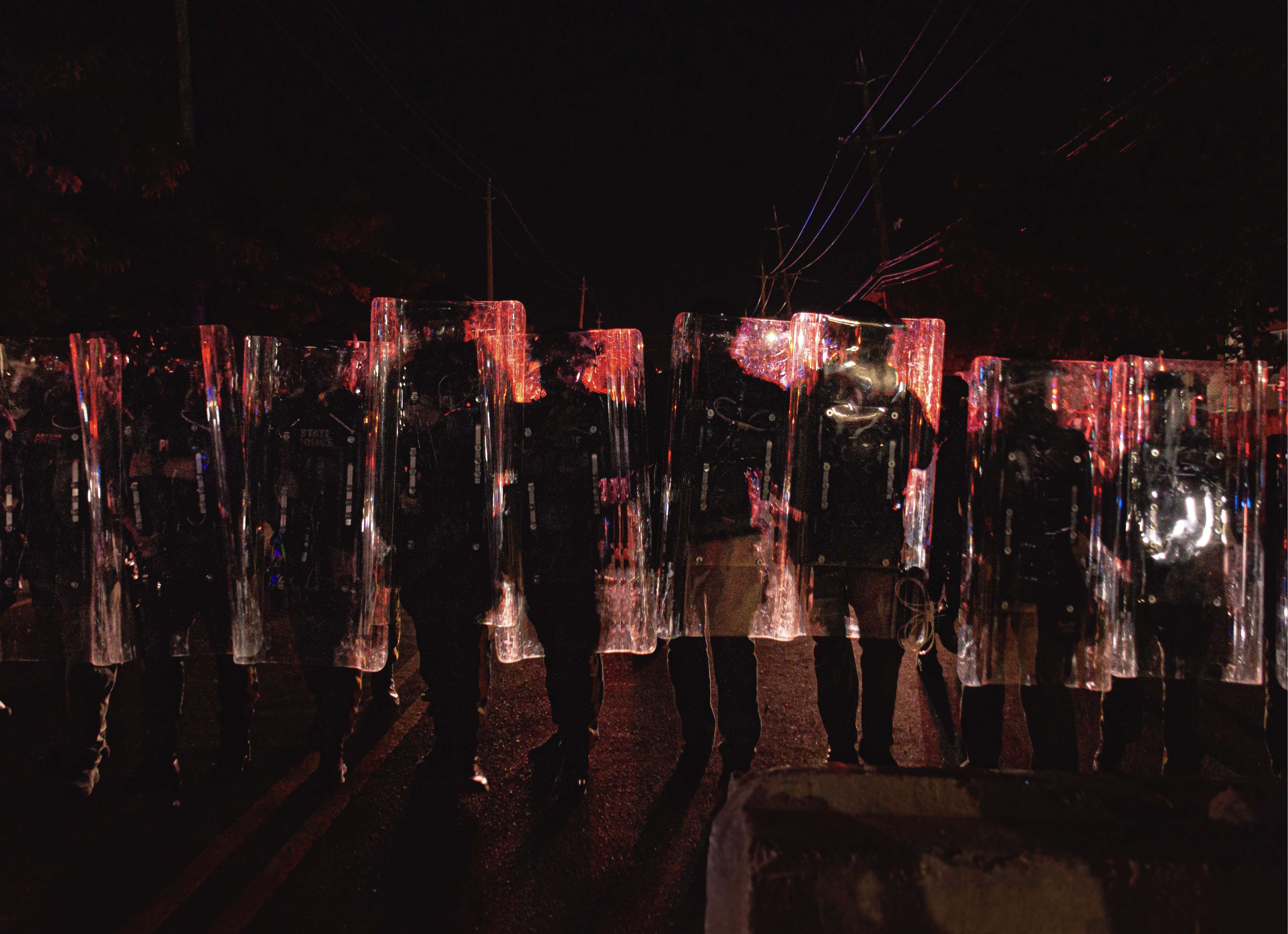
Several of those incidents share a troubling shape. Journalists were supposed to be exempt from the mayor’s curfew, yet were pulled in anyway when New Jersey State Police “kettled” the crowd over the Memorial Day weekend — encircling demonstrators and reporters together and arresting dozens. Several of those arrested reportedly ended up in the hospital. In one moment captured that night, protesters chanted for the press to stay even as officers moved to push them out.
Christian Vasquez was in that crowd. A freelance photojournalist who pays his own way — about a hundred dollars a day out of pocket for transit and food — he has documented Delaney Hall since the first major day of protests on May 26. He describes a scene that escalated fast: barricades pushed around 9:30 on the night of May 30, then “all hell broke loose.” Tear gas and smoke canisters were fired into the air over the crowd, he says, without any order to disperse — the basic legal step police are supposed to take before using force to clear a gathering. “They didn’t give us a warrant to disperse,” he says. “They just did it.” He ran blind along a highway in the dark as troopers pushed everyone back, not knowing where he was. “When I got home, I was kind of shooken up. I almost died, let’s be honest.”
He’d already been hurt once. On May 28 he took a faceful of pepper spray; on the 30th, tear gas got through swim goggles he’d taped at the airways and an N95 respirator. He credits volunteer medics with keeping injured reporters from being seriously hurt. His experience is not unusual — it is, by the monitors’ count, representative.
Rules that make documentation impossible
What worries press advocates most isn’t only the violence in the moment; it’s the steady, bureaucratic narrowing of access that follows.
Vasquez describes returning later in the week to find that state police would no longer let him bring camera bags or equipment near the facility at all. He doesn’t drive, so when officers told him to leave his gear chained to a pole and “come back every hour to check,” there was no realistic option — and no one was guarding it. “It’s an open road. People just come out of nowhere and steal it,” he says. Each time he complied, the rules shifted again: a supervisor to consult, a background check to clear.
“Tear gas and smoke canisters were fired into the air over the crowd, he says, without any order to disperse..
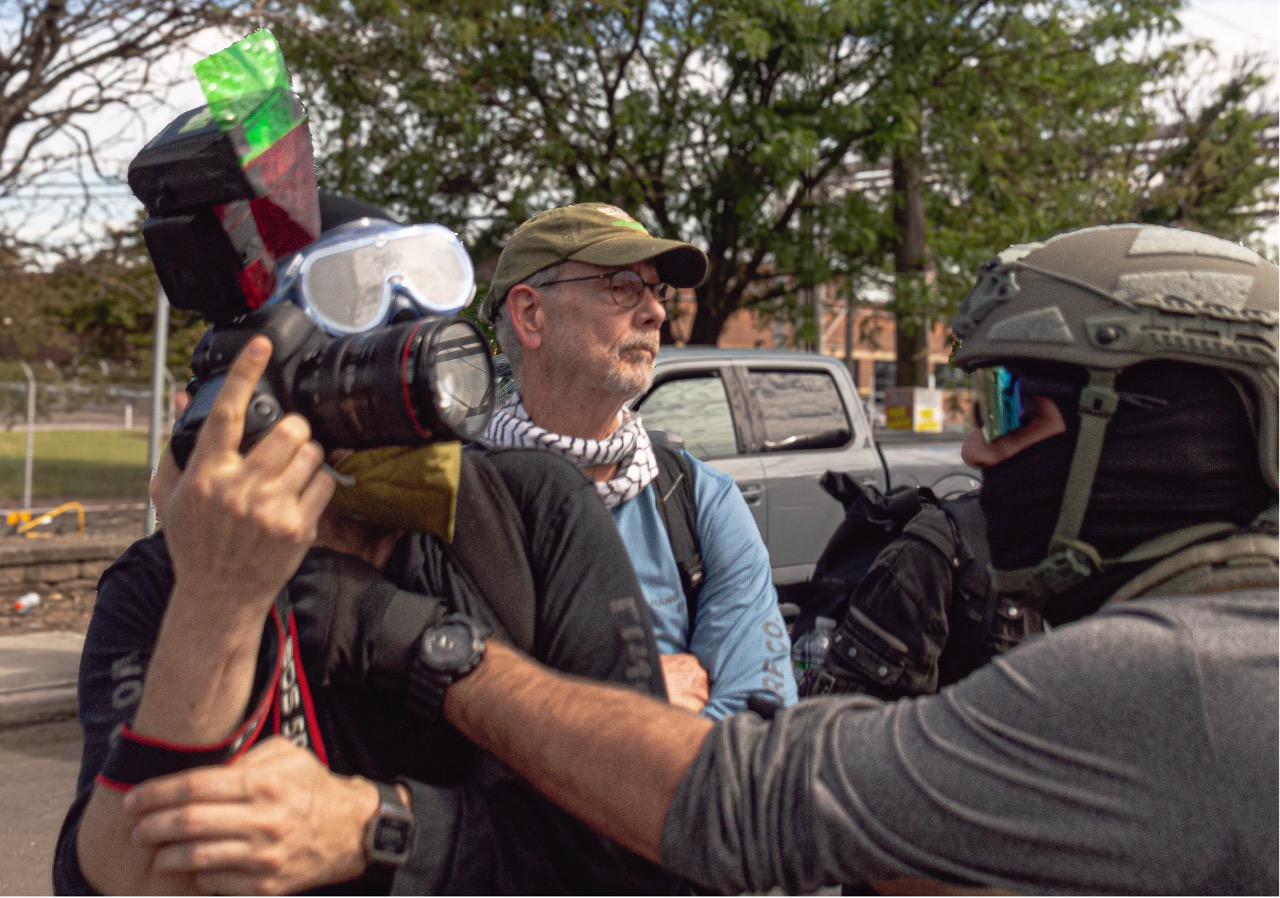
An I.C.E. agent is seen grabbing a photojournalist on the ground. Photography by Christian Vasquez.
“They know we’re press. They know how important it is to have our equipment.”
That isn’t a hypothetical risk. During the same stretch of protests, a New Jersey law-enforcement officer was criminally charged after an Associated Press photojournalist’s camera bag — roughly $10,000 of gear — was allegedly taken while she was being treated at a hospital for protest injuries, then tracked to the officer’s possession. Federal law specifically bars police from seizing or searching a journalist’s work materials; the photographer’s attorney called the alleged theft a direct assault on the First Amendment. It is one of several equipment-damage and seizure cases monitors are now examining for possible violations of the federal Privacy Protection Act.
“people punished just for talking about what’s going on in the world.
Officials have offered their justifications. The state attorney general has said troopers were deployed out of public-safety concern amid an anticipated surge of federal agents, and has pledged to review reports of unconstitutional policing. But the gap between that explanation and what reporters describe at the scene — exemptions ignored, gear confiscated, dispersal orders skipped — is exactly the gap press-freedom groups say should not exist in a country with a First Amendment.
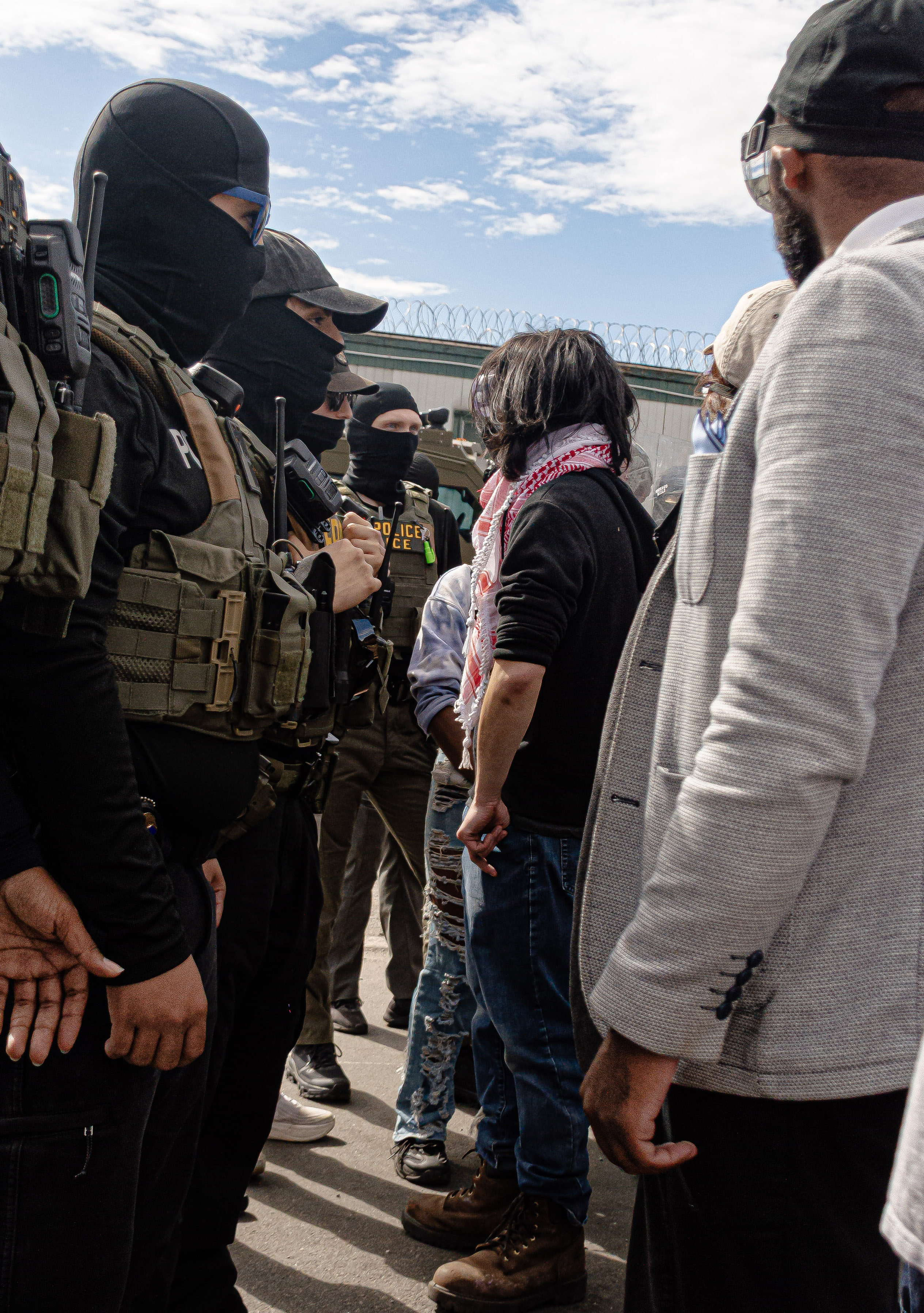
“We’re risking our lives here”
For Vasquez, it’s a betrayal he takes personally, and he doesn’t soften it. He frames what’s happening at Delaney Hall as part of a wider assault on speech, pointing to the recent fates of late-night hosts like Stephen Colbert and Jimmy Kimmel as, in his view, people punished “just talking about what’s going on in the world.” Journalists, he argues, deserve more protection and respect than they’re getting.
He is blunt, too, about how he reads the police treatment of the press. Watching officers seize and lose reporters’ equipment, he calls it plainly unfair. “We have the freedom of the press, we have freedom of speech,” he says. “They’re just taking it like it’s nothing, and they don’t care. That’s kind of scary.” His worry is that there is no end in sight: “This is going to be a cycle for — what, another two, three years? You don’t know what’s going to happen.”
What stays with him, though, isn’t the politics so much as the people. He describes the families who gather under a tent near the Essex County Correctional Center several feet away from the protestors, kept at a careful distance for their privacy, and the detainees whose silhouettes he has photographed standing at the windows late at night. He recounts interviewing a detained protester — an Army veteran — hours after his release, still “disheveled” and shaken. “It’s like he’s in another war zone, and he’s not deployed,” Vasquez says.
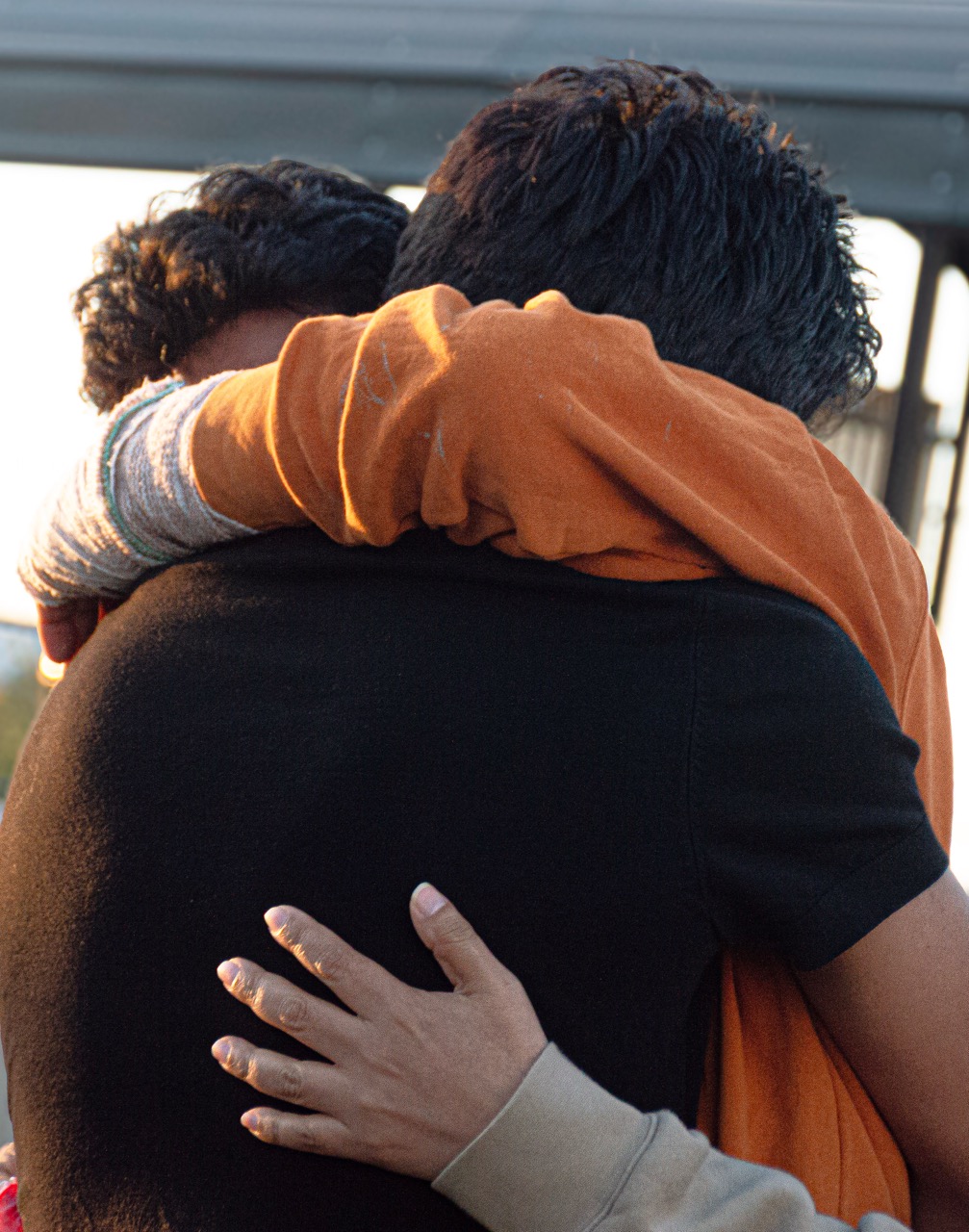
“Watching families come apart in front of his lens is the the biggest challenge of the job.
Seeing it in person, he says, is a different thing entirely. “Seeing the tears of the detainees running to their family members — it’s real. It’s very real,” he says. “At some points I was tearing up. This is insane.” Watching families come apart in front of his lens is the the biggest challenge of the job.
What gets him through, he says, is the belief that someone has to be there to witness it. “We as journalists, we’re also human at the end of the day” — people who feel all of it, then raise the camera anyway.
Why it matters beyond Newark
The stakes are larger than one facility. Delaney Hall is where a fight over what the public is allowed to know is being tested, and the outcome won’t stay in New Jersey. The conditions inside the jail are contested precisely because so little can be independently verified — the government denies a hunger strike that detainees, their lawyers, and members of Congress all describe.
In that vacuum, the photographs taken at the gates do real work. Restrict the people making those images, and the only account left standing is the official one.
His fear is less about any single bruise than about the precedent. If reporters can be kettled despite a curfew exemption, told to abandon their equipment, gassed without warning, and arrested for being present — and if that becomes routine across red and blue states alike — then the historical record of this moment gets written by the only camera left rolling.
For now, his ask is simple: keep watching, keep sharing, support the independent reporters still showing up. Because the effort to make them stop is the clearest sign of why they can’t.



.png)