
Hit Enter to Search or X to close

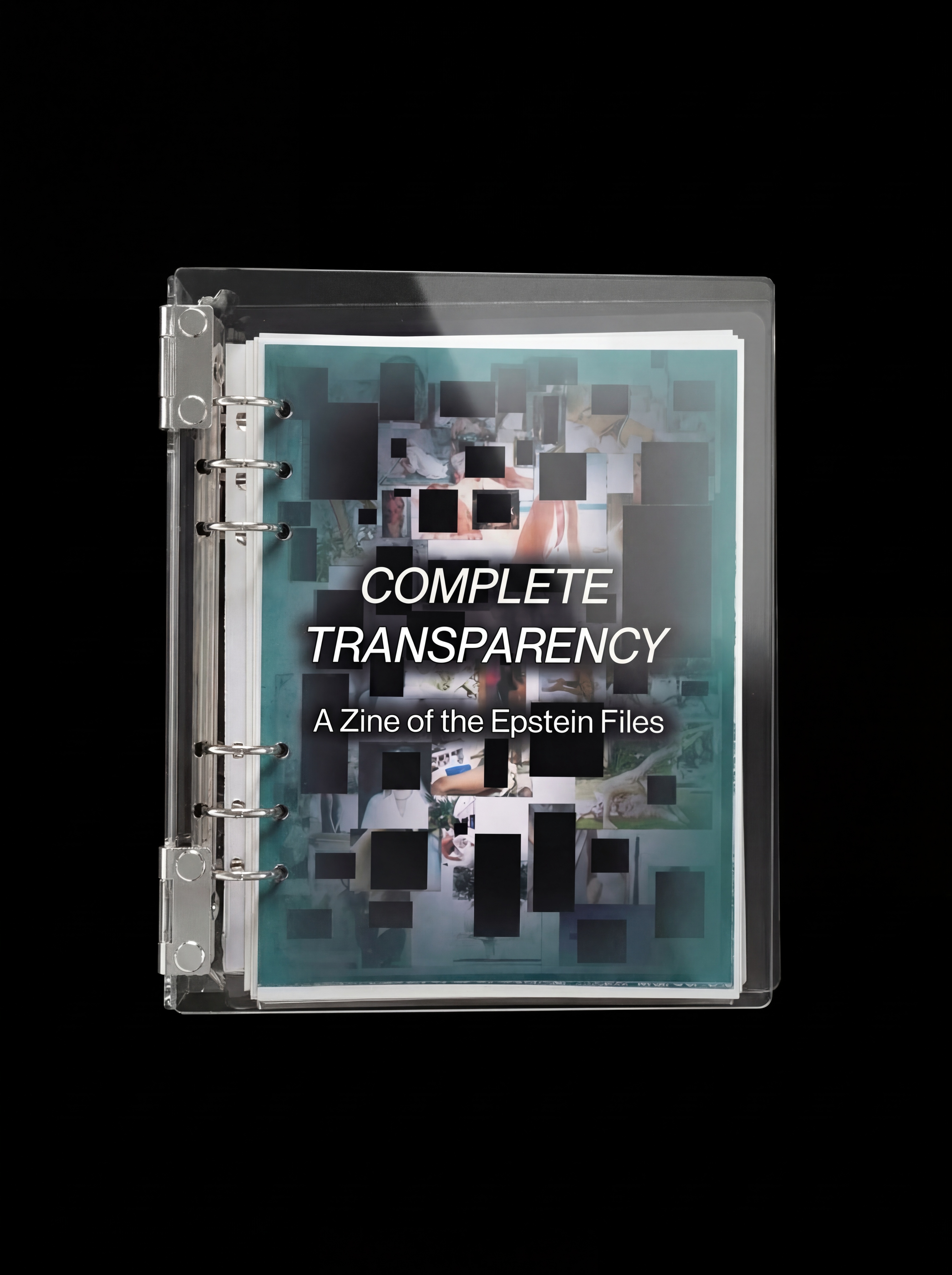
We are hearing a lot about Jeffrey Epstein in the news right now: salacious texts involving Ghislaine Maxwell that connect Trump to Virginia Giuffre. Pathetic schmucks like Larry Summers asking a convicted pedophile for romantic advice? What’s up with men seeking advice about women from the worst dudes in the world? News flash: just because a man surrounds himself with women, or in Epstein’s case, little girls, doesn’t necessarily mean they are there on their own accord. They are probably being paid, and that doesn’t make him an expert.
One thing consistently missing from these reports, however, is the steady stream of bombshells coming from investigative reporting outlet Drop Site News, connecting Jeffrey Epstein to Israel’s intelligence apparatus—you know, like a spy. While there’s no explicit evidence formally designating him as a Mossad agent, he was clearly operating as a loyal asset for Israeli intelligence.
Messages spanning from 2013 to 2016 show intimate, often daily correspondence between Ehud Barak and Epstein. Their conversations covered political and business strategy, as Epstein coordinated meetings for Barak with other members of his elite circles. Although Barak has denied any knowledge of Epstein’s sex trafficking or abuse of minors, these email exchanges took place after Epstein’s 2009 conviction for procuring a minor for prostitution.
Jeffrey Epstein leveraged his connections among political and financial power brokers to assist Ehud Barak and, ultimately, the Israeli state in pushing Israeli spy-tech companies into international markets. Epstein played an active role in bolstering Israel’s intelligence-linked tech sector through venture capital investments and donations to ostensibly “independent” charities—organizations that, in practice, helped pave the way for formal Israeli security agreements abroad.
The leaked emails were released by Handala, a pro-Palestinian hacking group with speculated ties to Iran, and were posted by Distributed Denial of Secrets, a nonprofit whistleblower and file-sharing website. Here are some of the shocking revelations so far.
Epstein and Mongolia
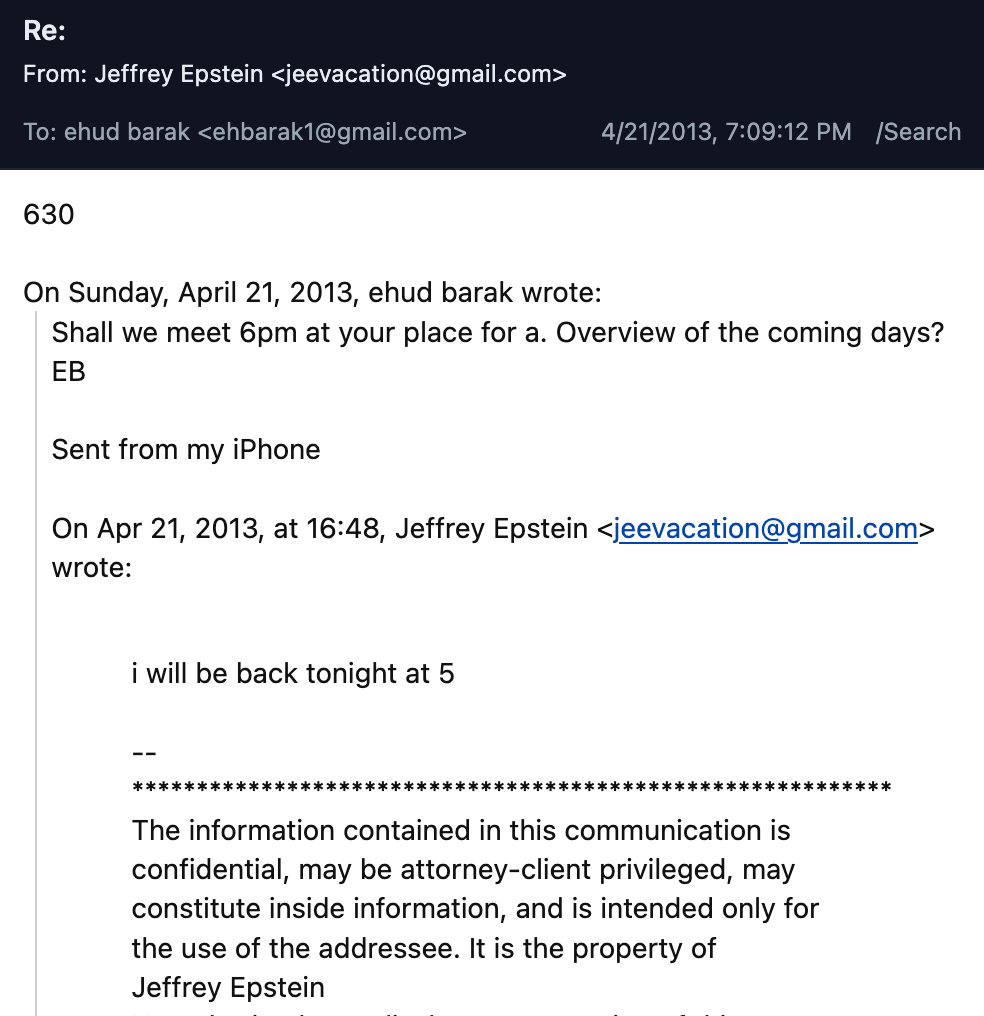
In April 2013, just weeks after stepping down as Israel’s Defense Minister, Ehud Barak traveled to Mongolia to promote Israeli defense interests and scout opportunities for his new consulting firm. Behind the scenes, Epstein was quietly coordinating parts of the trip, according to emails authenticated by Drop Site.
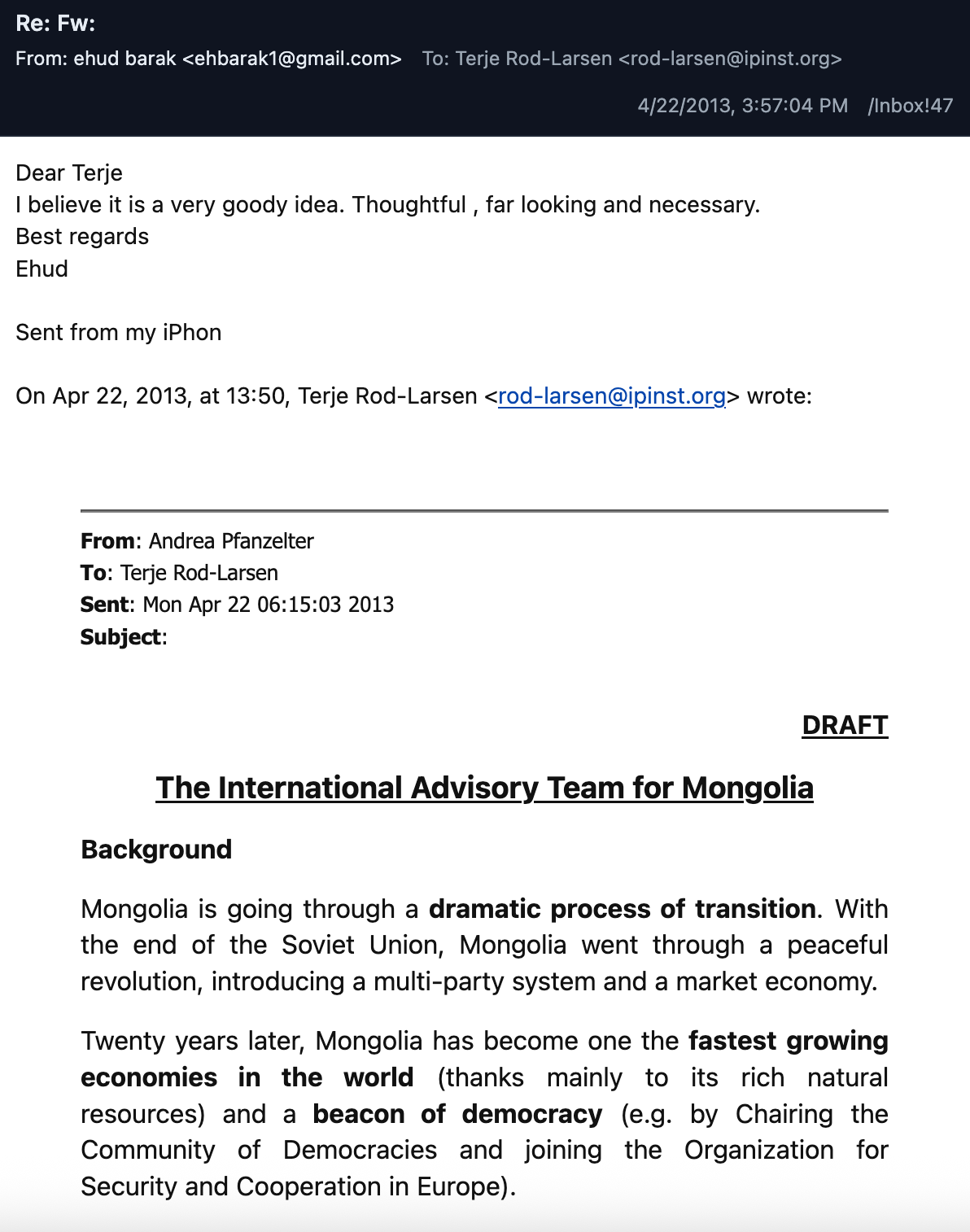
Barak’s visit overlapped with that of Terje Rød-Larsen of the International Peace Institute (IPI), another longtime Epstein contact. Together, the trio floated the idea of creating a Mongolia Presidential Advisory Board to attract foreign investment to the resource-rich nation. Barak called the proposal “thoughtful, far looking and necessary.” Internal IPI correspondence later showed Rød-Larsen looking for ways to compensate Epstein, promising they would “get it back many fold.”
By January 2014, the advisory board had formally launched it's membership. Lawrence Summers, Kevin Rudd, Kjell Magne Bondevik, and Epstein listed blandly as “financier” met for the first time in Davos. Summers pushed Mongolia to develop a sovereign wealth fund and strengthen ties with mining corporations, while Barak and Epstein promoted reforms to the nation’s financial and security sectors.
Barak and Epstein kept collaborating into 2016. That year they worked jointly to promote Reporty, an Israeli emergency-response startup with intelligence-sector roots. Their outreach stretched from Valar Ventures to the Singaporean government, with plans for expansion back into Mongolia.
Epstein + Côte d’Ivoire
Around the same time, Barak turned to selling Israeli defense and surveillance technology abroad. Epstein, acting as an informal envoy, broker, and connector, helped him build access to African political elites, particularly in Côte d’Ivoire.
Leaked emails reveal that while Barak met with Ivorian President Alassane Ouattara in Jerusalem, Epstein met privately in New York with Ouattara’s inner circle: his son, his niece, and his chief of staff. Together, Barak and Epstein shepherded Israeli proposals for mass surveillance of Ivorian communications, designed by former intelligence leaders like Aharon Ze’evi-Farkash. These proposals were routed through private firms, MF Group and Logic Industries to obscure direct state involvement while maintaining deep coordination with Mossad-linked figures.
Barak continued these negotiations even after leaving office, despite a UN arms embargo. With Epstein, Doron Cohen (Barak’s brother-in-law), and a network of Israeli defense executives, he pushed ahead until 2014, when Israel and Côte d’Ivoire signed a formal security agreement. That pact became the foundation for Israel’s growing intelligence footprint in West Africa.
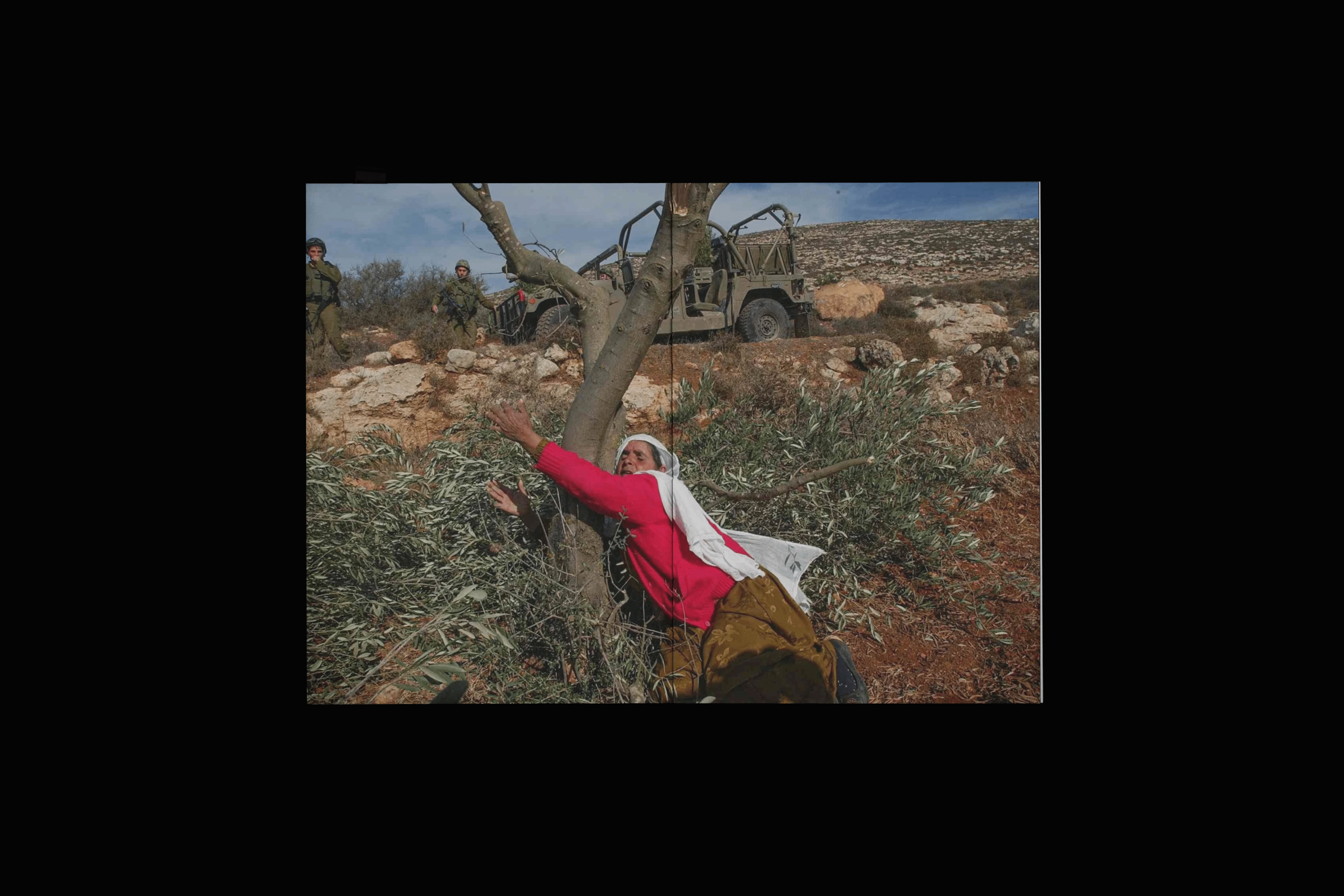
Since then, Ouattara’s government has consolidated power, leaning heavily on Israeli-supplied surveillance tools that activists say are used to silence dissent and criminalize speech. The Côte d’Ivoire files make clear that what Barak called “consulting” and Epstein called “investments” were, in reality, extensions of Israel’s covert intelligence export strategy.
Epstein's Townhouse
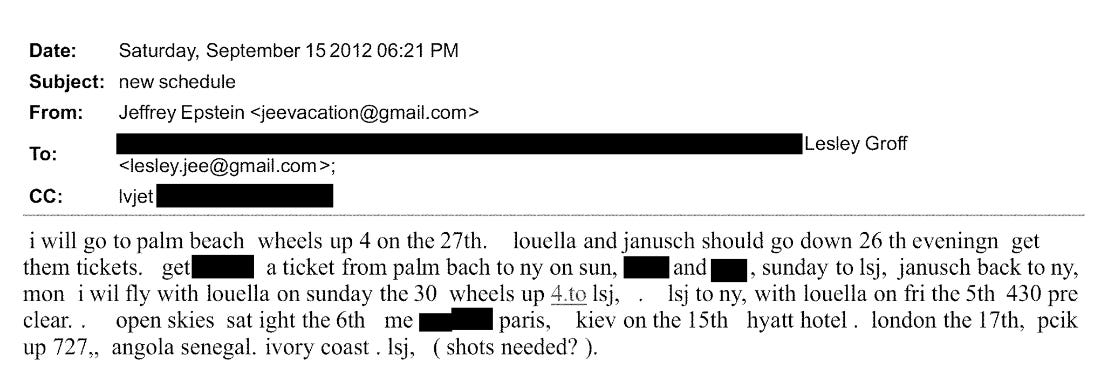
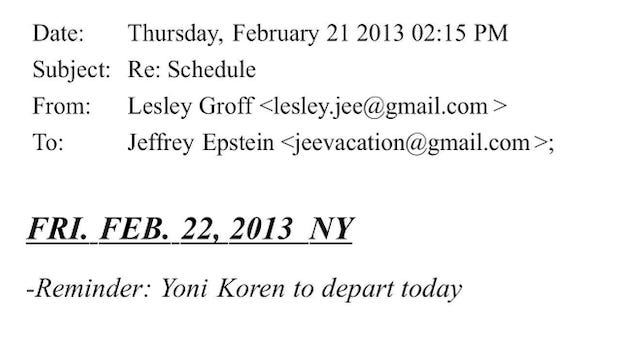
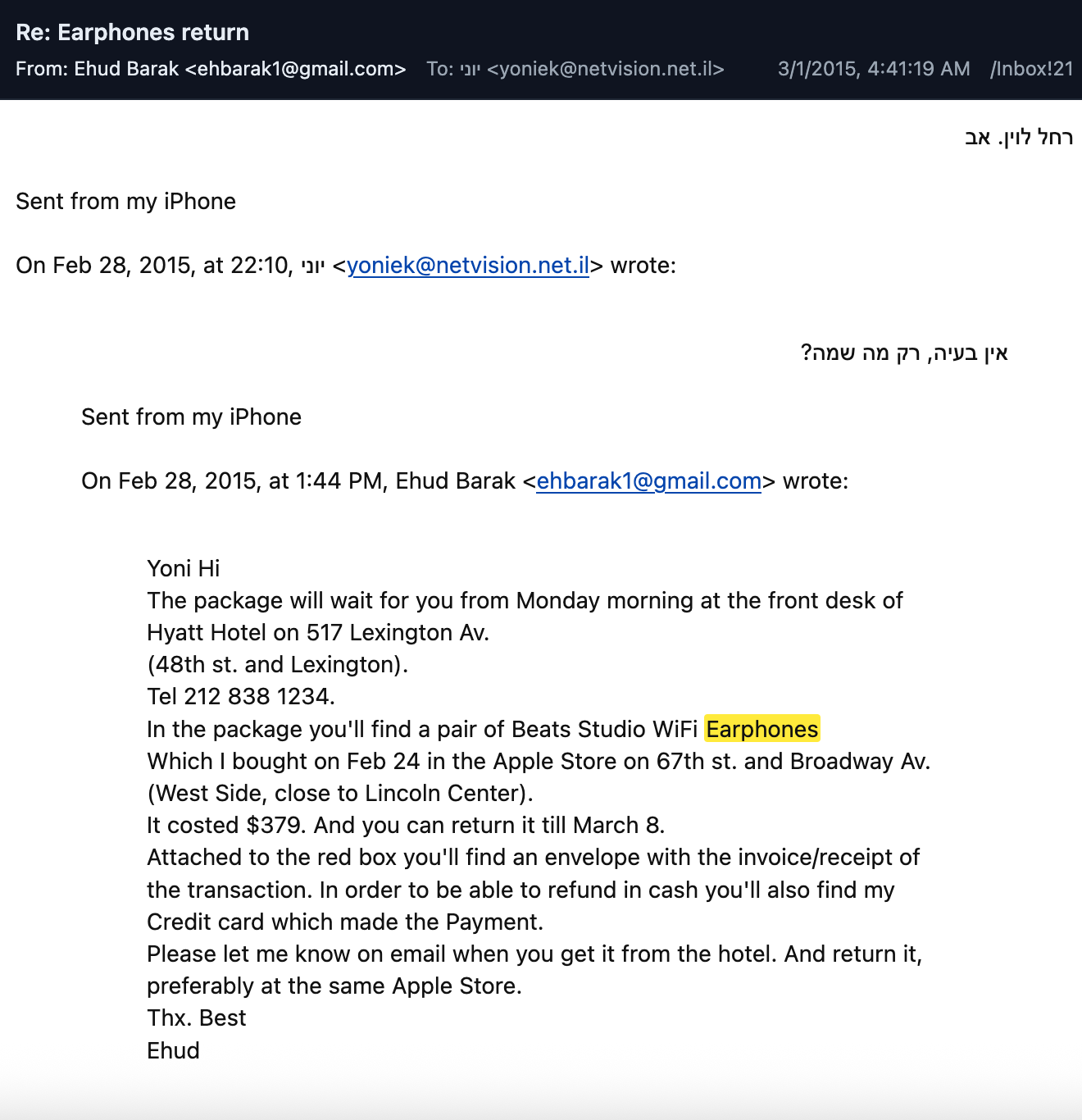
The leaks also offer direct evidence of Epstein’s utility to Israeli intelligence operations. Emails show that Yoni Koren, an Israeli intelligence officer and longtime aide to Barak stayed at Epstein’s Manhattan townhouse for extended periods between 2013 and 2015.Koren, a former bureau chief for Israel’s Ministry of Defense, acted as a discreet liaison between U.S. and Israeli intelligence after Barak’s retirement. During this same period, Barak and Epstein were jointly pursuing tech ventures tied to Israel’s cyber and intelligence sectors.The correspondence contains references to Epstein wiring money to Koren’s Citibank account at Barak’s request, along with cryptic notes about a “bank card” and a package at a hotel. Koren also leveraged his contacts to arrange private White House and Pentagon tours for Barak and his grandchildren, working through Jeremy Bash, former chief of staff at both the CIA and the Department of Defense.
Epstein + The Kremlin
The Barak and Epstein correspondence does more than reveal financial favors or high-profile networking. It provides a window into Epstein’s involvement in geopolitical maneuvering, particularly during the height of the Syrian civil war, which was one of the most consequential conflicts of the decade.Between 2013 and 2016, the emails show Epstein helping create and maintain a covert diplomatic backchannel between Israeli political figures and the Kremlin. This was the period when Russia had fully committed itself to defending the Assad government, which fundamentally changed the direction of the war. Israel was publicly focused on limiting Iranian power in Syria, but privately it was exploring whether a negotiated settlement or even a managed transition away from Assad might be possible.According to the leaked correspondence, Epstein used his access to Russian elites to relay information, arrange introductions, and facilitate at least one private meeting between Barak and Vladimir Putin. These conversations dealt with the political feasibility of removing Assad, or if that was not achievable, with reshaping the terms under which Assad remained in power in ways that would serve Israeli and Western interests. The emails indicate that Epstein, despite having no formal diplomatic title, served as the connective tissue that kept the channel working. He coordinated messages, handled logistical details, and advised Barak on navigating the interests of the Kremlin, Mossad, and the United States.
Epstein’s involvement appears to have included:
• Managing communication between Barak and Russian intermediaries
• Preparing Barak for potential negotiation scenarios involving Assad’s future
• Sharing analysis of Kremlin strategy, military timelines, and diplomatic red lines
• Positioning Barak and himself to influence debates in Washington about the war
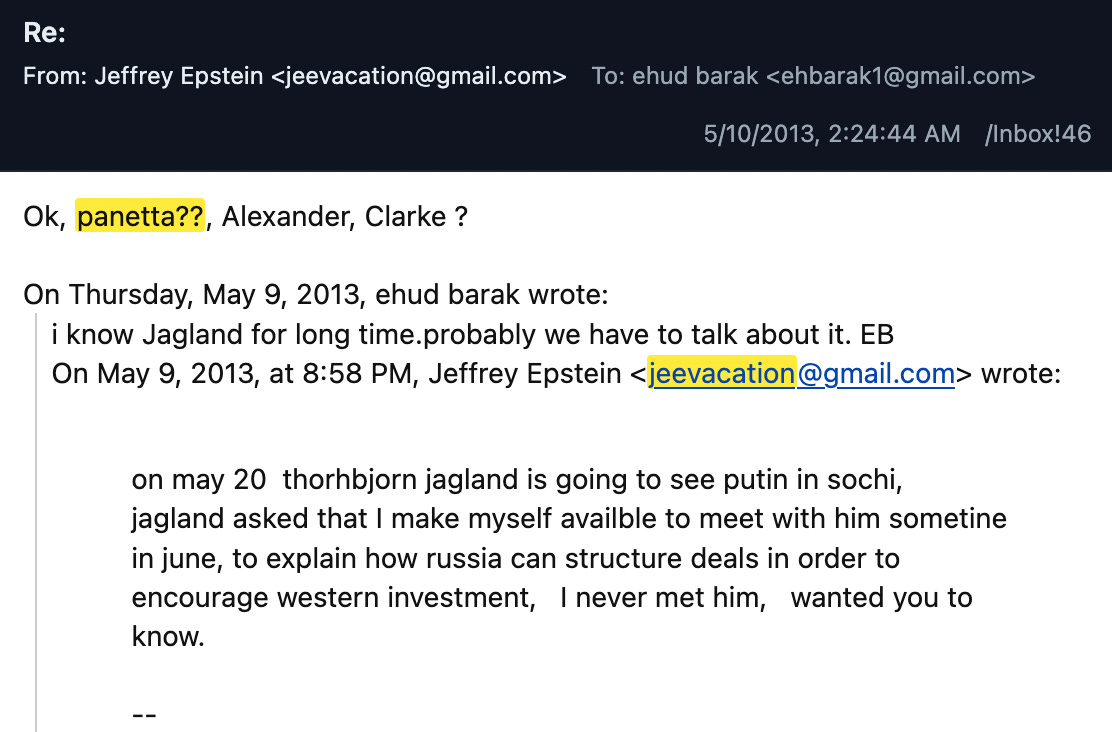
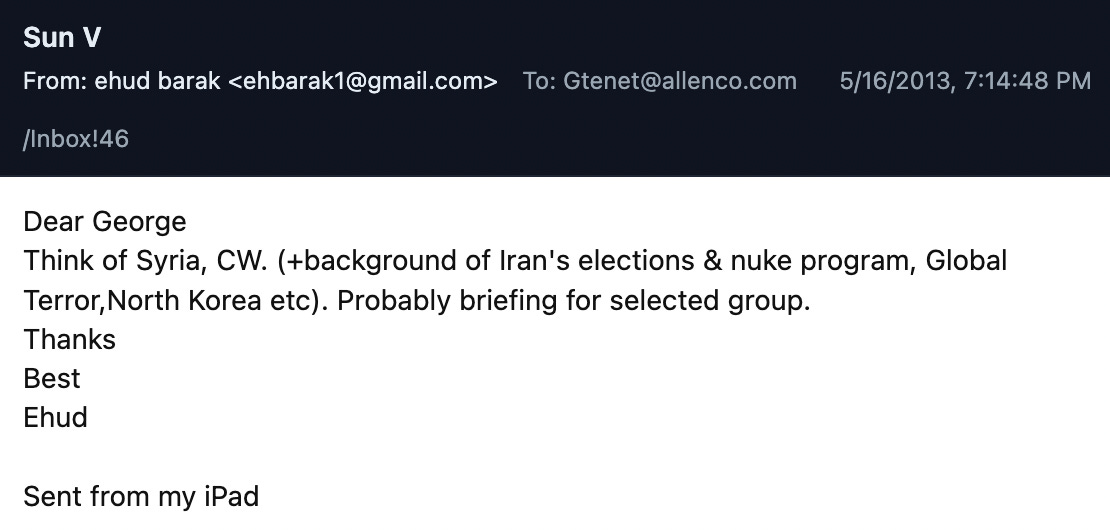
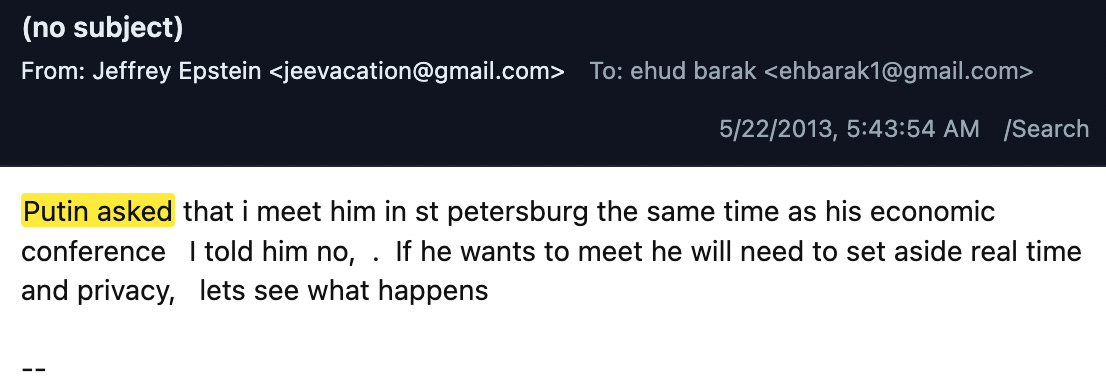
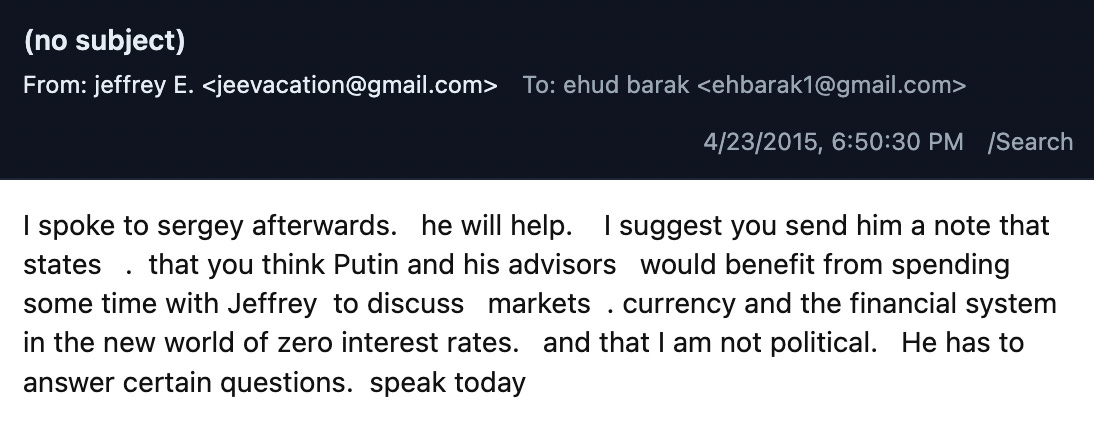
These exchanges strengthen the broader picture emerging from the leaks. Epstein was not simply a disgraced financier with political friends. During this period, he operated as an informal intelligence broker who leveraged his access to world leaders and elite networks to insert himself into one of the most sensitive conflicts on earth.
The media’s silence around these developments shows how closely major news outlets align themselves with the State Department. Even when Trump scandals or Epstein-related stories draw enormous attention, the press still functions as a buffer that filters government actions before they reach the public.This pattern is not limited to legacy media. When the Department of Justice claimed Epstein had no files and no clients, a claim almost no one believed, it only fueled the suspicion that he was receiving protection that pointed to intelligence connections. Soon after, Joe Rogan invited a former CIA officer who redirected blame away from Israel and toward China or Russia, a convenient reframing that kept the focus safely elsewhere.Across the entire media ecosystem, from establishment newspapers to supposedly independent podcast empires funded by institutional money, the effect is the same. These outlets operate as public relations arms for state power, covering up wrongdoing and sanitizing history. Major news organizations remain intertwined with political elites, corporate interests, weapons manufacturers, and the surveillance industry, a network that overlaps significantly with Israel’s security apparatus.In the end, these revelations show that the real story is not Jeffrey Epstein as an individual. The story is the system that enabled him and the media environment that continues to protect that system. While journalists obsess over scandalous scraps, the machinery of intelligence networks, billionaires, and political elites continues shaping global policy far from public view. Until we confront both the shadow networks and the media structures that shield them, the same actors will continue to operate in secrecy, accountable to no one.

.jpg)
.jpg)