
Hit Enter to Search or X to close
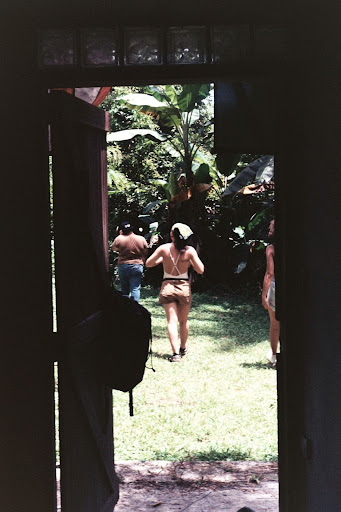
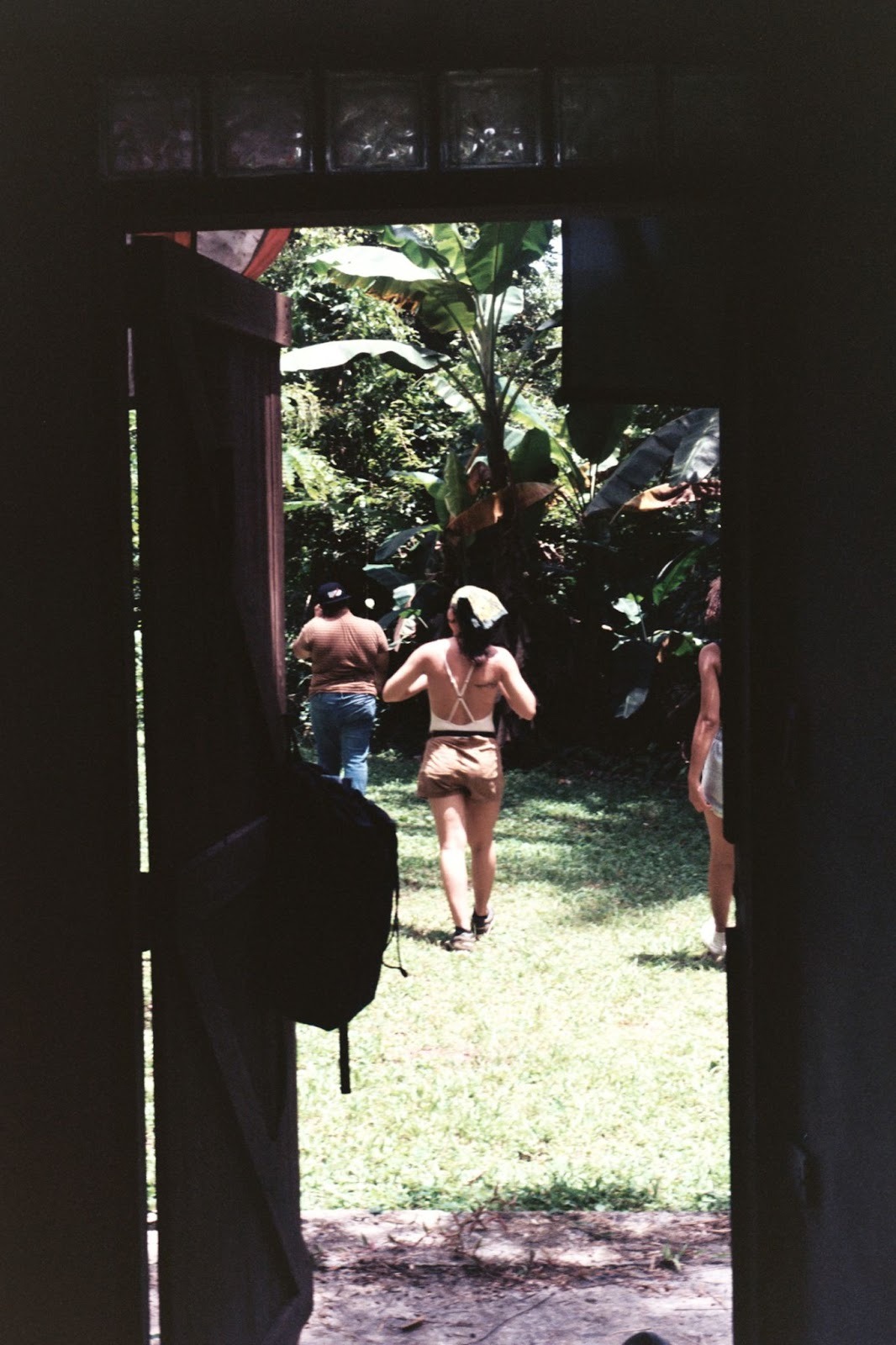
It’s a brisk, humid morning in Hormigueros, Puerto Rico. The kind that kisses your skin with a gentle breeze while the air clings in a warm, sticky embrace. I stand on land so impossibly green it feels otherworldly. This morning, I’m at Casa Museo Filiberto Ojeda Ríos, the historic home of the independence leader, tucked away in a secluded valley embraced by lush greenery. Arriving here felt like something out of a García Márquez novel. A secluded haven that reveals itself only to those who know how to search.
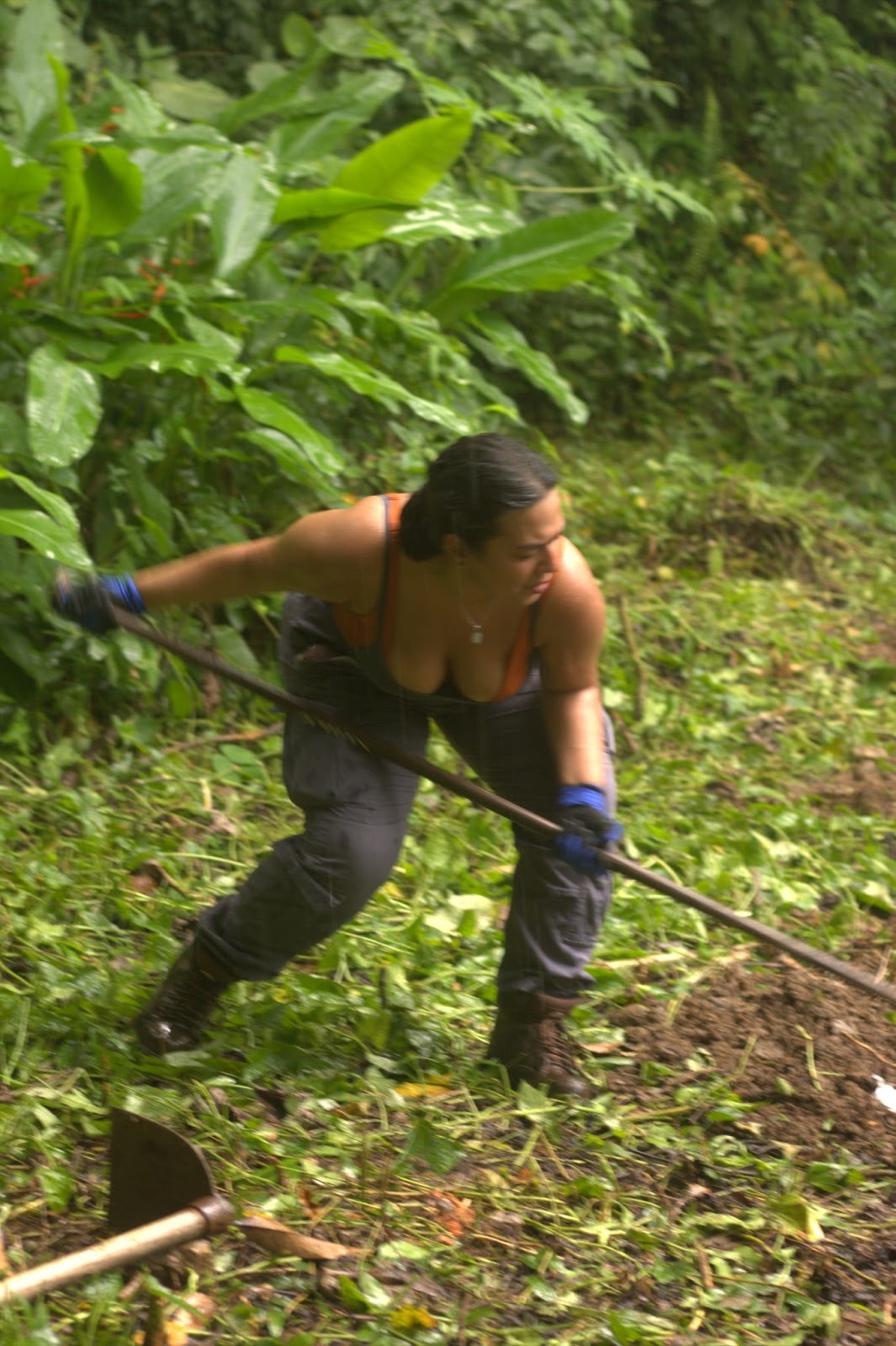
I’m here as part of a brigade between my political organization—formerly New York Boricua Resistance (NYBR), now Juventud Unida por la Independencia (JUPI)—and the volunteers and organizers who manage Filiberto’s home. Our task for the day is to dig a canal, redirecting the water encroaching on the house to preserve its structure and protect it from flooding. By the day’s end, with the help of comrades—mostly locals and another visiting Nuyorican—we completed the work, a measure to safe-guard a house perched on a mountainside of perpetually wet soil. From landslides caused by climate change and deforestation to the mismanagement of resources under entities like LUMA Energy, the island’s survival depends on these daily acts of reclamation. Filiberto’s home, like so much of Puerto Rico, is a symbol of defiance against a system designed to erode both legacy and land.The aroma of damp earth fills my lungs, wafting in like steam from a cup of hot coffee, attuning my body to the fecundity of this land while my mind drifts to the painful history it carries. As I dig the canal at Filiberto’s home, I am struck by the simplicity of this act. It is part of a much larger story: a centuries-old struggle for survival and connection to the earth. Puerto Rico, once called Borikén and home to the native Taíno people, has known the unruly and violent ambition of extractivist imperial forces viewing the bountiful island through the lens of profit.
Columbus arrived in Borikén in 1493, marking the beginning of the Doctrine of Discovery and the “New World.” Renamed “San Juan Bautista,” its colonization began in 1508, following the pillage and genocide of the Taíno people. This was documented by Spanish clergyman Bartolomé de Las Casas, who wrote in Historia de las Indias: “There were 60,000 people living on this island [when I arrived in 1508], including the Indians; so that from 1494 to 1508, over three million people had perished from war, slavery and the mines. Who in future generations will believe this?”. The Spanish brought with them the enslavement of African peoples, and Borikén remained a Spanish colony until the Spanish-American War in 1898. The Treaty of Paris ended the war, ceding Puerto Rico, Guam, the Philippines, and Cuba to the United States as spoils of victory. Puerto Rico’s status as a colony underscores the hypocrisy of U.S. democracy—a nation claiming to champion liberty while maintaining a territory with limited sovereignty, no voting representation in Congress, and no voice in presidential elections. In the context of Trump’s victory—the same man who, in 2017, as Puerto Rico endured the devastating effects of Hurricane María, tossed paper towels to affected oh.hk. in a church basement on the island as if it were some game—this contradiction becomes even more glaring. This is the man who will oversee the United States’ relationship with one of its many imperial possessions for the next four years.
Paranoia grips me while standing in Filiberto’s backyard, my heavy combat boots and cargo pants shielding me from the elements, but my spaghetti strap top leaving my arms exposed to the mosquitoes. I am vulnerable in more ways than one. The verdant ground I stand on might be yanked from under by some invisible hand, leaving us all dumbfounded. The forces threatening this house are the same forces endangering Puerto Rico today: privatization, exploitation, colonial neglect. Inside his home, my fingers carefully trace bullet holes scattered like rainfall across the walls of this place, left by the FBI on the day they assassinated Ojeda Rios in 2005. I had heard so much about Filiberto’s home from my NYBR comrades, about what it means to help preserve it and absorb its history. But nothing could have prepared me for the visceral reality of revolutionary praxis, and of the repressive violence employed by the oppressor. The weight of it all rushes at me like a wave.
I am arriving from the belly of the beast; a cautious, almost anxious visitor in the home of a revered, martyred independence leader for the first time ever. As a Nuyorican (a term coined around the 1960s/70s, following the Great Migration of many Puerto Ricans or Boricuas to the US in the 1950s) who also lived for years at a time on the island, my relationship to land and identity is hybridized, in limbo, a constant state of being both insider and outsider, separate but belonging; a connection of liminality.I can’t help but feel like I am invading Filiberto’s space. What does it mean to show solidarity with a colony when you are complicit in the actions of its colonizer? I embody an uncomfortable duality: one of diasporic contradictions. I am a visitor, tied to this land by blood and memory, yet I live off the fruits of its exploitation. I am compelled to compare the two worlds, to confront the material differences between those who remain on the island and those of us in the imperial epicenter. As my friend and comrade Elías Prieto puts it, “They are different trenches.”Tending to Filiberto’s home on that cherished day felt like planting a seed, a small act that laid the foundation for something greater to flourish. An act that affirmed continuity and maintained legacy, showing that the fight for sovereignty isn’t confined to just policy change or mobilization against oppressive forces. It is rooted in the soil itself, in the daily acts of care that nourish the land and the spirit, when we honor ourselves and our history by taking care of the earth that sustains us.
Elías, an artist, cultural worker, and student of agriculture, was there with me on that overcast July day at Filiberto’s. They are part of another land initiative in Puerto Rico, a grassroots organization called Sembrando Resistencias. Focused on land reclamation, food sovereignty, and community healing—particularly for trans and queer folks—Sembrando Resistencias not only cultivates restorative blooms like hibiscus and roses but also creates dignified opportunities for work and collective healing. Its flagship project, Amara Siembra, honors the legacy of Amara, an Afro-Boricua trans woman who was deeply connected to the land in Caguas. This initiative serves as both a space for agricultural production and a vessel for historical memory. As Elías explains, “In Sembrando, we use the phrase ‘compostar las violencias’—to compost the ancestral and present-day violences we’ve experienced into seeds of freedom. Like any compost, it’s a constant process of transformation, and it’s incredible to see all the life that emerges from it.”“For me,” Elías continues, “the greatest achievement has been the connections we’ve built—trans people coming together to reconnect with the land, feeding ourselves and others, and creating spaces of dignity and healing in the face of systemic violence.” Casa Museo Filiberto Ríos and Sembrando Resistencias are initiatives which form part of a broader push in Puerto Rico: vibrant revolutionary hope in response to capitalist deregulation and privatization. Countless examples illustrate the disastrous effects of capitalism in Puerto Rico. The privatization of the power grid under LUMA Energy has saddled residents with skyrocketing electricity rates and chronic outages, including a blackout that left 1.3 million people in darkness on New Year’s Eve 2024, as reported by PBS News. Similarly, Act 60, a tax incentive program for wealthy investors, has driven a 63% surge in home prices between 2012 and 2021, according to the Center for Investigative Journalism. All-cash purchases by non-residents soared by 740%, making housing increasingly inaccessible to locals. Compounding these issues is Puerto Rico’s reliance on imported food—85% according to the USDA—alienating people from the land while American franchises like Chick-fil-A and Starbucks proliferate, celebrated as symbols of convenience but eroding cultural and agricultural autonomy.
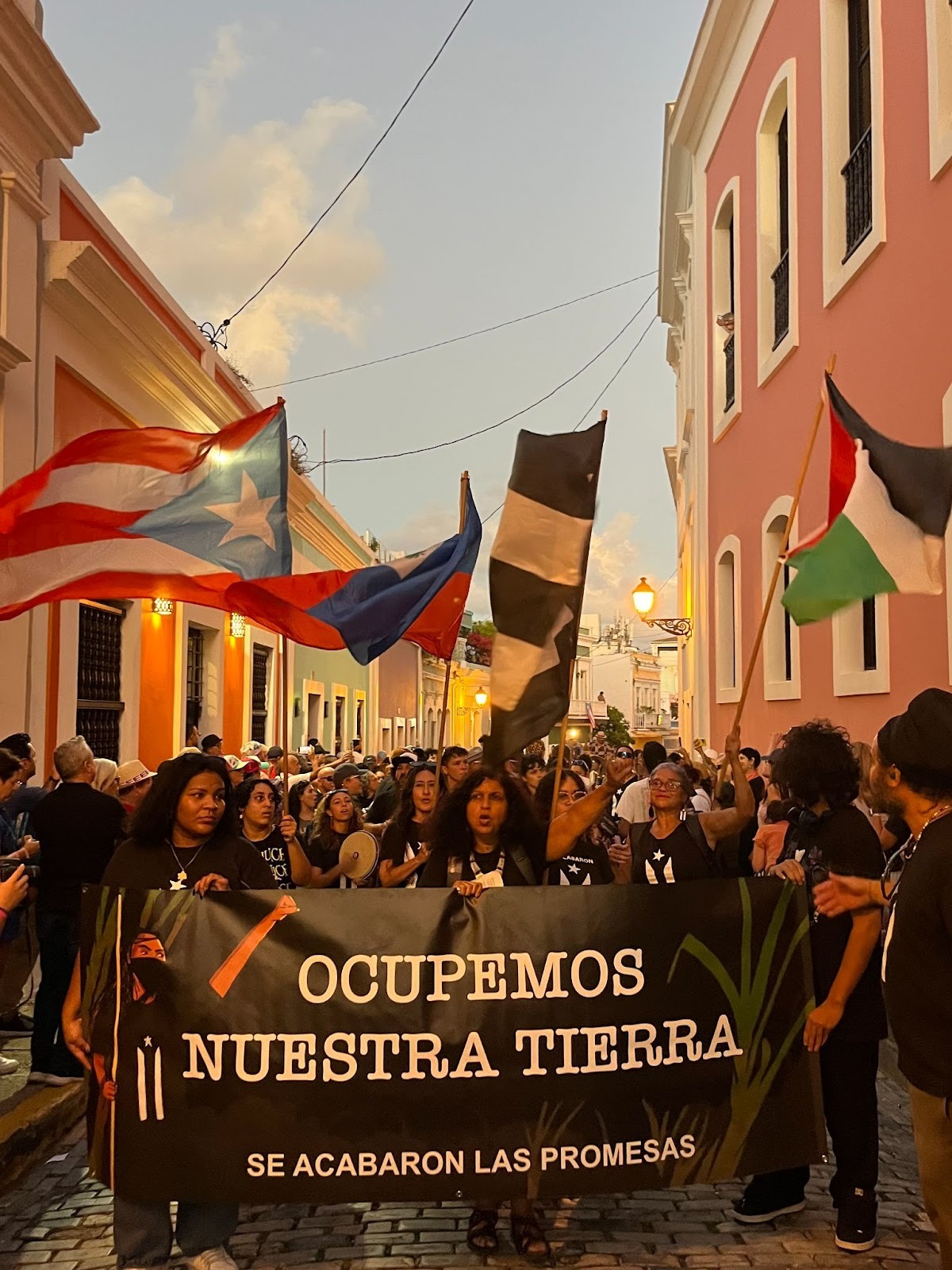
“Puerto Rico is a consumer economy, not a productive one... The fact that most of our access to food comes from imported products, that is alienating people from the land they walk on,” says anthropologist, archaeologist, and recent University of Puerto Rico graduate Eli Valentín. Who I spoke with about how colonial structures affect food sovereignty and produce insecurity. “Colonialism is the displacement of people from their land, their food, and their knowledge—the access points to their ancestry,” Eli explains. “To want food security in a colony is a political stance. You must take a political position to imagine that as a possibility. What needs to happen in Puerto Rico right now is occupying land, occupying abandoned buildings, starting to take action,” they assert. “Capitalism and the state are killing us. We want to live in community, taking care of each other beyond the state.”The need for spaces such as Casa Museo Filiberto, Sembrando Resistencias, El Josco Bravo, Proyecto Plenitud, and others in Puerto Rico is undeniable. “We don’t realize that we have some of the best soil in the world, but it’s neglected.” says artist and activist Andrea Robles, a Bayamón native and recent Pratt graduate who is rematriating (a preferred term to employ, given the maternal element that so many ascribe to Puerto Rico) to the archipelago. “Sometimes we don’t even have to plant something for it to just grow in our backyard. Food will just appear because [the soil] is so fertile and it will just spread. That’s why I’m so excited to be a part of this project.” Andrea will be participating in an immersive agroecology course at El Josco Bravo. “We’ll learn everything– from harvesting and planting to dealing with pests and becoming more sovereign with our food.”
Family-run in the mountains of Toa Alta, El Josco Bravo is a farm that serves as both a model of regenerative agriculture and a hub for community education. At a local market called el Mercado de la Cooperativa Orgánica Madre Tierra in San Juan, the Pagán Roig family, who runs the farm, offers their farm’s products. “The program is a full semester, one day a week, where we’ll spend a full day on the farm learning theory about agriculture and ecology and practicing it directly on the land. They’ve been doing this program for 12 years now. I’ve always wanted to connect my art with working directly with soil and plants. Being at El Josco Bravo will help me bring those ideas into my work, whether it’s painting, writing, or creating films. It’s powerful to think about sharing food you’ve harvested with others, being in contact with animals on the farm, and learning to work with the land. That’s something I’ve dreamed about doing.” says Andrea.
The soil of Puerto Rico is stained. It holds the blood of genocided Taíno people and enslaved African peoples; the sweat of sugarcane workers who toiled under the United States’ 20th-century industrialization project Operation Bootstrap; and the tears of countless Puerto Rican women sterilized without consent under the political guise of solving a problem of “surplus population” (a term used by acting Governor Rafael Menendez Ramos in 1936 when he signed the bill legalizing birth control, as recorded by The New York Times). From police and security guard brutality—such as the 2022 shooting of a protester during a land protest as reported by NBC—to the ongoing militarized privatization of Puerto Rican shores, violent impositions persist, manifesting in new ways. These shores, which by law are all supposed to be public, render many of the new and contested beach property developments not only to be aggressively gentrifying but illegal. As the slogan on the island goes: “Las playas son del pueblo” (The beaches belong to the people). But the American presence in Puerto Rico is not just about taking land, it is about actively destroying it. On January 2nd, 2025, Danielle Bertothy—an American tourist and a deranged embodiment of colonialism—set three businesses ablaze in Cabo Rojo in an arson attack, a criminal rampage sparked by a drunken argument with employees. Suffice to say, the soil carries trauma—ancestral and otherwise.
And yet, this soil cradles love. It has nurtured centuries of survival and empowerment, and it will continue to do so. Seeds of renewal are being sown, tended to with meticulous, militant care by islanders who refuse to let the land’s legacy be defined by hopelessness. Grassroots movements are transforming the soil into a site of resistance, reclaiming it from centuries of imperial greed, neglect, and exploitation.
The struggle for Puerto Rican liberation is as much about cultivating the soil as it is about cultivating imagination. As Eli reminds us, “There needs to be a reimagining of what it means to live in Puerto Rico... of how to enjoy the land and how much we believe we deserve to belong to it.” This reimagining requires courage. Yet, as these revolutionary movements across the island show, it is entirely possible. From the fer-tile grounds of El Josco Bravo, to the many loving hands at Sembrando Resistencias, to Filiberto Ojeda’s home being maintained and protected by those dedicated to preserving his legacy; Puerto Ricans are forging paths to freedom, and composting the violences of colonial subjugation. Puerto Rico’s fight for sovereignty and liberation offers a blueprint for global movements. From reclaiming the soil to reimagining community, the island teaches us that resistance is not just about defying oppression—it’s about planting the seeds for a freer, more dignified future.

.jpg)
.jpg)