
Hit Enter to Search or X to close
.png)
To understand the gravity of Sudan’s crisis is to confront some sobering statistics. Sudan is experiencing one of the worst humanitarian crises in the world, with over 24.6 million people acutely food insecure and 5 million on the brink of famine More than 12 million people are internally displaced, making Sudan the country with the largest internally displaced population globally. Fighting between the Sudanese Armed Forces and the Rapid Support Forces has devastated communities, left thousands dead, and displaced millions. Disease outbreaks are rampant, with over 11,000 suspected cholera cases reported, and severe acute malnutrition threatens the lives of over 700,000 children. The healthcare system is in shambles, with up to 80% of hospitals in conflict-affected areas no longer functional. Despite these dire circumstances, humanitarian aid remains grossly underfunded. The World Food Programme (WFP) has a funding gap of $74 million for the Sudan crisis response. This underfunding is not merely a logistical issue; it reflects the broader devaluation of Black lives, showing how deeply ingrained racial biases influence the allocation of global resources.
It’s been 16 months — nearly 500 days — since the start of the brutal conflict in Sudan.
Throughout this time, I’ve found myself struggling with the world’s profound indifference to the tragedy unfolding in my homeland. Despite the immense suffering marked by brutal violence, mass displacement, and a looming starvation crisis, Sudan’s plight remains largely ignored by the international community.
This silence is not just a byproduct of ignorance or compassion fatigue; it’s a stark reflection of deeply ingrained Anti-Black racism. These attitudes are the direct legacy of colonial, imperialist, and capitalist systems that have long devalued African lives and narratives. To awaken the world’s conscience, especially in the Global North, we must confront these harsh truths and ask why Sudan’s suffering has been relegated to the margins of global concern. As Sudan approaches another grim milestone, it becomes increasingly urgent to recognize that the global response — or lack thereof — is not an isolated failure but part of a systemic problem rooted in racism. Changing the course of this crisis and preventing future tragedies requires dismantling these destructive narratives, committing to justice and equity, and recognizing the humanity that connects us all.
The indifference to Sudan’s crisis can be traced back to the deliberate construction of Anti-Black racism by colonial powers to justify the exploitation and enslavement of African people. This strategic dehumanization was essential for the colonial project, framing Africans as less than human, and thus exploitable without moral consequence. By promoting the idea that Black lives were less valuable, colonial powers rationalized their ruthless extraction of African resources and the brutalization of African bodies. Walter Rodney argued that the wealth of the West was built on the destruction of African societies, stating, “The developed capitalist countries of today exploit the labour and natural resources of less developed countries This dehumanization was not merely an abstract ideology; it was a practical tool of control that allowed the economic exploitation of Africa to go unchallenged.Frantz Fanon described how colonialism used race to define social hierarchies, establishing a framework where the colonizer was seen as the civilizing force and the colonized as inherently backward and uncivilized. Fanon argued, “The colonial world is a world divided into compartments… What divides this world is first and foremost what species, what race one belongs to." This racial framework justified the violent subjugation of colonized peoples, presenting it as a noble endeavor to bring civilization to the uncivilized. This imposed racial hierarchy dehumanized the colonized, stripping them of their agency and humanity. He further contended that this dehumanization did not end with the formal end of colonialism but, persisted in neo-colonial relationships, where former colonial powers continued to exert economic and cultural dominance over their former colonies.
The legacy of these historical practices continues to shape global perceptions and responses to African crises today. The idea that African suffering is inevitable or somehow less important persists in the way international media and political institutions respond to crises in Africa. When famine, war, or disease strikes in African nations, the response is often characterized by apathy or a lack of urgency. Teju Cole in his critical essay on Western interventionist attitudes, aptly calls this phenomenon the “White Savior Industrial Complex,” highlighting how the perception of African issues often centers around Western intervention rather than African agency. This indifference is not simply a failure of empathy; it is a direct continuation of the colonial mindset that positioned African lives as less valuable. This legacy of dehumanization manifests in the underfunding of humanitarian aid, the lack of comprehensive media coverage, and the slow response of international organizations to crises in African countries like Sudan. By understanding and challenging these historical narratives, we can begin to dismantle the structures that perpetuate inequality and injustice.
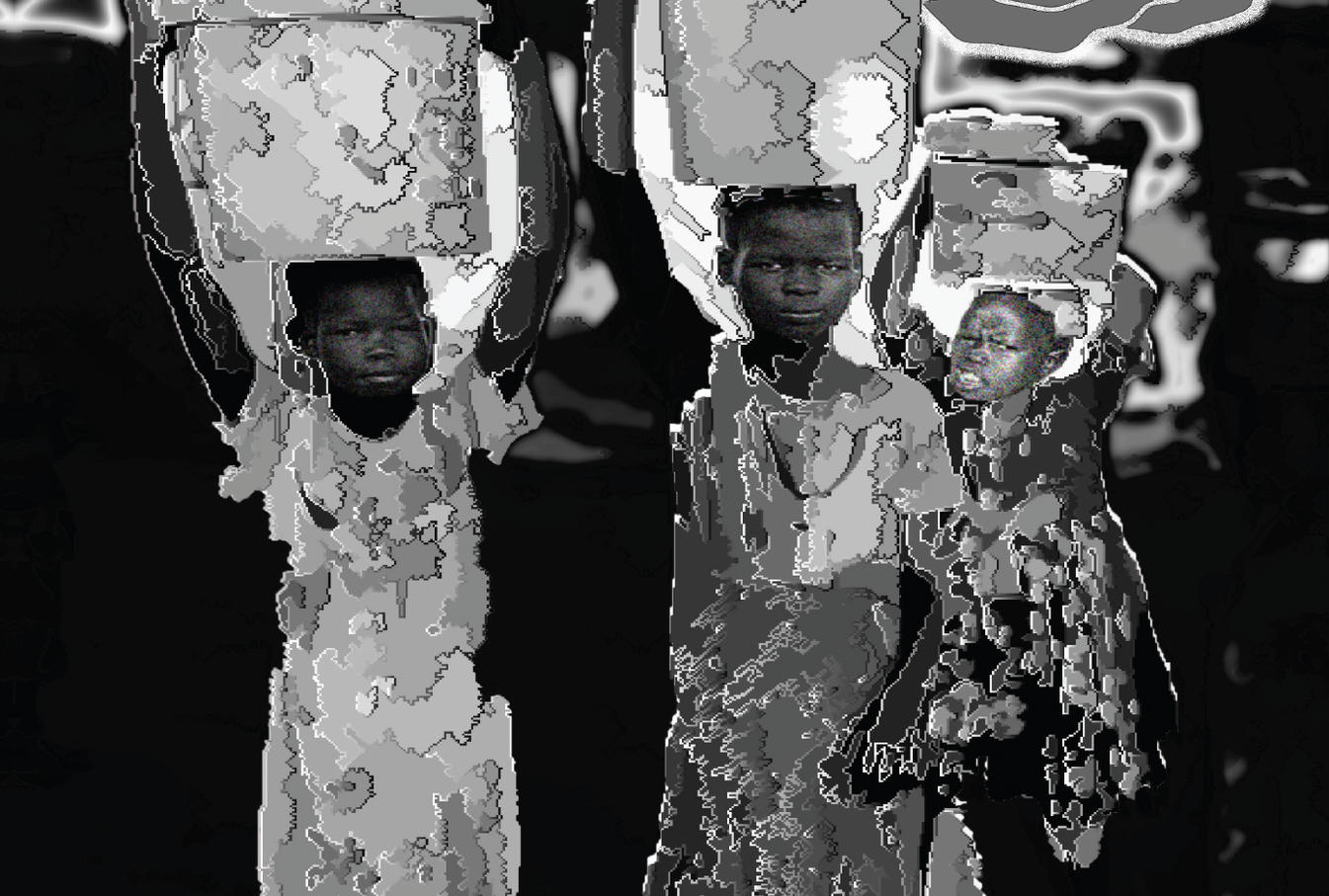
We must look at how internalized Anti-Black racism operates, particularly within individuals in the Global North. From an early age, people are inundated with biased media portrayals, Eurocentric education, and societal narratives that depict Africa as a continent in perpetual crisis, inherently incapable of solving its problems. These narratives aren’t benign; they’re insidious, conditioning people to see African suffering as less urgent and less human. This internalized bias dulls empathy and concern for African lives, making it easier for people to maintain a status quo of inaction and indifference.Anti-Black racism has been so deeply ingrained and normalized that it often goes unnoticed, even by those who consider themselves progressive or Anti-racist. This normalization results in a distinct lack of urgency and moral outrage when humanitarian crises unfold in African countries. The prevailing view that African suffering is somehow inevitable — part of a natural order — obscures the reality that these crises are largely the consequence of historical and ongoing exploitation by colonial and imperialist powers.
When people subconsciously believe that Africa’s problems are beyond help or intrinsic to the continent, they feel justified in their lack of engagement or action. This internalized racism perpetuates systemic neglect, as personal indifference feeds into a broader pattern of global apathy.Confronting these internalized biases requires a significant shift in perspective. It means moving beyond reductive narratives and recognizing the historical and systemic factors at play. Education and media must play a transformative role in this shift, emphasizing the connections between colonialism, imperialism, and contemporary African crises. It is crucial to elevate African voices and perspectives in these discussions to provide a more accurate and comprehensive understanding of the issues.
Recognizing and addressing internalized Anti-Black racism is essential for genuine solidarity with African nations. It involves acknowledging the interconnectedness of global struggles and taking responsibility for how our own societies contribute to the suffering of others. It means shifting from a mindset of charity and saviorism to one of justice and equity, where the dignity and humanity of African people are respected and upheld. Only by challenging these deep-seated biases can we hope to build a more just and compassionate world.
__________________________________________________________________________________________________________________________________________________________________________________
Typical Reactions Shaped by Anti-Black Racism
"ISN'T IT A CIVIL WAR?"
This question reduces the complex sociopolitical dynamics of Sudan to a simplistic and dismissive label. By calling it a civil war, people are able to ignore the external influences that have exacerbated or even sparked the conflict. It allows the listener to sidestep the responsibility of understanding how Western interventions, economic interests, and historical colonialism have played roles in the current situation. It supports the narrative that African violence is internal, inevitable, and isolated from global systems of power, which in turn justifies a lack of action or solidarity from the international community.
"IT'S VERY COMPLICATED"
Invoking complexity as a reason for inaction is another way internalized racism manifests. Yes, the issues facing Sudan and many African countries are complex, but this complexity should not be a barrier to engagement or understanding. When people use complexity as an excuse, it reflects a deeper unwillingness to confront the uncomfortable realities of racial and economic injustice. It suggests that African suffering is too alien or inscrutable for Western intervention, conveniently absolving individuals and societies from engaging with these crises or taking action to help. This response maintains a comfort zone that avoids challenging systemic racism and the historical exploitation that underpins these issues.
"I DON'T KNOW WHERE TO BEGIN"
Reflects a form of internalized Anti-Black racism that subtly excuses inaction and disengagement. While it may seem like an expression of overwhelm, it often serves as a way to avoid taking responsibility or confronting uncomfortable truths about systemic racism and one’s own complicity in these issues. This response shifts focus from personal accountability to the perceived complexity of the problem, creating a sense of paralysis that justifies inaction. It reflects a reluctance to invest time and effort into understanding the historical and systemic roots of African suffering, underestimates individual agency, and maintains the status quo.
__________________________________________________________________________________________________________________________________________________________________________________
The global indifference to Sudan's crisis stems from deeply entrenched colonial and imperialistic ideologies that frame African suffering as inevitable, enabling apathy and inaction. To dismantle these structures, decisive steps must be taken to challenge Anti-Black racism, colonialism, and capitalist exploitation. This includes policy advocacy for reparations and alternative economic systems, holding corporations accountable, and fostering coopertive economies. Education should center African histories and knowledge systems, while media should amplify African voices and challenge harmful stereotypes. Grassroots organzing, direct action, and transnational solidarity networks are essential in mobilizing support. Sustainable activism requires self-care and resilent communities, while direct support for Sudanse and African- led initiatives ensure agency and self-determination.

.jpg)
.jpg)