
Hit Enter to Search or X to close
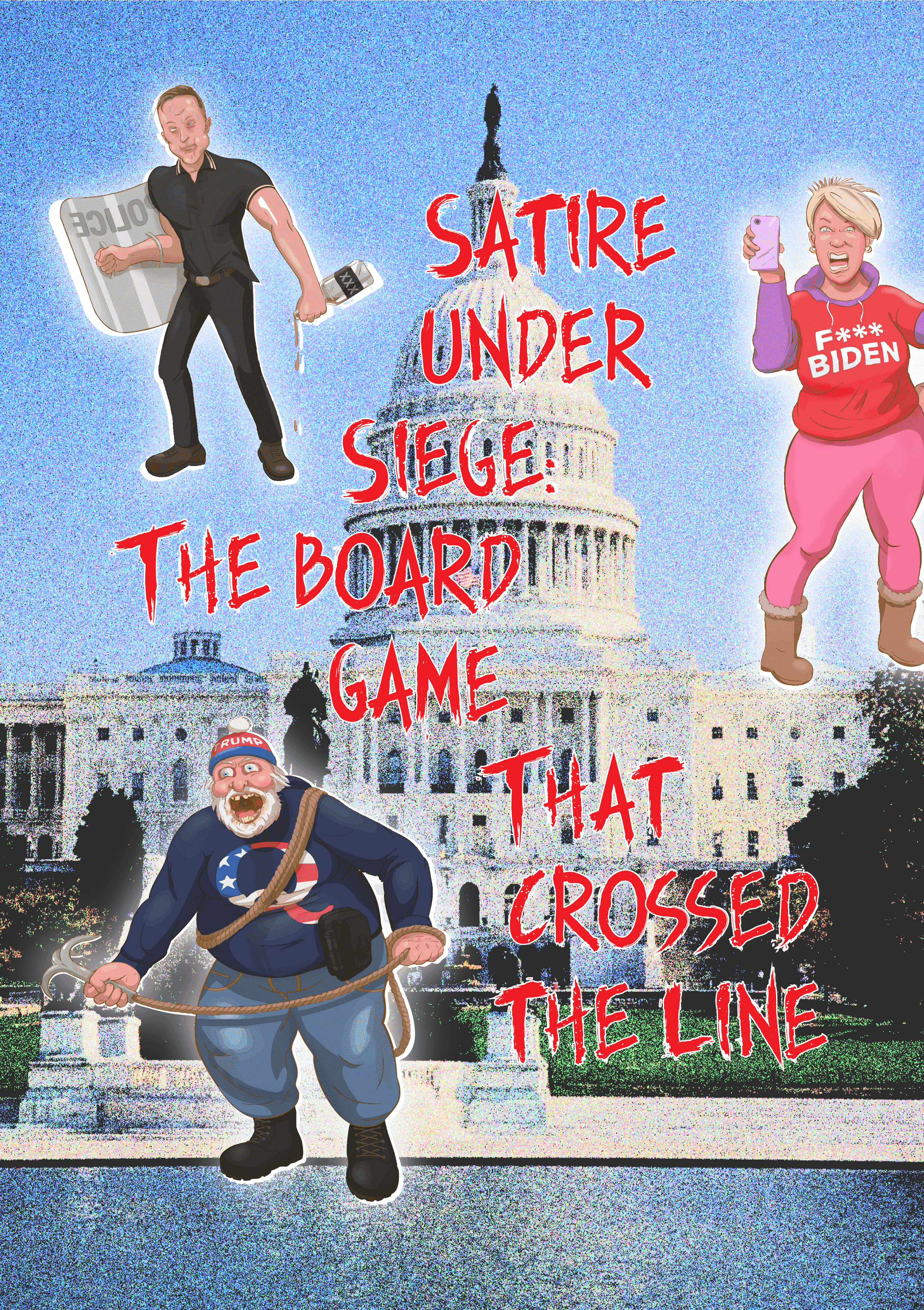
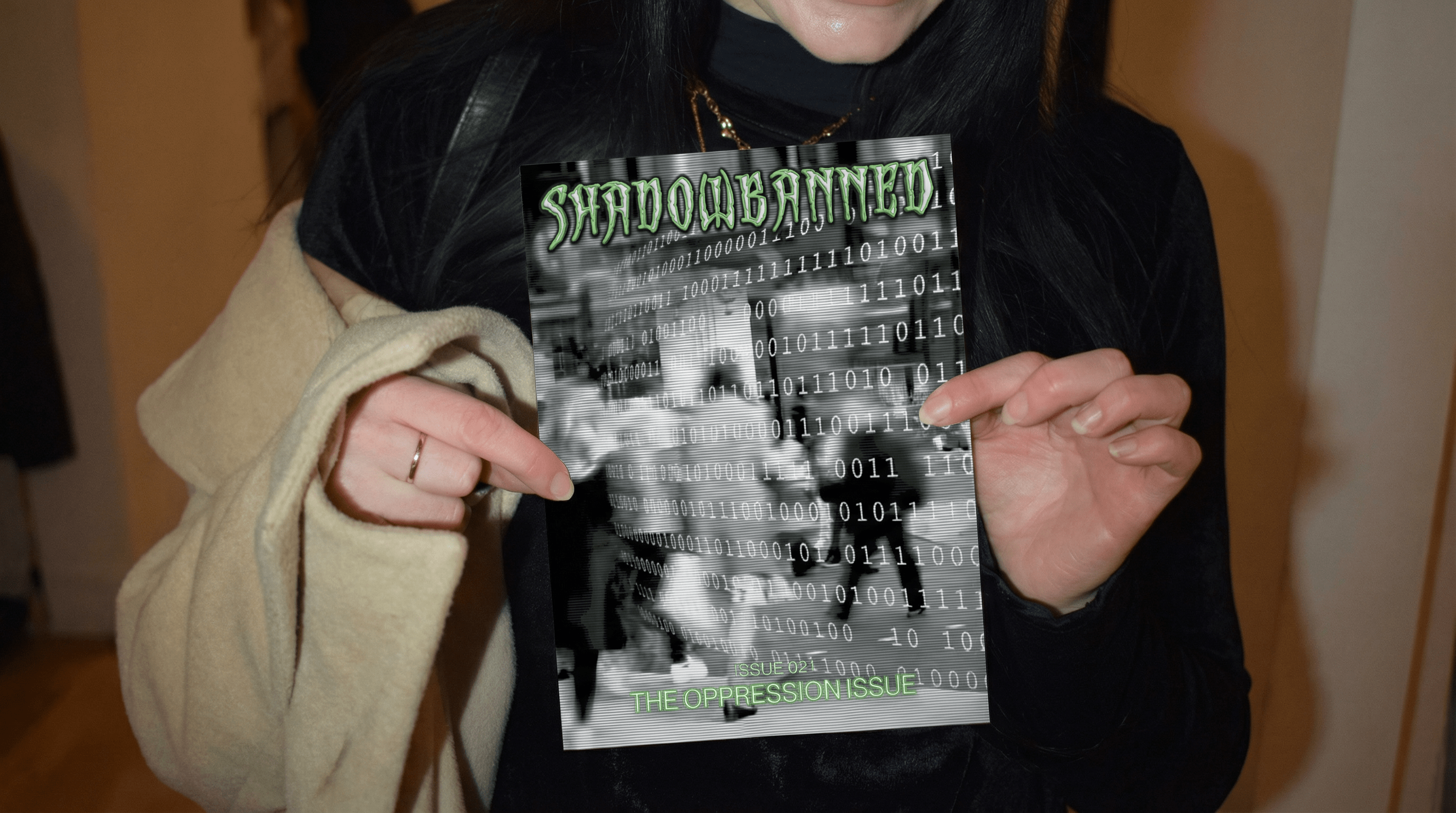
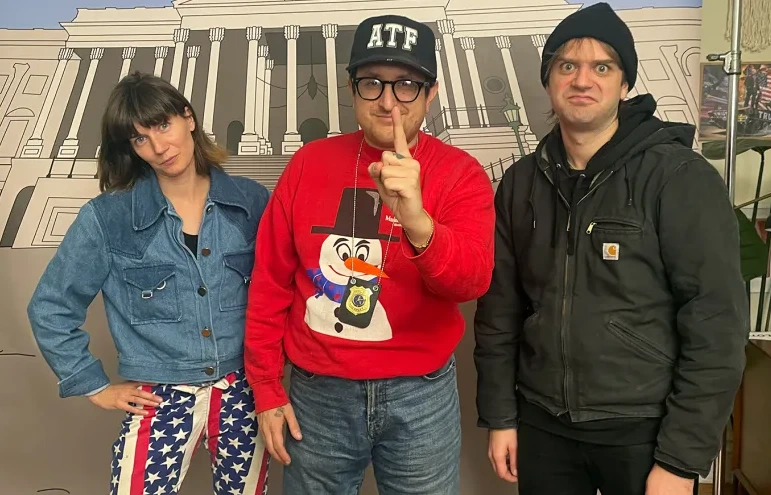
Walker and Zee Behl, a brother-sister duo, are the creators of the independ-ent board game “Storm the Capitol,” which satirizes the events of January 6, 2021. The game invites players to engage with the absurdity and chaos of that day, blending dark humor and sharp political critique. Despite its clever design and growing popularity, the game has faced significant censorship, with major platforms banning its advertisements and retailers refusing to stock it, citing its “political nature.” The Behl siblings sat down with Shadowbanned Magazine to discuss their game, the challenges of satire in today’s political climate, and the limits of free expression in media.
Shadowbanned Magazine: Why don’t we start with you introducing yourselves and sharing a bit about your background?
Walker: Sure, I’m Walker, and we’re the co-creators of “Storm the Capitol.” I don’t have a background in board games—we’ve played plenty, but Zee and I come from art. I’ve been in punk bands for years, and Zee is an artist. This project started as a fun idea, not something we expected to dive into fully.
Zee: It was our family COVID project. Walker and I have done a lot of gig work in film and other creative fields. During COVID, with everything shut down and those weekly stipends, we had the chance to work on something purely creative. The idea came about right af-ter January 6th. I was making a banana cream pie for Walker’s birthday, and we joked about turning the chaos into a board game. It grew from there, though we’ve had to learn a lot—especially about working together as siblings.
SM: Why choose a board game as the medium to satirize such a controversial event?Walker: It felt right. Board games are in-teractive and let people engage directly with the absurdity of an event. We love alternative humor, and coming from the punk scene, I’m used to politically on-the-nose, sarcastic, and cartoonishly dark imagery. A board game gave us the freedom to lean into that.
Zee: It also felt like a way to explore the fantasy of the event. Watching the footage, it was like a twisted selfie-thon, with people having the time of their lives in this bizarre reality. The board game medium allowed us to capture that while encouraging people to reflect and laugh at the ridiculousness of it all.
SM: What inspired the overall tone and approach?
Zee: It was the surreal nature of the event we were referencing. Watching people document everything like a selfie marathon—it felt both absurd and strangely celebratory. We wanted to capture that vibe without being didactic.
The goal was to create something fun and chaotic, a shared experience for players to parse what’s going on in that fantasy world. I think everyone, you know, can relate to some of the fun in it. It feels important to push people a little, to remind them that we can joke about these things. We have to joke about how messed up the government is, how messed up our country is—and the people in it, too, all of it. If we can’t do that, then what? We’re basically living in a state of censorship already, right?
Walker: Exactly. And that’s true—it’s not untrue. The media is obviously con-trolled. We’ve had a lot of trouble getting our project out there, even though our game is really popular. Meta won’t allow us to advertise on their platform because of the AI and censorship bots they use. Facebook got in a huge amount of trouble after the 2016 election, and I think they made new rules: no product could be sold or advertised on Facebook during an election year if it was political at all. So obviously, a lot of people trying to raise money for Palestine ran into this problem. And it was true for us too. It could’ve been that they just saw “Trump” on the cover—we misspelled it, by the way—or maybe the American flag. I don’t know. But we were immediately flagged as “political.”
SM: What other ways have you faced censorship?
Walker: I’ve been noticing this even more lately because we keep getting flagged again—this time on TikTok. We met a TikToker at our event at Pioneer Works the weekend before I met you. I was talking to her, and she said, “Oh, I’m already a fan! I’ll make a TikTok video.” And we were like, cool, that’d be great for reaching that audience. She made the video and DM’d me like, “Holy shit, TikTok took it down in 30 minutes.”
SM: Wow.
Walker: Yeah. It was labeled as “misinformation.” I’ve been through this so much trying to sell the game online. Shopify’s the only platform that’s been okay with it. I’ve been banned from Etsy multiple times. Amazon barely works. We even tried Walmart—hilarious, right? It got flagged instantly. We couldn’t even advertise on Reddit—paid ads! They wouldn’t let us. But when I was banned from Etsy, I looked around, and they sell T-shirts making fun of school shootings—Second Amendment shirts.
Zee: It’s like you’re challenging the wrong people or people they want to protect.
SM: So, when Storm the Capitol was released, what kind of reactions surprised you the most? Did you expect this type of reception? I’d think the liberal media might embrace it more.
Walker: It was confusing for them. The Democrats were in power, so they wanted everyone to fall in line and say, “No, it’s fine, we’ve got this.” But we’ve always been like, “We’re not really with you” A lot of people couldn’t handle that—like, wait, there’s still a reason to be angry even though Trump’s gone? They freaked out and didn’t know how to handle it. Honestly, it might be easier now with Republicans back in power—then it’s seen as anti-establishment again, even though the message hasn’t changed.
SM: How do you respond to critics who say the game is in poor taste?
Zee: Honestly? crew that. It’s ab-surd to single out our game when there are countless war games that trivialize real-world atrocities. Humor allows us to process trauma and absurdity, and it’s critical for addressing these issues.
SM: So why do you think humor and satire are so powerful in tackling controversial topics?
Zee: Humor helps us confront difficult realities without running away from them. It fosters radical acceptance and enables us to process things together in a less intimidating way. We grew up in NYC, near Ground Zero, and humor was a natural coping mechanism post-9/11. It’s not escapism—it’s a way to chip away at the edges of trauma and confront it directly.
SM: Do you think there’s a double standard in how satire is received, depending on the political target?
Zee: Definitely. People don’t know how to handle satire if it challenges their assumptions. Without someone like Stephen Colbert giving them “permission” to laugh, they’re unsure how to react.
SM: What does that say about the current state of satire in America?
Zee: It highlights the binary nature of our political discourse. Satire challenges that binary, which threatens those in power. But we need it to expose the absurdity of the system and encourage collective action.
SM: How do you think censorship shapes public memory of events like January 6th?
Zee: Censorship creates a single, controlled narrative. That’s the whole “history is written by the winners” idea, right? It’s incredibly powerful, especially for those who were directly affected. For people like us, who grew up near Ground Zero, the media’s lies and Islamophobic narratives were impossible to ignore. It radicalized my generation. We learned early on that authority figures—whether principals, police, or the press—weren’t protecting us. Those experiences taught us to question everything. Watching how the media framed 9/11 and its aftermath was eye-opening. Instead of addressing real issues, the response became about militarization, gentrification, and tourism. It was infuriating.
SM: That sounds intense.
Zee: It was. Suddenly, there were checkpoints, armed guards, and a general atmosphere of fear. Even kids were treated like threats. It felt like we were living under occupation. That’s why it’s so important to resist censorship—it’s about preventing these false narratives from becoming the only ones people remember.
SM: In a climate where certain narratives are heavily controlled, what role do do independent creators like yourself play in keeping dissent alive?
Walker: We’re going to keep making games. I don’t know if they’ll get funded again, but that’s not the point. It’s about finding spaces that aren’t controlled by platforms like Meta. That’s why I reached out when I saw you were doing a zine—it’s something independent and offline. I hope print makes a comeback because it feels necessary. The tech giants lured everyone onto their platforms under the guise of free speech, but now they control everything. These spaces were never free. I think we’ll need to carve out new, independent spaces for ourselves. We’ve been building community in unexpected ways. This project brought me into DIY markets and spaces where people genuinely support each other’s art and ideas. Walker’s friends from the hardcore scene, my friends from other creative circles—it’s all merging. We’ve met people who resonate with what we’re doing, even someone who documented January 6th and wanted to share their experience.
Zee: Yeah, I didn’t expect this personal, homegrown, almost therapeutic side to emerge. At events like Pioneer Works, we’ve had people like Laura Albert—a queer icon—participate enthusiastically. It’s exciting and validating, like a reminder of the revolutionary spirit.
SM: What’s the risk of letting fear of controversy or censorship dictate the kinds of stories or games people create?
Zee: Everything. If we let that fear take over, we’re silencing ourselves before anyone else can.
SM: What advice would you give to people who are afraid to walk that line?
Zee: As dark as things are, the only way to feel better is to exercise your rights while you still have them. Spend time with others in real life. Build communities. It might sound dry on paper, but you just need to get out, meet people, talk, and create. That’s how movements start—organically. It’s tough because there are so few public spaces left for this, but it’s worth the effort.
You can learn more or buy a copy of Storm the Capitol here

.jpg)
.jpg)