
Hit Enter to Search or X to close

We’re in a housing crisis- or so we’re constantly told. The logic seems right- it’s hard to find an apartment, and even harder to buy a house. If everyone- from the college-educated middle class to people struggling to afford food- is feeling the pinch, the issue seems obvious: we need more buildings and houses.
Except that we don’t. What we need are more homes- but to understand that enigmatic statement, some historical context is required. From the very beginning of this country, America has linked its liberty-loving identity to property rights: life, liberty, and property, not happiness, was actually the original wording. This may have been a reaction to monarchs taking whatever land they wanted, whenever they wanted; owning land was a tangible way to declare your individuality. That basic ideology, however, quickly mutated into an excuse for government-sponsored greed: stealing land from the indigenous people who lived here, justifying slavery as an economic necessity for your plantation, etc. Only recently did we even start to reconcile how our own racist inclinations bled into this desire for property through redlining, robbing Black and Brown families from this supposedly American “right” to land and wealth.
For those lucky enough to have been born White, there was a time, at least, when the government actually worked for you. In 1934, FDR’s National Housing Act made it possible for Americans to purchase homes. This and subsequent acts injected significant funding into both private and public housing. NYCHA- NYC’s public housing authority- for example, began that same year and, flush with federal and state money, started building all the socialized housing that continues to house many Yorkers today.
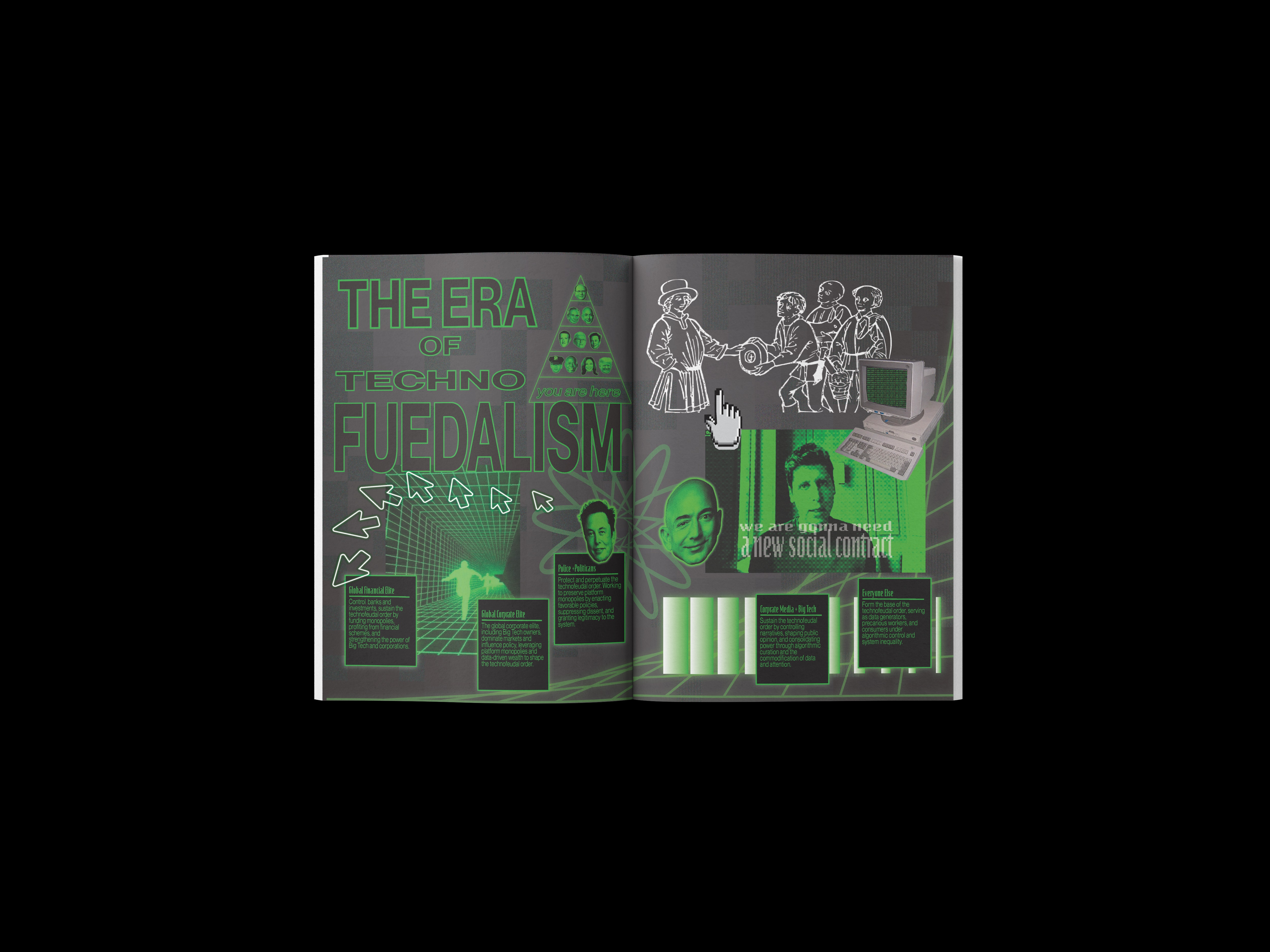
I’m skipping over a lot, but the upshot was that Boomers grew up in an era where you could afford to go to college, get a job, start a family, and buy yourself a house- all of this subsidized by our government, who understood that it was our economic best interest to have a robust middle class driving the economy forward. But Corporate America wanted a bigger slice of the pie, and by 1980 their efforts paid off with president Reagan- who started gutting all the laws that had kept corporations in check. Clinton spent his eight years doing even more deregulatory damage, and by the time the 21st Century arrived, we were basically a corporate oligarchy where the 1% gobbled up most of wealth. When the completely predictable 2008 housing crisis hit, Obama failed to capitalize on the moment the way FDR had done during the Depression. Instead of installing a new round of socially responsible regulations, he rewarded corporate America with a bailout, sending out a clear signal: land- not gold, not stocks- was your best Return On Investment. And so, investors set their sights on land.
Since 2008, the entire planet has become one giant Monopoly game run by investment firms driving the value of land higher than we ever imagined (while wages have barely risen.) If you buy a house, sure- you hope it appreciates in value, but your primary motivation is to live there. Investors, however, want their land to go up in price as much as possible, which means charging as much rent as they can. Affordable housing is to no one’s benefit in this logic; the less rent you pay, the less profitable that land is on the market. Why would anyone want to invest in that?
Let me take you now to the working-class borough of Queens, NY- most diverse county in the world, with the most languages spoken per square mile, and my home for the last quarter century. It’s never been hip, but it was always affordable and safe- a real community of lifelong residents, until the venture capitalist agenda reached our shores. In 2018, Amazon threatened to build their new headquarters here in Queens- a move that would have destroyed this community in several ways. In anticipation of massive gentrification, landlords started raising prices- but to their unpleasant surprise, the people of Queens came together and defeated Goliath. That victory is what led a group of people- including me- to create the Western Queens Community Land Trust, which is what pushed me, a filmmaker and artist with zero knowledge about housing, onto the frontline of the housing issue.
Community Land Trusts have a rich history steeped in the Civil Rights Movement. The first one was created in 1969, when Slater King and leaders from the SNCC, inspired by Israeli agricultural kibbutzim, came up with a legal way to help Black farmers in Georgia from being pushed off their land. By forming a legal entity that could own land in the name of the community, people could remove that land from the private market and make it permanently affordable. The idea started spreading as a movement in the 1980’s, and today, CLT’s are being used all over the world as a mechanism for communities to create affordable housing, commercial spaces, gardens, and more.
WQCLT is trying to do many things at once: purchase buildings (if they’re privately owned) or get the city to give us some (if they’re publicly owned) so that we can convert them into deeply affordable places to live or work in. We’re also constantly advocating, along with other CLTs, for new laws that will make affordable housing easier to develop. And, because moneyed interests are constantly trying to gentrify our valuable land, we work with the community to stop harmful projects, offering more equitable alternatives via the CLT model. We are pro-developmentwe’re just pro equitable and sustainable development, which is a huge distinction.
This sometimes puts us at odds with our elected officials. I don’t totally blame them- this is a capitalist society, and they can’t do much without money, which often comes from the private sector. Even if their intentions are good, if they go against the wishes of someone higher up on the political chain, they risk their own career- so most of the time, they capitulate rather than fight for something better. With a CLT, people can still own houses and buildings, but the CLT owns the land under that building. This prevents the building owners from selling that building years later at a big profit; we are locking in permanent affordability by decommodifying the land. This is an important detail, because many government-sponsored affordable housing programs lack such a safety feature, and have allowed people to flip subsidized housing into market rate moneymakers over time. CLTs keep it real in perpetuity.
Right now in NYC, Mayor Eric Adams (whose biggest funder is the Real Estate Industry) has made his dream clear: build as much as possible, as tall as possible, as dense as possible. The city accomplishes this through zoning laws, and Adams’ new City of Yes plan makes it easier for developers to build. Because we seem to be in a housing crisis, the mainstream press has bought into his developer-friendly mantra; Forbes’ only criticism is that his plan doesn’t go far enough. It’s Economics 101, they argue: build up the housing supply, and the demand will drop. Everyone agrees this is the solution.
Everyone is wrong.
Take Vancouver, for instance. Its population has doubled since 1961, but get this: its housing stock has tripled, and yet the cost of a home there is higher than ever. How can that be? Canadian architect Patrick Condon used to buy into the supply & demand philosophy until he realized why it doesn’t work: when you rezone land from allowing a 20-story building to a 40- story tower, you’ve just doubled the amount of money this land will generate. Its value skyrockets, its tax assessment skyrockets, and the owner charges rent that matches this increased value. The only reason developers buy buildings in the first place is to make a big profit- otherwise they would have invested that money in Wall Street stocks or something simpler. In other words, building taller and denser ironically makes housing more expensive, not less.
It used to be that people bought homes, which went up in value slowly. Today, corporations are gobbling up the stock at record rates, creating a false demand that drives up value like a Beanie Babies bubble- and not just in New York, but all over the nation. And not just all over the nation, but all over the world, as the 2019 documentary Push perfectly captures. As people of all income levels struggle to pay basic costs of life, it’s no coincidence that the worldwide rise in fascism, xenophobia and racism mirrors the rise in income inequality.
It all goes back to money. Back in the 1930’s, the federal government threw tons of money towards housing, so we got lots of affordable housing. No administration has allocated that kind of funding in decades- not Trump, not Obama, not anyone. The only glimmer of hope has been AOC’s recent Homes Act bill, the first serious attempt at fixing this problem in ages. I’m proud to say we (and other groups) worked on this legislation with her office, refusing to endorse the bill until it was truly robust (early drafts were weak and full of loopholes.) Of course, in today’s political climate, it’ll probably languish in limbo for years, but it’s a start- and concrete evidence that the grass-roots work we do does eventually bear fruit.
Some people- progressives, even- think any new housing is better than none. Kamala Harris’ campaign speeches centered around creating more housing, and while some of her ideas were worth exploring, she, too, parroted the supply-and-demand mantra that we could build our way to affordability. That philosophy is what birthed NYC’s “Mandatory Inclusionary Housing,” which forces a developer to set aside a certain percentage of a new building for “affordable housing.” But, as anyone here can tell you, it only covers a small percentage of apartments, and even those aren’t affordable to most of us, because the system they use to judge affordability (AMI) is insanely inaccurate. To qualify for a typical affordable MIH apartment (set at 80% AMI), a family of four needs to make $124,000. The median Black household in LIC makes $36,000. Affordable to whom, we ask?
It's not just New Yorkers, and it’s not just people with low incomes. Middle-class Americans everywhere have the same issue. Even the National Association of Realtors’ own data is shocking: before the pandemic, there used to be 20 states they considered “affordable” for average Americans. Today, there are zero. States like Montana and Idaho are now in the top 5 most unaffordable states in the country, and only the city of Akron, Ohio approaches what they consider true affordability in a metro area anywhere in America. My partner is from Akron, and every time we visit, people complain about how expensive rent and housing prices are getting. If that’s the most affordable city in America, what does the future hold for our middle class?
The solution to this crisis is the same as the solution to health care, education, and everything else: tax the rich the way we used to tax them decades ago: upwards of 80% of the ultrawealthy’s personal income, and 35% of corporations’ profits. Defund our military budget- $824 billion went completely unaccounted for last year. None of this is rocket science, but neither political party is interested in doing this, due to the stranglehold corporate money has on Washington. Most likely, we’ll have to wait until it all breaks down and things get really bad- a depression, a few climate disasters, a civil war… take your pick.
The United Nations has declared that housing is a right, not a commodity:
“To be adequately housed means having secure tenure- not having to worry about being evicted or having your home or lands taken away. It means living somewhere that is in keeping with your culture, and having access to appropriate services, schools, and employment.”
And yet, as you’ve seen, housing is actually more of a commodity than ever before, which is why I say we don’t need more houses- we need more homes. We need community-controlled houses, buildings, parks, and gardens, all of them rejecting the false notion that land exists for financial gain. Even Adam Smith, patron saint of the Free Market and the guy who, more than anyone, championed Capitalism’s mantra of supply and demand, wrote this:
As soon as the land of any country has all become private property, the landlords, like all other men, love to reap where they never sowed, and demand a rent even for its natural produce.
Even Smith recognized the flaw in his economic philosophy: people are greedy. Our best bet is to build a social system that keeps that greed in check by removing the profit motive from anything that affects us all: land, water, science, education, the arts, and more. it’s a revolution of the mind, and we’re running out of time.
Memo Salazar is co-chair of the Western Queens Community Land Trust and is always happy to talk further about land & housing issues via his email: memo@wqclt.org


.jpg)
.jpg)