
Hit Enter to Search or X to close
I knew from the moment I could speak that I was Palestinian and that it was a very special thing to be. I remember tiny moments, like a gathering at a sunny park in Kuwait where I chased glistening bubbles in a grassy field and posed for photos with other Palestinian kids, all relatives or close friends who had known each other for years. I remember being handed an orange and told what a shame it was that is wasn’t a Yaffa orange like we used to cultivate bi yom sitti in my grandmother’s day.
I remember there were elders lounging comfortably in the shade, just on the outskirts of the group of parents, gently pulling smoke from a water pipe or quietly thumbing a string of prayer beads in their laps. I remember going to concerts where there was singing and chanting. I remember looking around at adults wiping moisture from red rimmed eyes and feeling like I was missing something as the wave of emotion was obviously an aftereffect of lyrics I was still too young to understand, but I knew it was always, ALWAYS about homeland.
I remember what felt like lavish birthday parties with giant bowls of fresh homemade tabouli and artfully frosted cakes that inevitably erupted into joyful dance circles with clapping and zagreet calls echoing throughout the small apartments. These moments, while fewer and further apart in time, magnified in importance after leaving our lives behind in Kuwait during the bombings and magnified even more once we landed an ocean away in tiny Rhode Island. It was here, alone and apart where I struggled to root my Palestinian-ness into something tangible, something present and not just of the past. It’s only now, all these decades later that I finally understand those tiny moments were always adding up to something much bigger than me.
I started undergrad in fall of '02. The US was already bombing Afghanistan and by sophomore year it was bombing Iraq. I joined a small but determined group of student activists in antiwar protests, teach-ins, movie nights, and organizing. By the time I was 19, I was fully burnt out, but it wasn’t because keeping up with courses while working and being an activist did me in. It was the growing weariness that came with being the only Palestinian, Arab, or Muslim anywhere I went, especially while the world was falling apart yet no one around me seemed to notice. As a child of a parent with borderline, I was already used to being gaslit, but this felt like I was gaslighting myself.
A pattern was cementing that would take me years to remake: my life felt like it was all giving and zero receiving. I am not sure when it became clear to me that something major needed to shift in my life, but it was sometime after my eyes filled with bitter tears between drags of shared cigarettes during fruitless attempts to put words to my feelings of emptiness. It was sometime after a waspy white lady tried to convince me I was white in an anthropology class and I wanted to burst into blue flames. It was after I decided to end the off and on again relationship with my high school boyfriend whose parents’ increasingly anti-muslim fear became directed towards me. That was why in the spring of my sophomore year, despite my mother’s attempts at control, I applied for a study abroad scholarship and got it. By August, I was off to Cairo, the city that-yet unbeknownst to me-raised my Baba, the city that every woman in my family got to see except me. The city that grounded me and gave me new eyes.
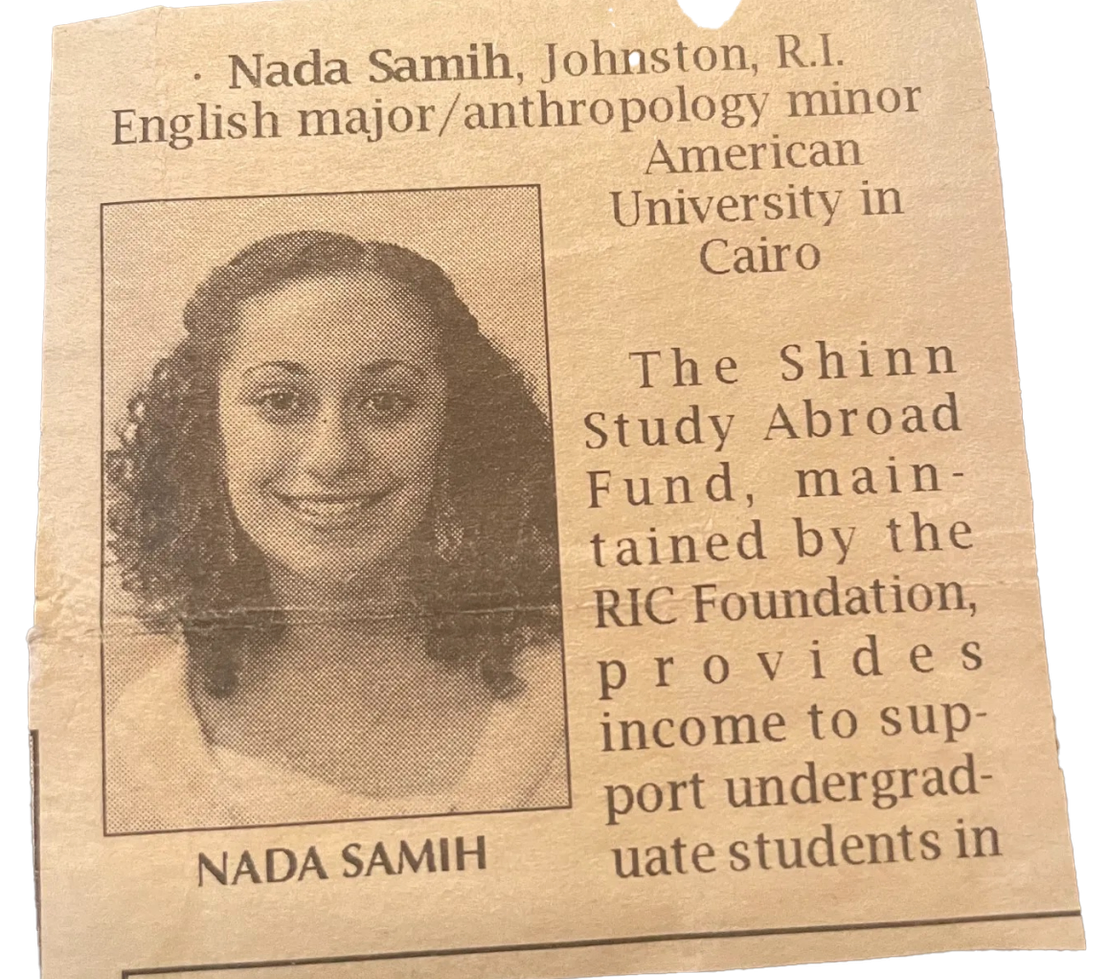
During those precious six months studying and exploring Cairo, I was surrounded by gaggles of Arab Americans and other Americans of color, Egyptians from all walks of life, and other Palestinians who earned scholarships directly from Palestine. One of those Palestinians was Munther from Jerusalem. While he was younger than me at 18 and I was what I thought was a mature and worldly 20, he carried himself with air of a man nearly twice his age. I quickly learned this was because he, like countless young man his age, had been detained and imprisoned by the IOF
forwait for it-
-throwing stones.
I am not sure exactly how long he was in prison or what he experienced, but it was enough to imprint him with an aura similar to those I had only yet encountered from Black friends back home who witnessed and survived state violence. Anytime we went out in Cairo, it was typically in large groups, enough to stuff into 2 or 3 cabs, sharing laps in a harrowing ride swerving through traffic for a night of sheesha smoking on the Nile and dancing to house music I sorely disliked, but would later change my mind about when the DJ mixed in Arab pop and hiphop. Those nights were always magic, like fulfilling ancestors’ wishes of unity and continuity despite time or space.
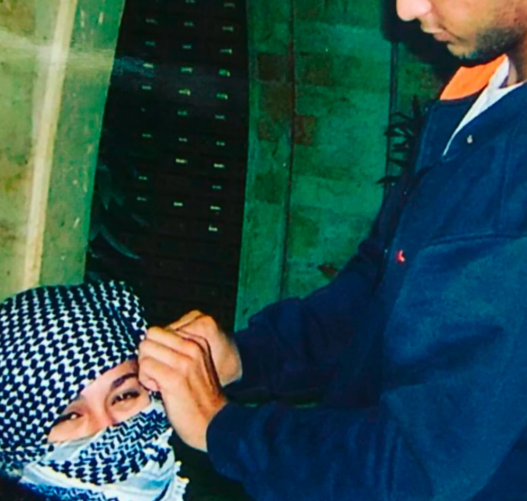
My friend caught this moment on camera of Munther showing me how to wrap a kuffeya around my face like a proper resistance fighter and all I could do was smile so gleefully it reached my eyes- quite a tall order for me during this time in my life. If there’s a single moment out of all the countless ones I could point to that summarize what I know about being Palestinian, it is this: the excited hushed moments of tension waiting by a screen or a radio, waiting for news of progress, of agreement, promised futures unfurling like rosebuds in the summer sun. The growing heat of bodies sitting in a circle, muscles taut and expectant. These were and are monumental occasions, like awaiting the birth of child. For what is birth but a new beginning? Fresh and unpolluted by the weight of the past or the expectations of the present.
Of course, I know that is fantasy. Nothing can exist without a past or a present, I am fully aware of the space my grief and trauma take up in my body, most of it started long before I was born, but it is from here that I nevertheless enter this moment with unabashed naked hope, thorn entwined as it might be.
This current genocide in Gaza and the ongoing violence in the West Bank is a generations-long struggle. That must be why our current moment feels so much bigger than a six week ceasefire. On the evening of the ceasefire announcement, I came home from work, barely believing it would hold. I slumped down on my couch to doom scroll but instead of the usual news of stalling or last minute hiccups, I was taken in by images of joyful celebrations. The drumming, the playful singing, the sugar syrup dripping off the knafe, the steaming mint tea passed around in a circle. The waving sun drenched flags and smiling children, long awaited reunions of loved ones and tearful embraces. I felt it all right along with them. All I wanted was to be with my people. It is when we are all together that I remember how we never left Falastine and she never left us. Because our bodies and her are one in the same.
That night I wept with the fury of millions across dimensions of time and space, through folds of gravity and the heat of blackholes, with the force of tsunami waves roiling with lava. I wept and lines of ancestors stretching back in a long winding line appeared to me in the daylight like a waking dream. I gathered with them around the city square, the wood paneled radio, the black and white television. We gathered in Yaffa, in Heifa, in Acre, in Jenin. They are here now holding my hand. Exuberant, lively, eyes drunk on hope and alive. There are lines of decedents joining around us too. Our children, our grandchildren and our great-grandchildren are dancing dabke and singing freedom songs far into the future. While the future is unwritten, we remain steady, and rooted to our land. Regardless of the outcome of this ceasefire or the next, we will remain Palestinian. I am Palestinian and that's a very special thing to be.

.jpg)
.jpg)