
Hit Enter to Search or X to close
.png)
The attacks that occurred during New Year’s celebrations in New Orleans and Las Vegas immediately triggered a sense of déjà vu. For many Americans who remember the early 2000s, the atmosphere surrounding these incidents felt all too familiar. Within hours, media narratives coalesced around terrorism, national security, and renewed threats from abroad. The speed and certainty of this framing mirrored the political climate after September 11, 2001, when fear became the most effective tool for expanding state power.
In the aftermath of 9/11, fear was transformed into policy. Sweeping changes, such as the USA PATRIOT Act, mass surveillance programs, and decades of military interventions across the Middle East, were justified as emergency responses to an existential threat. What began as urgent measures gradually hardened into permanent structures of governance, entrenching intelligence and law enforcement agencies at the center of everyday life. Two whistleblowers, Julian Assange and Edward Snowden, revealed the mechanics of this expansion: covert operations abroad, the entanglement of governments with proxy militias, and domestic surveillance conducted under the guise of national security.
Central to these strategies has been the use of jihadist organizations as both symbols and instruments of fear. The historical roots of this approach stretch back to the CIA’s Cold War-era support of the Afghan Mujahideen, which helped defeat the Soviet presence in Afghanistan but also contributed to militant networks that would later evolve into al-Qaeda.
In the years that followed, the Middle East became increasingly entangled with armed groups whose origins were tied to earlier proxy conflicts. Documents released through WikiLeaks later revealed that U.S. officials were privately concerned that key regional allies were helping finance extremist organizations. In a widely circulated 2014 email, former Secretary of State Hillary Clinton wrote that the governments of Qatar and Saudi Arabia were providing clandestine financial and logistical support to radical Sunni groups operating in the region.
These disclosures complicated the conventional narrative surrounding militant movements. Saudi Arabia, one of Washington’s closest regional partners, has long faced allegations that wealthy individuals and informal networks within the kingdom helped finance extremist groups. Yet despite these concerns, the strategic relationship between the United States and Riyadh has remained durable, underpinned by energy markets, arms sales, and regional security cooperation.
Within this geopolitical framework, the relationship between Western policy objectives and the activities of militant organizations becomes difficult to ignore. Regional initiatives such as the Abraham Accords have strengthened alignment between the United States, Israel, and several Gulf states, particularly around shared concerns about Iran’s growing influence. At the same time, many of the most prominent attacks claimed by ISIS in recent years have targeted governments and societies that stand in opposition to those same strategic interests.
The alignment between ISIS’s operational focus and U.S. and Israeli strategic interests raises the possibility that the group functions as a convenient geopolitical tool. Attacks are concentrated on regimes and regions that oppose Western-aligned objectives, while Israel, despite being a central adversary in jihadist rhetoric, remains largely untouched. This selective targeting mirrors broader policy goals: maintaining instability in certain states to justify military interventions, sustaining alliances with Gulf partners, and framing regional conflicts in ways that reinforce the narrative of an ever-present Islamist threat. In this sense, ISIS operates both as a real adversary and as a symbolic instrument, a boogeyman whose existence validates the expansion of intelligence programs, surveillance measures, and foreign interventions that serve U.S. and allied agendas.
Within the United States, the pursuit of terrorism suspects has also transformed federal law enforcement practices. After failing to prevent the 9/11 attacks, the FBI shifted its focus from gangsters and corrupt officials to the pursuit of terrorists, a mission that has since consumed the Bureau. In the 14 years following 9/11, the United States experienced roughly six major terrorist attacks, including the Boston Marathon bombing in 2013, alongside a handful of failed plots such as Faisal Shahzad’s attempted car bombing in Times Square. Yet during the same period, the FBI has claimed credit for foiling dozens of terrorism plots, often through operations it orchestrated itself.
Since 2001, the Bureau has arrested more than 175 individuals in aggressive undercover counterterrorism stings. These cases typically rely on informants who supply the means, opportunity, and sometimes even the idea for attacks, drawing in people who are economically desperate or mentally unstable. The directive was clear: never again. Agents were told to identify potential terrorists before they struck. To achieve this, the FBI recruited more than 15,000 informants nationwide, with many targeting Muslim American communities. Informants can earn upwards of $100,000 for each terrorism case they deliver, creating financial incentives that often blur the line between prevention and entrapment. In practice, the Bureau has ended up engineering more terrorism plots than actually occurred, using fear as both a tool and a justification for its expanding reach.
Alongside counterterrorism programs, intelligence agencies have leveraged fear to justify the creation of a sprawling surveillance state. Snowden revealed the National Security Agency’s collection of massive amounts of data on both domestic and foreign individuals, often conducted without oversight or due process. These programs exploit public fear, framing constant surveillance as necessary for protection while systematically eroding civil liberties.
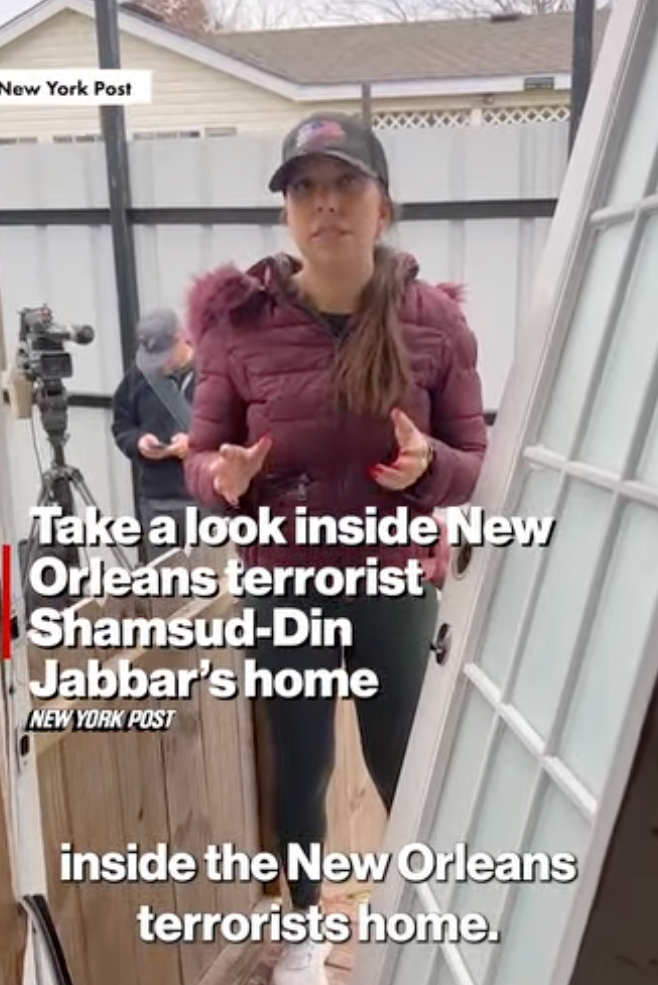
The New Orleans and Las Vegas attacks illustrate this dynamic. Media coverage emphasized alleged links to Islamist extremism, with some outlets amplifying fear over facts. In New Orleans, reporters were even allowed to conduct walkthroughs of active crime scenes, highlighting supposed bomb-making stations and Islamic texts. The message was clear: the objective was not merely to investigate, but to instill fear. Historically, intelligence agencies have engaged in covert operations to shape public opinion and policy. Programs such as Operation Mockingbird, which manipulated news media, and Operation Gladio, which staged attacks in Europe to justify authoritarian policies, demonstrate that the use of fear as a tool is neither new nor incidental.
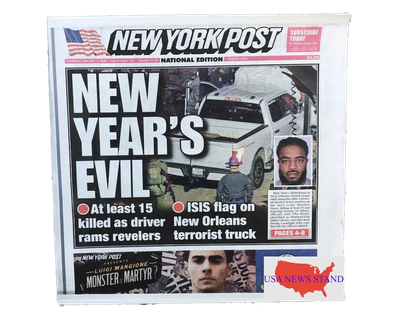
Fear remains a mechanism for expanding state power. Surveillance technologies, predictive policing, and intelligence operations at home are justified through narratives of jihadist threat. Simultaneously, foreign interventions in the Middle East are framed as necessary to contain these organizations. Both domains rely on the manufacture of fear: jihadist groups, whether supported indirectly, strategically tolerated, or operating independently, provide the narrative scaffolding for the expansion of control.
The New Year’s attacks should therefore be read not only as acts of violence, but as evidence of a broader system that weaponizes terrorism to sustain authority. Emergency measures introduced during crises rarely disappear once the immediate danger subsides. Surveillance infrastructures grow more sophisticated, artificial intelligence and predictive analytics extend the reach of law enforcement, and military interventions continue under the guise of counterterrorism.
The real stakes lie not in denying the existence of threats, but in recognizing how fear is leveraged to expand power. Jihadist organizations serve both as real threats and Jihadist organizations serve both as real threats and as political props for authority. Understanding this dynamic is essential for resisting the gradual erosion of civil liberties. Fear has long fueled the surveillance state, and recognizing that pattern is the first step toward reclaiming accountability and preserving democratic freedoms.
Disclaimer: This article has been edited since its original publication for our digital platform.

.jpg)
.jpg)