
Hit Enter to Search or X to close
This op-ed is part of Midterm Election Series: Lessons from Reconstruction*, a series running up to the midterm elections that examines the parallels between the Reconstruction era and American politics today.*
Perhaps you have seen it on your feed.
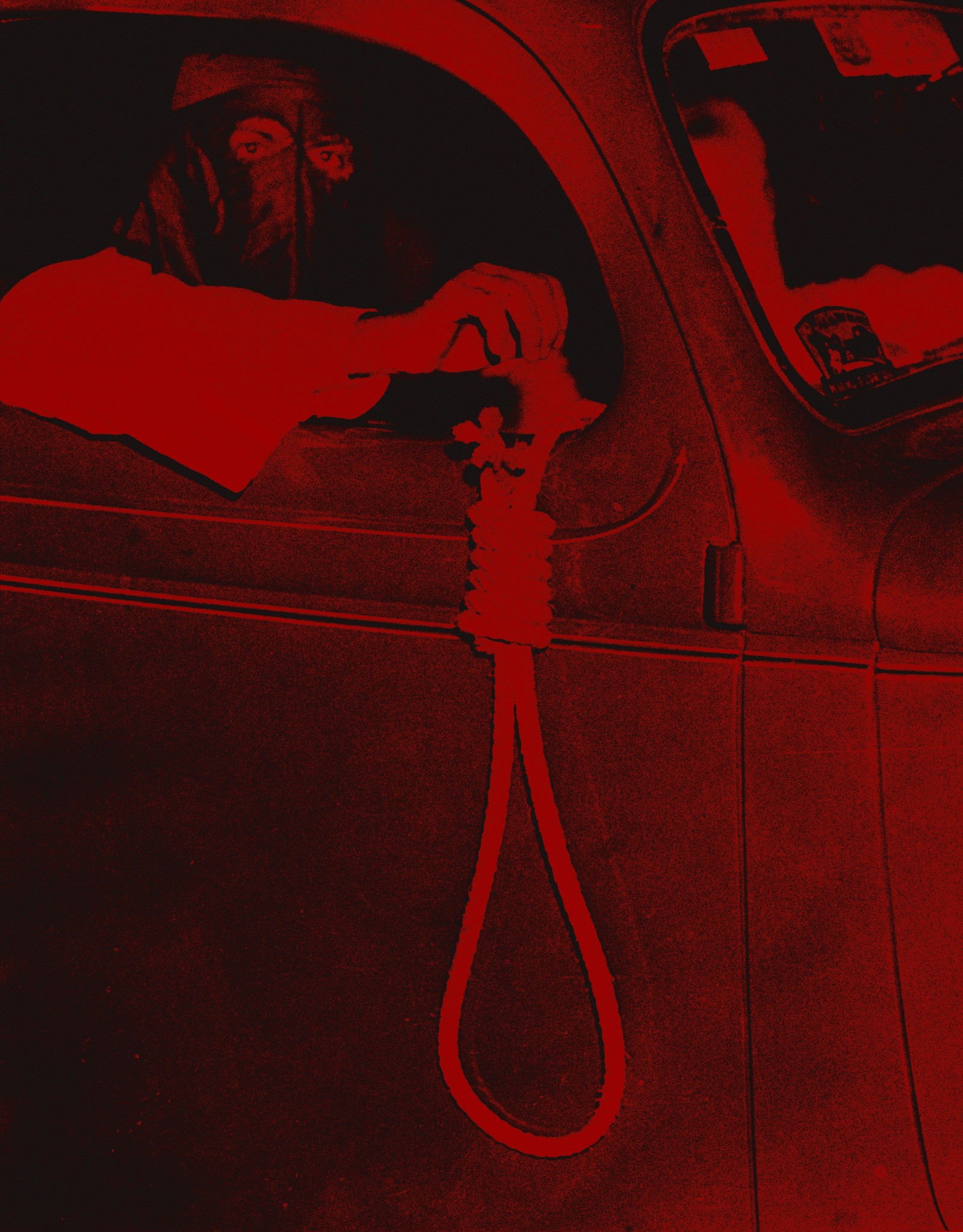
Reports of Black Americans found hanging from trees has steadily been increasing. In this year alone, there have been six high-profile cases of Black Americans found hanging under mysterious circumstances. While this could simply be a case of algorithms amplifying certain topics and making them appear more prevalent, there is research that suggests otherwise. A new study suggests that modern-day lynchings are on the rise in the Southern United States. The study, A Crimson Record, compiled by the civil rights organization Julian, documents more than 70 lynchings over the last 25 years.
While we don't know for certain whether some of these cases were actually lynchings, many of the recent cases that may have appeared on your newsfeed, including that of Tonea Nicole Miller, have been ruled suicides, with little apparent willingness to investigate whether foul play was involved.
To many people, particularly within the Black community, these rulings are met with deep suspicion. As Twitter user @taurusk_ put it, "Black people don't hang themselves from trees, given our history, if we gonna kill ourselves it's gonna be quick!" This suspicion is especially significant given the political moment we are in. We are seeing the current administration actively attempt to reverse Dred Scott v. Sandford, has gutted the Voting Rights Act of 1965, and remove initiatives throughout the government based on Diversity, Equity, and Inclusion. These policies represent direct attempts to disenfranchise Black voters and move us toward a Reconstruction-era America. The increase in lynchings may be another extension of this strategy.
Lynchings' Role in Disenfranchisement
Political scientists John Aldrich and John Griffin conducted extensive research on the relationship between lynchings and Black voter turnout in every county across eleven Southern states, examining the data month by month from 1876 to 1952. In the years after Reconstruction, before disenfranchisement was formally written into law, two factors predicted where a lynching was likely to occur.
The first was the strength of the Populist Party, which represented a biracial coalition in opposition to the Democrats. As some annoying conservative might have told you once, "Democrats were pro-slavery!" Yes, the Democrats were once the pro-slavery party, the pro-Jim Crow party, and everything else you might find deplorable. The second factor was the electoral calendar. The closer a congressional election approached, the more likely a lynching became.
Sociologists have examined how the Populist challenge to Democratic power in the 1880s and 1890s may have fueled lynchings, while historians have documented the use of violence to suppress opposition voting during this period, including targeted violence and murder in the lead-up to elections and on Election Day itself. Taken together, this research strongly suggests that lynchings were used as a tool of political suppression. Ida B. Wells wrote about this in 1900, describing how night riders killed until what she called the unwritten law had displaced the written one. James Weldon Johnson, in 1924, described lynching as an instrument for terrorizing Black people and keeping them from the polls.
In the South, voter suppression was driven by the fact that Black people were numerous enough to threaten white Democratic control of government if they voted. Initially, however, Southern Democrats lacked the capacity to carry out voter suppression on their own. Even after they developed that capacity, federal Republican intervention, or the threat of it, still protected Black suffrage. As a result, suppression often occurred outside the formal political system. It was decentralized, informal, and violent, directed by Democratic Party elites and carried out by both political leaders and ordinary people.
That decentralization also gave those in power something important: plausible deniability. The state could claim it wasn't responsible because the violence was not always carried out directly by the state. But everyone generally understood who the violence was protecting and who it was directed against. Journalists, political opponents, and civil rights organizations watched elections for precisely this kind of activity. And once that extralegal suppression became violent, it could also expose the state's inability to maintain order. The same violence being used to maintain political power could ultimately undermine the legitimacy of the state itself.
This is also why not every lynching looked the same. We often think of lynchings as public spectacles, but many were carried out in relative secrecy. Secret, targeted killings of Black officeholders and activists could directly affect Black political organizing and were critical to Democrats regaining power in the South. Other lynchings were deliberately public. Those were less about killing one person and more about sending a message to an entire community. They functioned as terrorism, reinforcing racial boundaries and strengthening white solidarity around the Democratic Party.
The Populist Party was a particularly dangerous threat because, in some states, it was explicitly biracial. Even where it wasn't, political competition created the possibility of mobilizing Black voters and poor white voters against the Democrats. If Democrats could not stop that coalition through the ballot box, they had another option: intimidation and violence.
It was an effective combination. In Louisiana, 130,000 Black voters were registered in 1896. By 1904, after a series of new restrictions and political violence, that number had fallen to just 1,342.
Which Brings Us to Now
Just like the Populist Party of the 1800s, there is a strong multiracial coalition that threatens white supremacy and Republican Christian nationalist supremacy. This coalition dramatically outsizes the Republican and/or MAGA Party. If this coalition regularly turned out and its entire base of support were enthusiastic voters, the Republican Party would essentially be dead. That is why they rely on so many different ways to disrupt this base: divide and conquer, intimidation, and voter restrictions. Some of these efforts are systemic; others are decentralized and informal.
Regardless, violence has always been a reliable tool for maintaining political power, and that is no different today. Whether or not the increase in lynchings is directly carried out for an electoral purpose does not change the potential consequences. The effect can still be the same: a decrease in Black voter turnout.
In Alabama, Florida, Georgia, Louisiana, North Carolina, and South Carolina, Black voter registration is nearly 3% lower in counties that rank in the top quartile for lynching rates from 1882 to 1930, compared with counties in the bottom quartile, according to the paper "Historical Lynchings and the Contemporary Voting Behavior of Blacks."
Author Jhacova Williams, an associate economist at the nonprofit policy think tank RAND Corp., explains, "What [lynchings] taught someone's great-great-great-grandfather was that whoever is supposed to protect you will not protect you. It taught, 'I should not trust this system.'"
Furthermore, the psychological toll of seeing people who look like you killed under circumstances ranging from outright murder, such as George Floyd's killing, to mysterious circumstances, such as being found hanging from a tree, cannot be ignored. Given this country's history and its continued systemic racism, the lack of accountability from the state, and the failure of supposed "allies" to act, this can contribute to a sense of hopelessness and apathy.
Breaking the Cycle
When we think about these upcoming midterm elections, particularly those who align with the political left, I would extend that definition to include the Democratic Party. Right now, we must put on a united front for these midterm elections and win. If people on the political left want to retain the ability to engage in political speech in the years ahead, then yes, that means "voting blue, no matter who."
The left has struggled to connect with Black voters, particularly Black voters of a certain generation. When thinking about how to earn the trust of these voters, we should not focus solely on reaching out to them at election time. We also need to focus on protecting Black voters. This work must extend beyond any individual election cycle. Protecting Black voters is part of being anti-racist.
What does protecting Black voters mean? It means listening to Black voters and defending them and the issues that matter to them. It means making Black voters feel safe in a system that has been designed to enslave and kill them since this country's existence, and letting them know they are not alone.
It means letting Black people know they are more than a black square or a hashtag. Your commitment to them and their community should not be based on their victimhood, but on recognizing their shared humanity. The same things you want for yourself, they want for themselves: the ability to exist without being othered; to send their children out into the world without fear that they will be killed because of the color of their skin; to have access to clean drinking water; and to know that their lives matter just as much as anyone else's.
But it also means physically protecting Black voters. Every avenue will be explored in these upcoming midterms to keep Trump and Republicans in power and continue dismantling what remains of the better parts of this system, including through violence. Whether that violence is systemic, such as deploying Trump's Gestapo at polling sites, or decentralized, such as right-wing agitators intimidating Black voters or, at worst, killing them, the threat must be taken seriously.
Create groups to help escort Black people in your community home. Start tracking far-right groups in the same way that countless autonomous groups are tracking I.C.E. Get armed. This election cycle has to be about more than simply turning out the vote; it has to be about establishing trust. Once trust is established, genuine coalition building can begin.
We Cannot Afford to Ignore This
Historically, lynching and voter suppression were never separate phenomena. Violence was one of the tools used to make political participation dangerous, intimidate Black voters, and ultimately prevent Black political power from threatening white political control. Today, we should be paying attention to whether we are seeing that same relationship take shape again.
Whether or not every case of a Black person found hanging from a tree is ultimately ruled a lynching, and whether or not every act of political violence is directly connected to an election, the consequences can still be profound. Fear makes people withdraw. Repeated violence without accountability creates hopelessness. And when people become too afraid, distrustful, or exhausted to participate, we all lose.
The resurgence of lynchings against Black Americans is an issue we cannot afford to ignore.
.jpg)